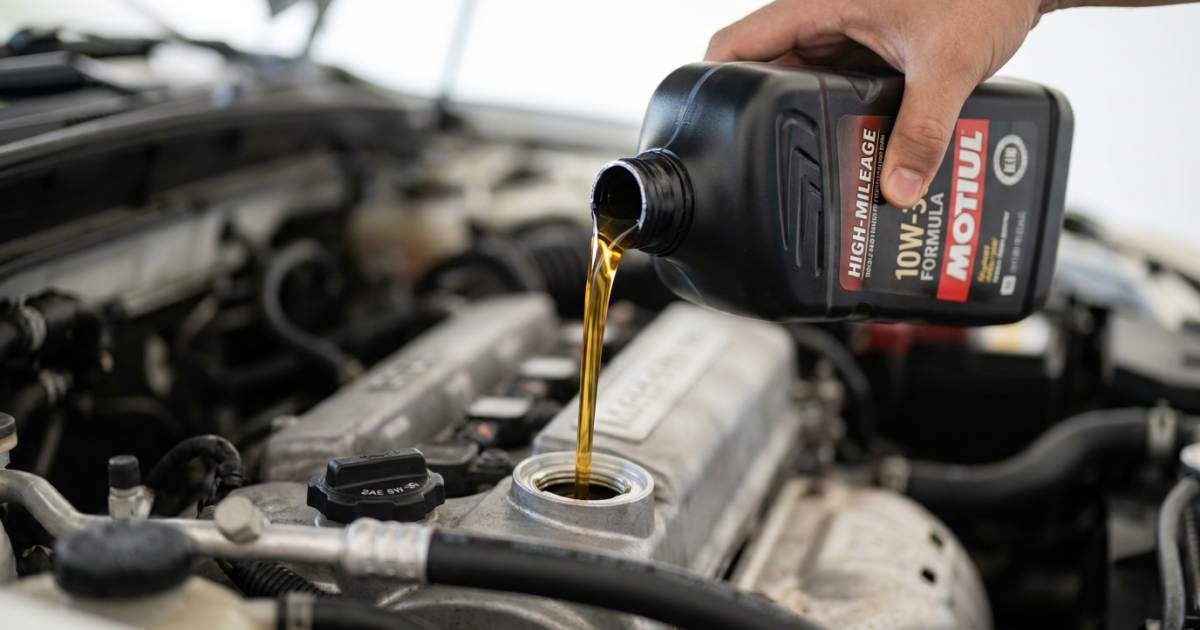
Once your car crosses the 75,000-mile mark, the rules change. The engine has been through thousands of heat cycles, the seals have aged, the tolerances have widened slightly, and the oil that worked perfectly at 30,000 miles may not be the best choice anymore. Choosing the best motor oil for high-mileage cars is one of the simplest and most impactful things you can do to extend the life of an aging engine.
This guide covers what makes high-mileage oil different, which viscosity grades work best for older engines, the top products worth considering, and how to decide between full synthetic, synthetic blend, and conventional options for your specific situation.
What Makes High-Mileage Oil Different?
High-mileage motor oils are not just regular oil with a different label. They contain a specific set of additives engineered for the challenges that come with an older, higher-mileage engine:
- Seal conditioners: As engines age, rubber seals and gaskets shrink and harden, leading to minor oil leaks and seepage. High-mileage oils contain seal swell agents — typically esters — that cause these seals to expand slightly back toward their original size, reducing or eliminating minor leaks.
- Extra detergents and dispersants: Older engines accumulate more sludge and varnish deposits. High-mileage formulas carry more cleaning agents to break down and suspend these deposits so they get filtered out.
- Anti-wear additives: Worn engine components have looser tolerances and need more robust anti-wear protection. High-mileage oils typically carry higher concentrations of ZDDP (zinc dialkyldithiophosphate) and other anti-wear compounds.
- Viscosity modifiers: Older engines often benefit from slightly thicker oil to maintain adequate film strength across worn bearing surfaces and cylinder walls.
- Antioxidants: Higher concentrations of antioxidants help the oil resist breakdown from heat — important in engines that may run slightly hotter due to age and wear.
Full Synthetic vs. Synthetic Blend vs. Conventional for High-Mileage Engines
This is the question most high-mileage car owners wrestle with. Here is the honest breakdown:
Full Synthetic High-Mileage Oil
Full synthetic high-mileage oil offers the best overall protection — superior thermal stability, longer drain intervals (7,500 to 10,000 miles), better cold-start performance, and the most robust additive packages. It costs more per quart ($8 to $12) but the extended drain intervals often make the total cost comparable to conventional oil changed more frequently.
Best for: Vehicles that are well-maintained, not burning oil excessively, and driven in varied conditions including extreme heat or cold.
Synthetic Blend High-Mileage Oil
A mix of synthetic and conventional base stocks, synthetic blend high-mileage oil offers better protection than conventional at a lower price than full synthetic ($5 to $8 per quart). Drain intervals are typically 5,000 to 7,500 miles. This is the sweet spot for many high-mileage daily drivers.
Best for: Vehicles with moderate wear, owners who want better-than-conventional protection without the full synthetic price premium.
Conventional High-Mileage Oil
Conventional high-mileage oil still contains the seal conditioners and extra additives, just with a conventional base stock. It requires more frequent changes (3,000 to 5,000 miles) and offers less protection in extreme temperatures. It is the most affordable option but the least protective.
Best for: Very old engines already burning oil significantly, where the cost of frequent oil changes is offset by not wanting to spend more on an engine nearing end of life.
Best Viscosity Grade for High-Mileage Cars
Always start with your owner’s manual viscosity recommendation. For most modern engines, that is 5W-20 or 5W-30. However, for high-mileage engines with worn bearings or increased oil consumption, moving up one viscosity grade — from 5W-30 to 10W-30, for example — can help maintain oil pressure and reduce consumption.
Do not go dramatically thicker without a specific reason. Using 20W-50 in an engine designed for 5W-30 will starve components of oil at cold start and can cause more harm than good. A one-grade step up is reasonable; anything more requires a mechanic’s input.
Top Motor Oil Picks for High-Mileage Cars
Mobil 1 High Mileage Full Synthetic
One of the most trusted names in motor oil, Mobil 1 High Mileage is a full synthetic formula available in 5W-20, 5W-30, and 10W-30. It carries an excellent additive package including seal conditioners, strong anti-wear protection, and extended drain capability up to 10,000 miles. It is the go-to recommendation for well-maintained high-mileage vehicles that deserve the best protection available.
Castrol GTX High Mileage
Castrol GTX High Mileage is a synthetic blend available in multiple viscosities. It is well-regarded for its seal conditioning performance and is widely available at most auto parts stores. A solid mid-range choice that balances cost and protection effectively for everyday high-mileage driving.
Valvoline High Mileage with MaxLife Technology
Valvoline’s MaxLife line is specifically engineered for engines over 75,000 miles and is available in both synthetic blend and full synthetic versions. The MaxLife formula is particularly noted for its seal conditioning additives and has a strong track record among owners of older vehicles with minor leak issues.
Pennzoil High Mileage Motor Oil
Pennzoil’s high-mileage line uses their PurePlus natural gas-to-oil base stock technology, which produces a cleaner base oil than traditional crude-derived conventional oil. Available in synthetic blend and full synthetic versions, it is a strong performer for engines that have accumulated significant sludge over the years.
Shell Rotella T6 Full Synthetic (for trucks and diesel)
For high-mileage trucks and diesel engines, Shell Rotella T6 is a benchmark product. Its heavy-duty additive package and robust anti-wear protection make it an excellent choice for work trucks and towing vehicles with high mileage.
Should You Switch to High-Mileage Oil?
If your vehicle has crossed 75,000 miles, switching to a high-mileage formula is almost always a good idea — even if you are not seeing any problems yet. The seal conditioners and extra additives are preventive, not just reactive. Starting them before leaks develop is more effective than trying to stop leaks that have already formed.
If you are currently using regular synthetic and your engine is running well with no leaks or excessive oil consumption, you can stay on it — but switching to a high-mileage synthetic will not hurt and may provide additional protection as the engine continues to age.
What About Oil Consumption?
High-mileage oil can reduce minor oil consumption caused by worn valve seals or piston rings, but it is not a cure for significant consumption. If your engine is burning a quart every 1,000 miles or less, that is a mechanical issue that oil alone cannot fix. In that case, focus on checking levels frequently and addressing the root cause rather than expecting any oil to solve the problem.
For engines burning moderate amounts of oil (a quart every 2,000 to 3,000 miles), moving to a slightly thicker viscosity high-mileage oil — such as 10W-40 instead of 5W-30 — can sometimes reduce consumption meaningfully.
How Often to Change Oil in a High-Mileage Car
Follow the oil life monitor if your vehicle has one — it accounts for actual driving conditions, not just mileage. If your car does not have an oil life monitor, use these general guidelines:
- Full synthetic high-mileage: Every 7,500 to 10,000 miles
- Synthetic blend high-mileage: Every 5,000 to 7,500 miles
- Conventional high-mileage: Every 3,000 to 5,000 miles
For high-mileage engines, erring on the side of more frequent changes is always the safer choice. Fresh oil with a full additive package is cheap insurance compared to engine repair costs.
Keeping your engine well-lubricated is just one part of high-mileage car care. If you have been hearing unusual sounds from your engine, check out our guide on what causes engine knocking — it covers another common issue in older engines. And keeping your cooling system healthy is equally important — our post on how to flush a radiator at home walks you through that process step by step.
For independent oil testing data and real-world performance comparisons, Bob Is The Oil Guy (BITOG) is the most comprehensive community resource available, and AAA’s synthetic vs. conventional oil guide provides authoritative third-party testing data.
Final Thoughts
The best motor oil for high-mileage cars is one that matches your engine’s current condition, your driving habits, and your budget. For most drivers with a well-maintained vehicle over 75,000 miles, a full synthetic high-mileage formula like Mobil 1 High Mileage or Valvoline MaxLife Full Synthetic is the best investment you can make in your engine’s longevity. Change it on schedule, check the level monthly, and your high-mileage engine can keep running reliably for many thousands of miles to come.
About The Author