Types of Solar Panels Explained
If you are thinking about going solar, one of the first decisions you will face is choosing the right type of solar panel for your home. The types of solar panels available today each have their own strengths, weaknesses, and ideal use cases — and understanding the differences can help you make a smarter, more confident decision.
This guide breaks down the three main types of solar panels in plain language, so you know exactly what you are comparing when you get quotes from installers.
The Three Main Types of Solar Panels
The solar industry primarily uses three types of panels for residential and commercial installations: monocrystalline, polycrystalline, and thin-film. Each is made differently, looks different, and performs differently depending on your roof, climate, and budget.
1. Monocrystalline Solar Panels
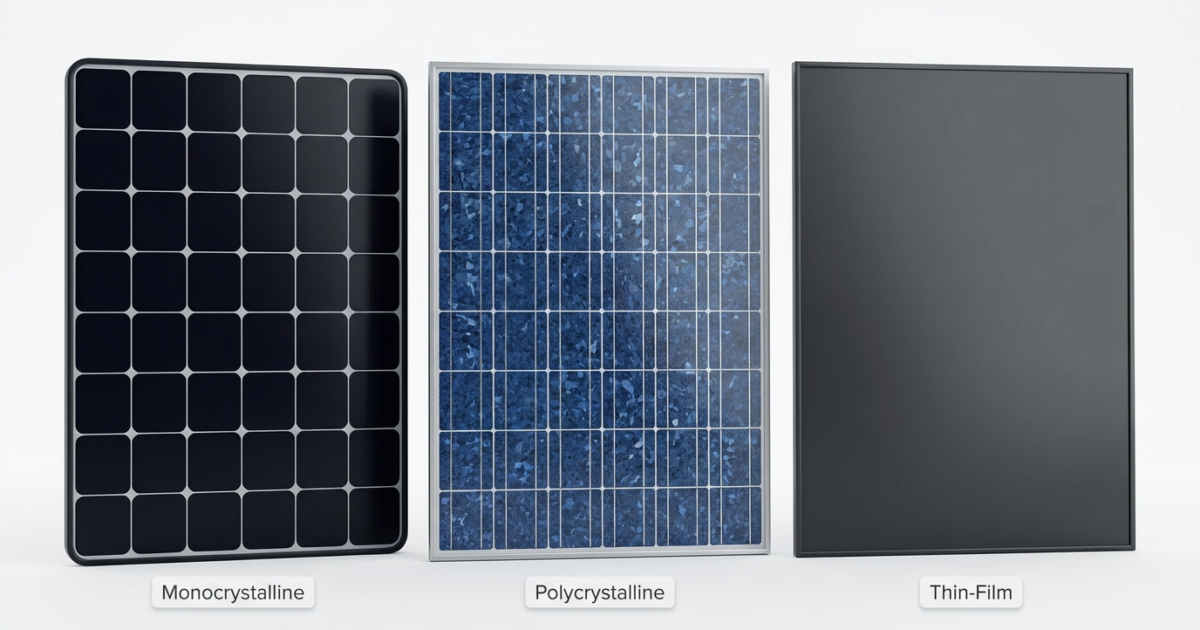
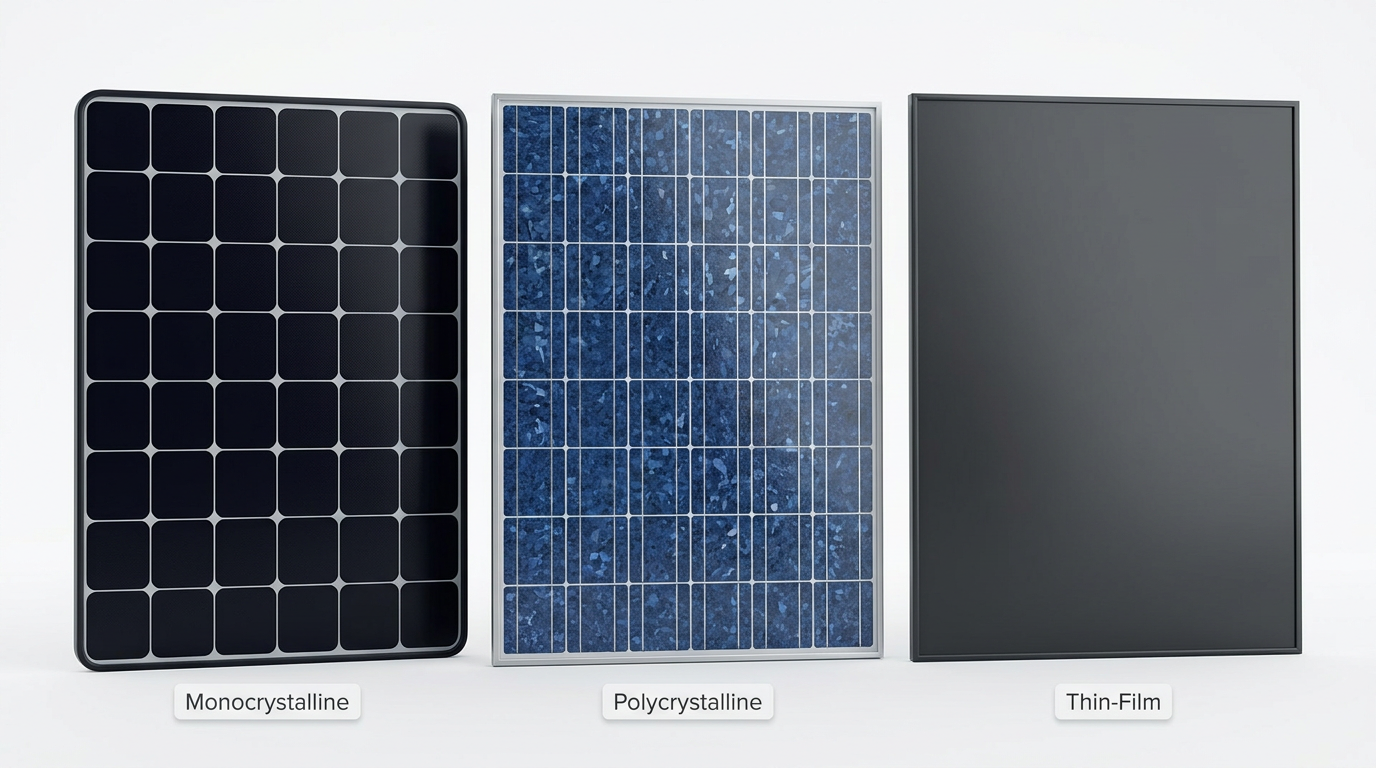
Monocrystalline panels are the most popular choice for residential solar installations today. They are made from a single, continuous crystal of silicon — which is what gives them their distinctive uniform black appearance and rounded cell corners.
Key Characteristics
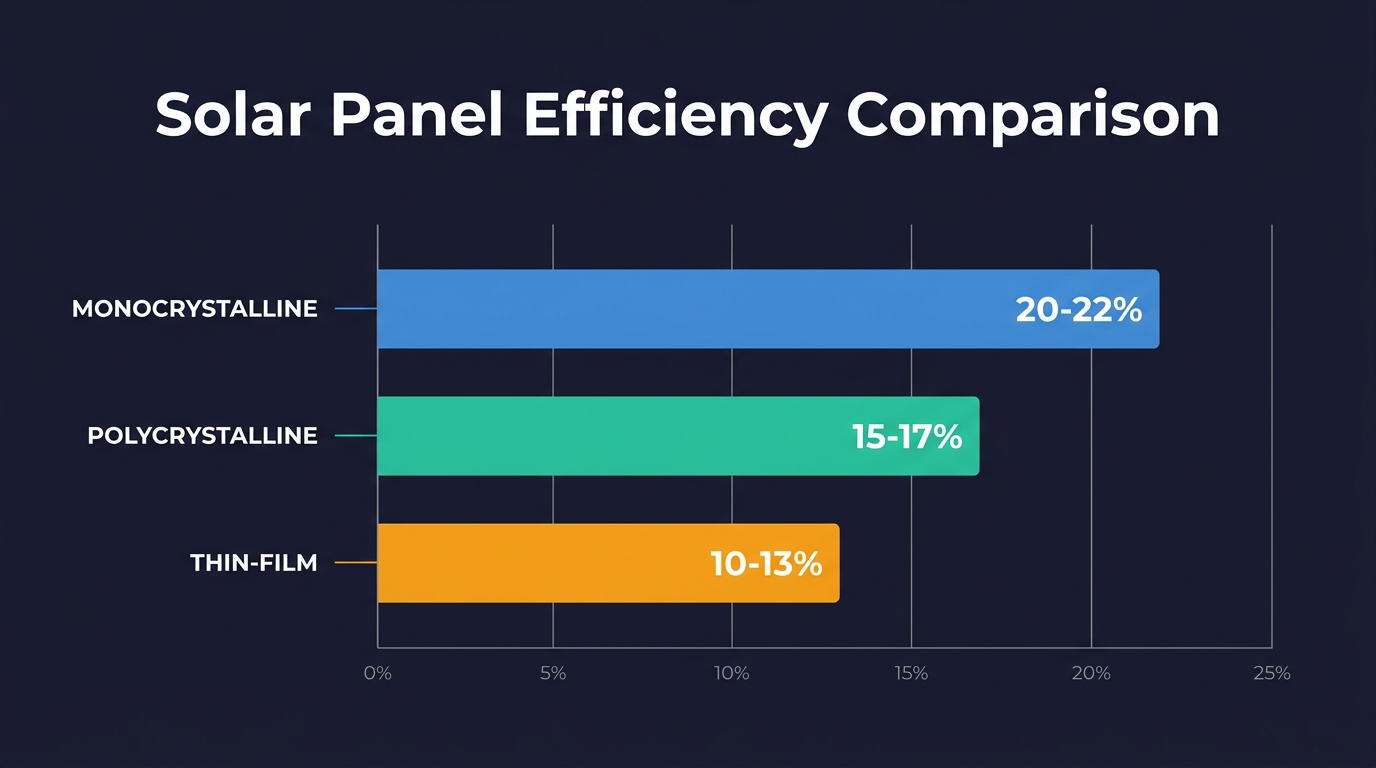
- Efficiency: 20–22% (highest of the three types)
- Appearance: Deep black cells with silver or black frames
- Lifespan: 25–30+ years
- Cost: Higher upfront cost than polycrystalline
- Best for: Homes with limited roof space that need maximum output
Because monocrystalline panels are so efficient, you need fewer of them to generate the same amount of electricity as other panel types. This makes them an excellent choice for smaller roofs or homes with high energy needs. They also tend to perform better in low-light conditions compared to polycrystalline panels.
2. Polycrystalline Solar Panels
Polycrystalline panels were the industry standard for many years and are still widely used today. They are made by melting multiple silicon fragments together — a process that is less precise than monocrystalline manufacturing, which is why the cells have a distinctive speckled blue appearance.
Key Characteristics
- Efficiency: 15–17%
- Appearance: Blue speckled cells with silver frames
- Lifespan: 25 years
- Cost: Lower upfront cost than monocrystalline
- Best for: Homeowners with larger roof space and a tighter budget
Polycrystalline panels are a solid, reliable option for homeowners who have plenty of roof space and want to keep upfront costs lower. The trade-off is slightly lower efficiency and marginally reduced performance in high heat compared to monocrystalline panels.
3. Thin-Film Solar Panels
Thin-film panels are a fundamentally different technology from crystalline silicon panels. Instead of silicon wafers, they are made by depositing one or more layers of photovoltaic material onto a surface like glass, plastic, or metal. The result is a lightweight, flexible, and completely smooth panel with no visible cell structure.
Key Characteristics
- Efficiency: 10–13% (lowest of the three types)
- Appearance: Smooth, uniform dark gray or black surface
- Lifespan: 10–20 years (shorter than crystalline panels)
- Cost: Lowest upfront cost per panel
- Best for: Large commercial rooftops, RVs, boats, or non-standard surfaces
Thin-film panels are rarely used in standard residential rooftop installations because their lower efficiency means you need significantly more panels to generate the same output. However, they excel in applications where weight, flexibility, or aesthetics are a priority — such as curved surfaces, portable solar setups, or very large flat commercial roofs.
Types of Solar Panels: Side-by-Side Comparison
Here is a quick reference comparison of all three types:
| Feature | Monocrystalline | Polycrystalline | Thin-Film |
|---|---|---|---|
| Efficiency | 20–22% | 15–17% | 10–13% |
| Appearance | Black, uniform | Blue, speckled | Smooth, dark gray |
| Cost | Higher | Medium | Lower |
| Lifespan | 25–30+ years | 25 years | 10–20 years |
| Best Use | Small roofs, high output | Large roofs, budget | Commercial, flexible |
Which Type of Solar Panel Is Right for You?
For most homeowners, monocrystalline panels are the best all-around choice. They offer the highest efficiency, the longest lifespan, and the best performance in real-world conditions. While they cost more upfront, the higher output and longer warranty period typically make them the better long-term investment.
Polycrystalline panels are worth considering if you have a large south-facing roof with plenty of space and want to reduce your initial installation cost. You will need more panels to match the output of a monocrystalline system, but the per-panel cost is lower.
Thin-film panels are generally not recommended for standard residential rooftop use. They are best suited for specialized applications where weight, flexibility, or surface type makes crystalline panels impractical.
Frequently Asked Questions About Solar Panel Types
Are black solar panels always monocrystalline?
Generally yes. The deep black color is a hallmark of monocrystalline panels. Some all-black polycrystalline panels exist, but they are less common. If a panel is blue and speckled, it is almost certainly polycrystalline.
Do panel types affect how long they last?
Yes. Monocrystalline panels typically carry 25-year performance warranties and often last 30 years or more. Polycrystalline panels are similar. Thin-film panels generally have shorter lifespans of 10 to 20 years.
Does panel type affect performance on cloudy days?
All solar panels produce less electricity on cloudy days, but monocrystalline panels tend to handle low-light conditions slightly better than polycrystalline. Thin-film panels can also perform reasonably well in diffuse light conditions.
Conclusion
Understanding the types of solar panels available is an important first step in your solar journey. For most homeowners, monocrystalline panels offer the best combination of efficiency, longevity, and return on investment. Polycrystalline panels are a solid budget-friendly alternative for larger roofs, while thin-film panels serve specialized applications.
Want to keep learning? Read about the benefits of installing solar panels, explore our solar panel installation guide for beginners, and find out about the cost of solar panels and what to expect. For more technical detail, the U.S. Department of Energy solar guide is an excellent resource.
About The Author