Your car’s cooling system works hard every single time you drive. It keeps the engine from overheating, regulates temperature in extreme weather, and protects internal components from corrosion. At the center of all that is your radiator — and like everything else on your vehicle, it needs maintenance. One of the most important things you can do is flush a radiator at home on a regular schedule. It’s a task most drivers skip, but it can save you from a blown head gasket, a cracked engine block, or a roadside breakdown.
The good news? You don’t need to be a professional mechanic to do it. With the right tools, a free afternoon, and this guide, you can flush a radiator at home safely and effectively — and save yourself $100 or more compared to a shop visit.
Why You Need to Flush Your Radiator
Coolant — also called antifreeze — doesn’t last forever. Over time, it breaks down and becomes acidic. When that happens, it starts attacking the very components it’s supposed to protect: rubber hoses, metal fittings, the water pump, and the radiator itself. Old coolant also loses its ability to prevent corrosion, which means rust and scale can build up inside your cooling system and restrict flow.
Here are the most common signs that it’s time to flush your radiator:
- Your coolant looks brown, rusty, or murky instead of bright green, orange, or pink
- Your engine is running hotter than normal
- You notice a sweet smell coming from the engine bay
- The heater inside your car isn’t putting out as much heat as it used to
- It’s been more than 2 years or 30,000 miles since your last coolant change
Most manufacturers recommend a coolant flush every 2 to 5 years depending on the type of coolant used. Check your owner’s manual for the specific interval for your vehicle.
What You’ll Need
Before you start, gather everything you need so you’re not running back and forth mid-job:
- New coolant (check your owner’s manual for the correct type — green, orange, pink, or blue)
- Distilled water (never use tap water — minerals cause scale buildup)
- Radiator flush solution (optional but recommended for heavily contaminated systems)
- A large drain pan (at least 2 gallons capacity)
- A funnel
- Pliers or a wrench
- Safety gloves and eye protection
- Old rags or shop towels
- A turkey baster or fluid transfer pump (optional, for the reservoir)
One important note: coolant is toxic to animals. Keep pets away from your work area and dispose of old coolant properly — never pour it down the drain. Most auto parts stores accept used coolant for recycling.
Step-by-Step: How to Flush a Radiator at Home
Step 1: Let the Engine Cool Completely
This is non-negotiable. Never open the radiator cap on a hot engine. The cooling system is pressurized, and hot coolant can spray out and cause serious burns. Park the car, turn off the engine, and wait at least 2 hours — or better yet, let it sit overnight. The engine should be completely cold to the touch before you begin.
Step 2: Locate the Radiator Drain Plug
Pop the hood and find the radiator. It’s typically at the front of the engine bay, behind the grille. Look at the bottom of the radiator for a drain plug or petcock — it’s usually a small plastic or metal valve. Place your drain pan directly underneath it before you open anything.
If your radiator doesn’t have a drain plug, you’ll need to disconnect the lower radiator hose to drain the coolant. Have a rag ready — it can get messy.
Step 3: Remove the Radiator Cap and Open the Drain
With the drain pan in place, slowly remove the radiator cap. This releases any remaining pressure and allows the coolant to drain faster. Then open the drain plug or disconnect the lower hose. Let all the old coolant drain completely into the pan — this usually takes 5 to 10 minutes.
While you’re waiting, use a turkey baster to remove as much old coolant as possible from the coolant reservoir tank (the small plastic tank connected to the radiator by a hose). This step is often skipped, but it makes a real difference in how clean your final flush is.
Step 4: Rinse with Distilled Water
Once the old coolant has drained, close the drain plug and fill the radiator with distilled water. Start the engine and let it run for about 10 minutes with the heat turned on full blast inside the car. This circulates the water through the entire system, loosening any remaining deposits.
Turn off the engine, let it cool again (at least 30 minutes), then drain the water. You may need to repeat this step once or twice until the water draining out runs clear.
Step 5: Use a Flush Solution (Optional but Recommended)
If your old coolant was particularly dirty or you haven’t flushed the system in a long time, add a commercial radiator flush solution after the first water rinse. Follow the instructions on the bottle — most require you to add the solution, run the engine for 10 to 15 minutes, then drain and rinse again with distilled water.
Flush solutions contain detergents and descalers that break up rust, scale, and old coolant residue that plain water can’t remove. They’re inexpensive and worth using if the system is heavily contaminated.
Step 6: Fill with Fresh Coolant
Once the system is clean and fully drained, it’s time to add fresh coolant. Most coolants come pre-mixed (50/50 with distilled water), which is the easiest option. If you’re using concentrated coolant, mix it with an equal amount of distilled water before adding it.
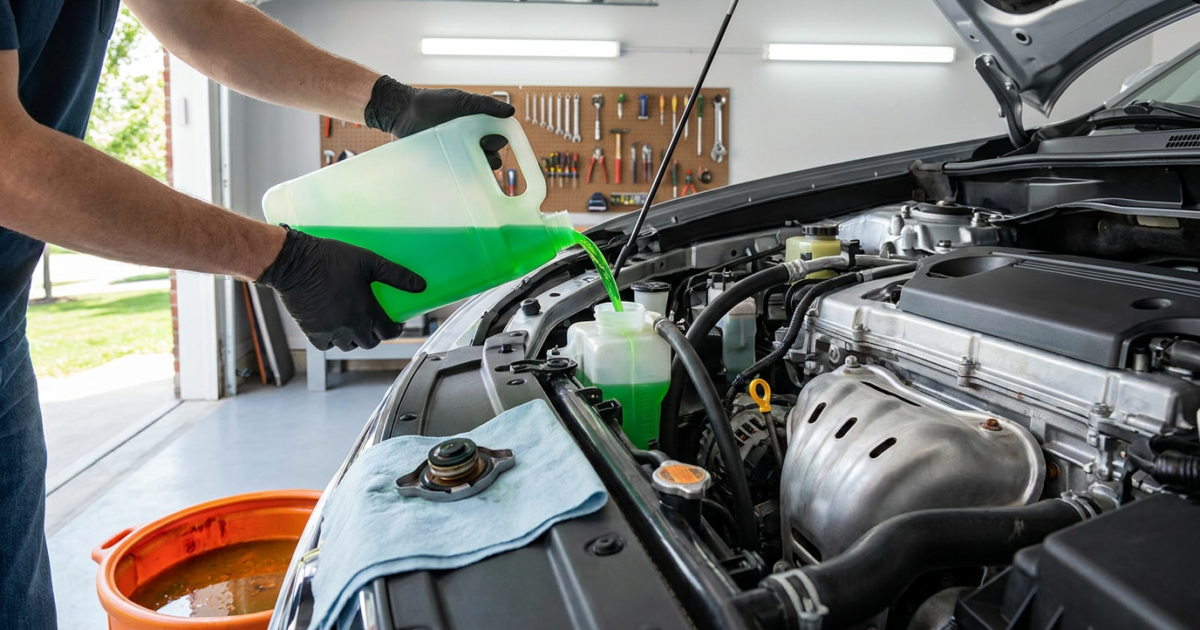
Pour the coolant slowly through the radiator opening using a funnel. Fill it until it reaches the top, then fill the coolant reservoir to the “MAX” line. Leave the radiator cap off for now.
Step 7: Bleed the Air Out of the System
Air pockets in the cooling system can cause hot spots and inaccurate temperature readings. To bleed the air out, start the engine with the radiator cap off and let it idle. Watch the coolant level — as the thermostat opens and coolant circulates, you’ll see the level drop and bubbles may appear. Add more coolant as needed to keep the level topped up.
Once the engine reaches operating temperature and the thermostat opens (you’ll see coolant start moving in the radiator), let it run for another 5 minutes. Then turn on the heater inside the car to full heat — this opens the heater core circuit and purges any air trapped there.
Step 8: Replace the Cap and Check for Leaks
Once the coolant is circulating properly and the level is stable, replace the radiator cap securely. Let the engine run for another 5 minutes and check underneath the car and around all hose connections for any leaks. A small drip now is much easier to deal with than a leak on the highway.
After the engine cools back down, check the coolant level one more time and top it off if needed. You’re done.
Common Mistakes to Avoid
Even experienced DIYers make these errors. Here’s what to watch out for when you flush a radiator at home:
- Using tap water: Tap water contains minerals that leave deposits inside the cooling system. Always use distilled water.
- Mixing coolant types: Different coolant formulas (green, orange, pink) use different corrosion inhibitors and should not be mixed. Stick to the type specified in your owner’s manual.
- Skipping the reservoir: The coolant reservoir holds a significant amount of old fluid. If you don’t flush it, you’re contaminating your fresh coolant immediately.
- Not bleeding the air: Air pockets cause overheating and inaccurate temperature gauge readings. Always bleed the system after refilling.
- Opening the cap on a hot engine: This is the most dangerous mistake. Always wait for the engine to cool completely.
How Often Should You Flush Your Radiator?
The general rule of thumb is every 2 years or 30,000 miles for conventional green coolant, and every 5 years or 50,000 miles for extended-life coolants (orange, pink, or blue). However, your driving conditions matter too. If you frequently tow heavy loads, drive in extreme heat, or do a lot of stop-and-go city driving, consider flushing more frequently.
A quick visual check every few months takes 30 seconds and can tell you a lot. Pull out the dipstick — if the coolant looks brown, smells burnt, or has visible particles floating in it, it’s time for a flush regardless of mileage.
How Much Does It Cost to Flush a Radiator at Home?
Doing it yourself is significantly cheaper than going to a shop. Here’s a rough breakdown:
- Pre-mixed coolant (1 gallon): $15–$25
- Radiator flush solution: $8–$15
- Distilled water (1 gallon): $1–$2
- Drain pan (if you don’t have one): $10–$20
Total DIY cost: roughly $25–$50. A shop will typically charge $100–$150 for the same service. Over the life of your vehicle, doing it yourself adds up to real savings.
Final Thoughts
Learning how to flush a radiator at home is one of the most practical skills a car owner can have. It’s not complicated, it doesn’t require expensive tools, and it directly protects one of the most critical systems in your vehicle. A clean cooling system means a longer-lasting engine, better fuel efficiency, and fewer unexpected repair bills.
If you’re already comfortable doing basic maintenance like oil changes and brake pad installation, a radiator flush is a natural next step. And if you want to keep your car running as long as possible, check out our guide on low maintenance used cars for daily use — some vehicles are simply easier to maintain than others.
For more detailed information on coolant types and cooling system maintenance, the team at AutoZone’s DIY guide and The Home Depot’s radiator flush guide are excellent resources worth bookmarking.
Set a reminder, grab your supplies, and give your cooling system the attention it deserves. Your engine will thank you for it.
About The Author