
Solar Panel Installation Guide for Beginners
Thinking about going solar but not sure what the installation process actually involves? You are not alone. For most homeowners, a solar panel installation is one of the largest home improvement projects they will ever undertake — and understanding what happens from start to finish can make the whole experience far less intimidating.
This beginner-friendly guide walks you through every stage of a typical residential solar installation, so you know exactly what to expect before, during, and after the work is done.

Before the Installation Begins: What You Need to Know
A solar installation is not something that happens overnight. From your first conversation with an installer to the day your system is switched on, the process typically takes between four and twelve weeks. Most of that time is not spent on the roof — it is spent on planning, permitting, and utility coordination.
Here is what the full process looks like from beginning to end.
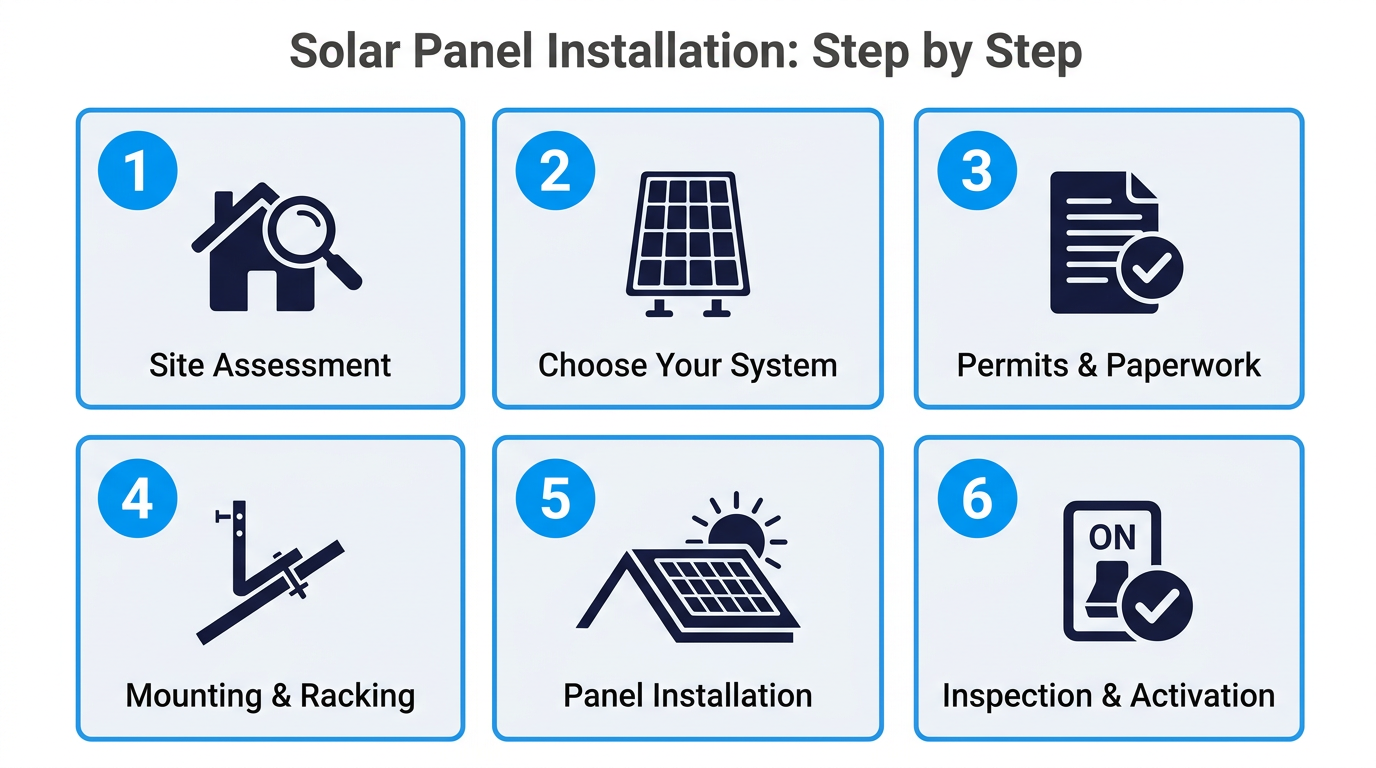
The 6 Steps of a Residential Solar Panel Installation
Step 1: Site Assessment
Every installation begins with a site assessment. A qualified solar installer will visit your home to evaluate your roof’s condition, orientation, pitch, and shading. They will also review your electricity bills to understand your energy usage and size the system accordingly.
Key things assessed during this stage include:
- Roof age and structural integrity
- Direction the roof faces (south-facing is ideal in the Northern Hemisphere)
- Shading from trees, chimneys, or neighboring buildings
- Available roof space for the number of panels needed
- Electrical panel capacity and location
Step 2: System Design and Equipment Selection
Based on the site assessment, your installer will design a system tailored to your home and energy needs. This includes selecting the type and number of solar panels, the inverter, and any optional components like a battery storage system.
You will receive a detailed proposal showing the expected system size (measured in kilowatts), estimated annual energy production, projected savings, and total cost after incentives. This is the stage where you review, ask questions, and sign the contract.
Step 3: Permits and Paperwork
Before any physical work begins, your installer handles the permitting process on your behalf. Most residential solar installations require a building permit from your local municipality and an interconnection application submitted to your utility company.
This stage is often the longest part of the process — permit approval timelines vary widely by location, from a few days to several weeks. Your installer manages all of this, so you do not need to do anything except wait for approval.
Step 4: Mounting and Racking
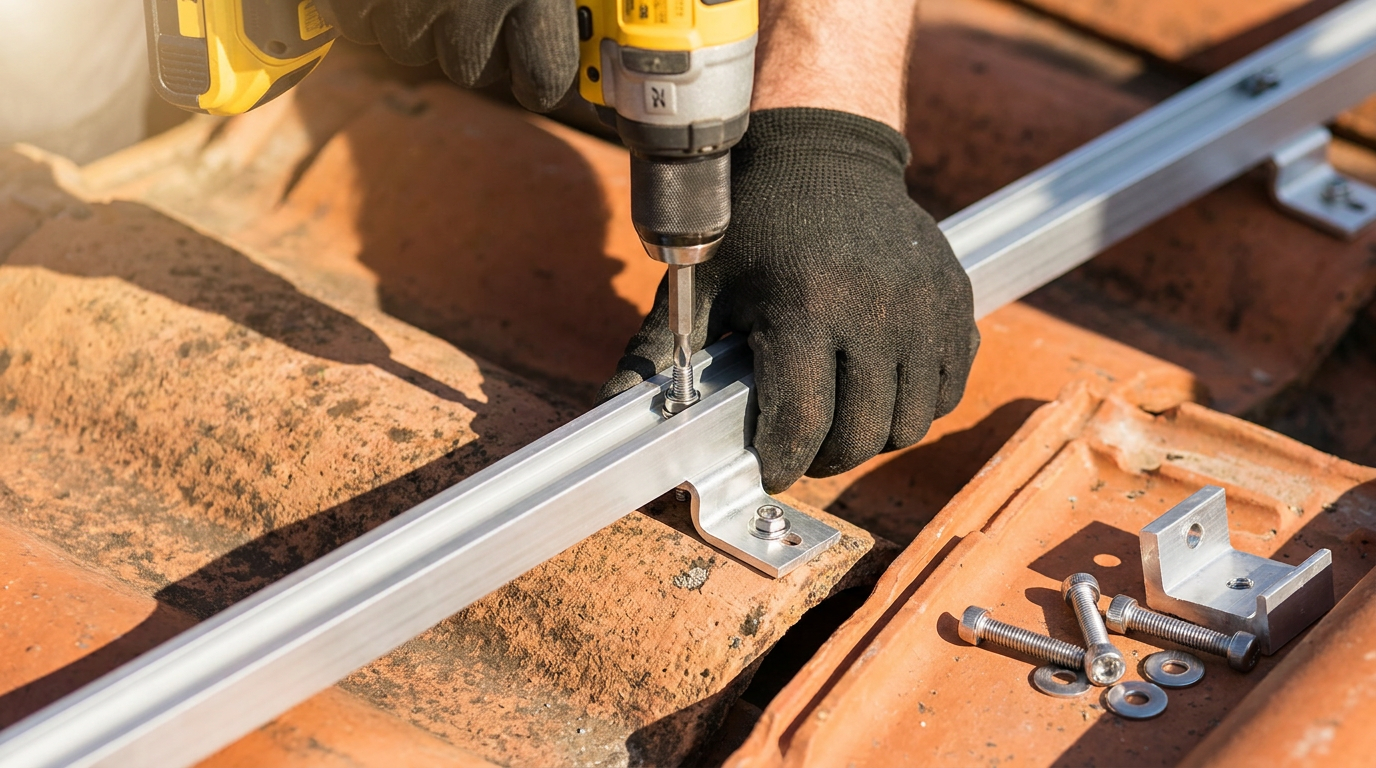
Once permits are approved, the physical installation begins. The first task is installing the racking system — the aluminum framework that holds your solar panels securely to the roof.
Installers attach mounting brackets directly to your roof’s rafters, then secure aluminum rails across them. This racking system is engineered to withstand decades of wind, rain, and weather. Proper installation at this stage is critical — it is the foundation everything else rests on.
Step 5: Panel Installation and Wiring
With the racking in place, the solar panels are mounted onto the rails and secured with clamps. Each panel is then wired together in a configuration designed to optimize output for your specific roof layout.
The wiring runs from the panels down into your home to the inverter, which converts the DC electricity generated by the panels into the AC electricity your home uses. The inverter is typically installed in your garage, utility room, or on an exterior wall near your electrical panel.
Step 6: Inspection and Activation
Before your system can be turned on, it must pass a final inspection by your local building authority and receive approval from your utility company to connect to the grid. An inspector will verify that the installation meets all local electrical and building codes.
Once approved, your utility company installs a new bi-directional meter (if you do not already have one) and gives the green light to activate the system. Your installer flips the switch, and your solar panels begin generating electricity for your home.
How Long Does Solar Panel Installation Take?
- Site assessment: 1–2 hours on-site
- System design and contract: 1–2 weeks
- Permitting: 2–8 weeks (varies by location)
- Physical installation: 1–3 days on your roof
- Inspection and activation: 1–4 weeks after installation
The actual rooftop work is surprisingly fast — most residential systems are fully installed in one to three days. The waiting time is almost entirely in the permitting and utility approval stages, which your installer handles for you.
Tips for a Smooth Solar Installation
- Get multiple quotes. Compare at least three installers before signing. Look at equipment quality, warranty terms, and company reputation — not just price.
- Check your roof first. If your roof is more than 15 years old or in poor condition, consider replacing it before installing solar. Removing and reinstalling panels later adds significant cost.
- Ask about monitoring. Most modern systems include an app or online portal that lets you track your system’s real-time energy production. Make sure your installer sets this up before they leave.
- Understand your warranty. Quality solar panels come with a 25-year performance warranty. Your installer should also provide a workmanship warranty covering the installation itself.
Conclusion
A solar panel installation is a well-defined, professionally managed process — and for most homeowners, the hardest part is simply waiting for permits to come through. Once the crew arrives, the physical work is typically done in a day or two, and within weeks you will be generating your own clean electricity.
Ready to learn more? Start with how solar panels work for homes, explore the types of solar panels available, and find out about the cost of solar panels and what to expect. For official guidance, visit the U.S. Department of Energy homeowner solar guide.
About The Author