Struts are one of the most important — and most misunderstood — components of your vehicle’s suspension system. They do not just absorb bumps. They are a structural part of the suspension that also affects steering geometry, tire wear, and braking performance. Picking the right struts for your vehicle means understanding what type of strut your car uses, what performance level you need, and which brands offer reliable quality at a fair price.
This guide walks through everything you need to know to make the right choice — whether you are doing a basic OEM replacement or upgrading for better handling.
What Is a Strut and What Does It Do?
A strut is a combined unit that integrates a shock absorber inside a structural housing. Unlike a traditional shock absorber — which is a separate component that bolts between the suspension and the chassis — a strut is a load-bearing part of the suspension itself. It supports the weight of the vehicle, controls spring compression and rebound, and serves as the upper pivot point for the steering knuckle on the front axle.
Because struts are structural, they affect more than just ride comfort. Worn struts allow excessive body roll, increase stopping distances, cause uneven tire wear, and degrade steering precision. The National Highway Traffic Safety Administration (NHTSA) considers worn struts a safety issue, not just a comfort issue.
Signs You Need New Struts
- Bouncing after bumps: If the car continues to bounce two or more times after hitting a bump, the struts are no longer controlling spring rebound effectively.
- Nose-diving under braking: The front of the car dips sharply when you brake — a sign the front struts are worn.
- Body roll in corners: Excessive lean when turning indicates the struts are not controlling lateral movement.
- Uneven tire wear: Cupped or scalloped wear patterns around the tire circumference are a classic sign of worn struts allowing the tire to bounce against the road.
- Oil leaking from the strut body: Visible hydraulic fluid on the outside of the strut housing means the internal seal has failed.
- Clunking or knocking over bumps: Can indicate a worn strut mount or top bearing plate, which is part of the strut assembly.
Most struts last 50,000 to 100,000 miles depending on road conditions and driving style. If you are noticing any of the above symptoms and your vehicle has over 60,000 miles, struts are a strong candidate.
Types of Struts
OEM Replacement Struts
These are designed to match the original factory specifications exactly — same spring rate, same damping characteristics, same ride height. They are the right choice for most drivers who want to restore the vehicle to how it drove when new. Brands like Monroe, Gabriel, KYB, and Bilstein all offer OEM-equivalent replacement struts for most vehicles.
Performance / Sport Struts
Performance struts use stiffer spring rates and firmer damping to reduce body roll and improve handling response. They are a good choice if you drive aggressively or want sharper handling, but they come at the cost of a firmer ride on rough roads. Bilstein B6 and KYB Excel-G Sport are popular options in this category.
Adjustable / Coilover Struts
Coilovers replace the entire strut and spring assembly with a fully adjustable unit that allows you to set ride height, spring preload, and sometimes damping. They are primarily for enthusiast and track use. They are not appropriate for daily drivers seeking a comfortable ride and are significantly more expensive ($500 to $2,000+ per set).
Quick-Strut / Complete Strut Assemblies
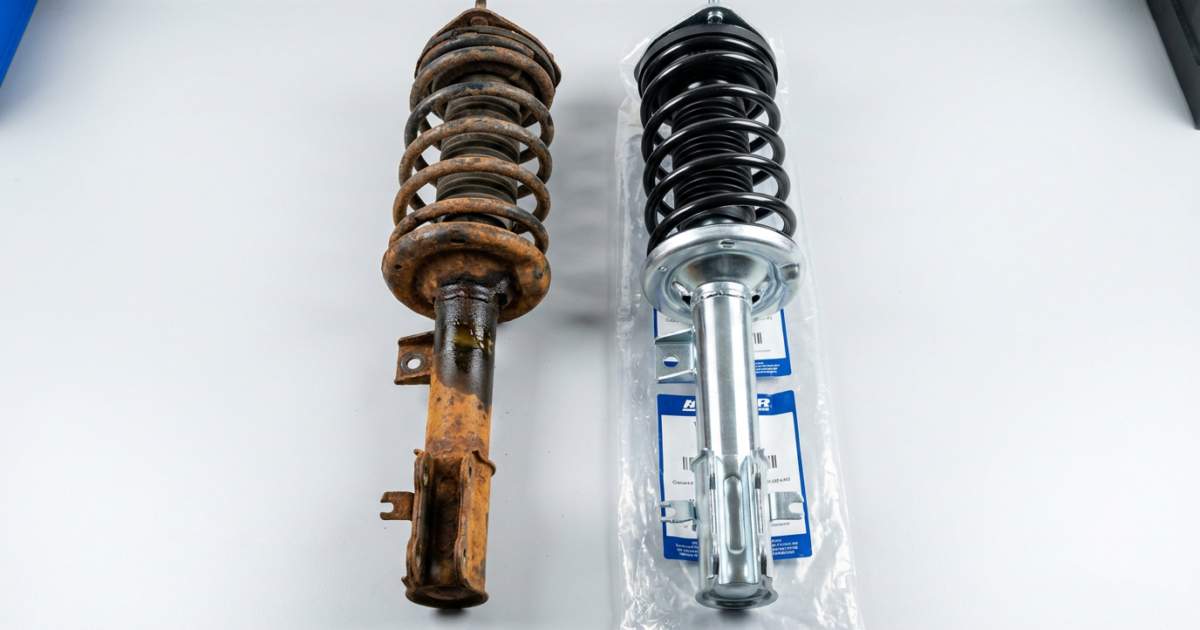
A complete strut assembly — sometimes called a Quick-Strut (Monroe’s brand name) — includes the strut, coil spring, upper mount, and bearing plate all pre-assembled. They cost more than a bare strut but eliminate the need for a spring compressor tool and significantly reduce installation time. For most DIYers, a complete assembly is the practical choice.
How to Choose the Right Strut for Your Vehicle
Step 1: Confirm Your Vehicle’s Fitment
Struts are vehicle-specific. Always search by year, make, model, and trim level. Some vehicles have different strut specifications for different trim levels — a base model and a sport trim may use different spring rates even if the strut body looks identical. Use a parts lookup tool at AutoZone, RockAuto, or the manufacturer’s website to confirm fitment before purchasing.
Step 2: Choose OEM Replacement or Upgrade
For most drivers, OEM-equivalent is the right answer. If you are replacing worn struts on a daily driver and want the car to ride and handle as it did when new, choose a quality OEM-equivalent strut from Monroe, KYB, or Gabriel. If you want improved handling and do not mind a firmer ride, consider Bilstein B6 or KYB Sport.
Step 3: Decide Between Bare Strut and Complete Assembly
If you are doing the job yourself and do not own a spring compressor, a complete strut assembly is strongly recommended. Compressing coil springs without the proper tool is dangerous — the spring stores enormous energy and can cause serious injury if it releases unexpectedly. Complete assemblies cost $80 to $200 per corner versus $40 to $100 for a bare strut, but the time and safety savings are worth it for most DIYers.
Step 4: Replace in Pairs
Always replace struts in axle pairs — both fronts together or both rears together. Replacing only one strut creates an imbalance in damping and spring rate from side to side, which causes the car to handle unevenly and can make it feel unpredictable in emergency maneuvers. The labor cost difference between replacing one and two struts is minimal since the car is already on the lift.
Recommended Brands
- Monroe: One of the most widely available brands, good OEM-equivalent quality, excellent parts availability. Monroe Sensa-Trac and Monroe OESpectrum are their best daily-driver lines.
- KYB: Japanese manufacturer with a strong reputation for quality and consistency. KYB Excel-G is their OEM-equivalent line; KYB Gas-a-Just is their performance option.
- Bilstein: German manufacturer known for premium quality and longevity. Bilstein B4 is OEM-equivalent; B6 is their performance upgrade. More expensive but widely considered the best in class for longevity.
- Gabriel: Budget-friendly option that meets OEM specs. Good for older vehicles where you do not want to spend more than the car is worth.
After Installing New Struts
Any time struts are replaced, a four-wheel alignment is required. Strut replacement changes the suspension geometry — even if only slightly — and driving on misaligned wheels will cause rapid, uneven tire wear. See our guide on wheel alignment vs. wheel balancing to understand what the alignment service involves and why it matters after suspension work.
Also check your tire tread after strut replacement — worn struts often cause cupped tire wear that may have already damaged the tires. Our post on how to check tire tread depth shows you how to assess whether your tires are still serviceable.
For independent technical guidance on strut selection, RockAuto’s parts catalog is an excellent resource for comparing fitment and pricing across brands, and Tire Rack’s suspension section includes customer reviews and performance ratings for most major strut brands.
Final Thoughts
Picking the right struts for your vehicle comes down to three decisions: OEM replacement vs. performance upgrade, bare strut vs. complete assembly, and which brand fits your budget and quality expectations. For most daily drivers, a quality OEM-equivalent complete strut assembly from Monroe, KYB, or Bilstein — replaced in pairs and followed by a wheel alignment — is the right answer. Get that combination right and your car will ride, handle, and stop the way it was designed to.
About The Author