How Solar Panels Work for Homes
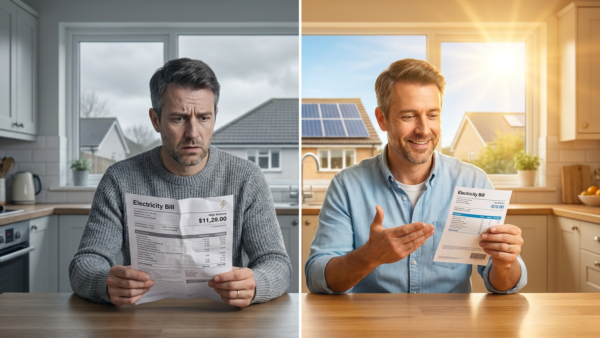
If you have ever looked at a neighbor’s rooftop and wondered what those dark panels actually do, you are not alone. Understanding how solar panels work for homes is the first step toward deciding whether a home solar system is right for you. The good news is that the process is simpler than most people think — and the benefits can be significant for your electricity bills and the environment.
This guide breaks down the entire process in plain language, from sunlight hitting the panel to powering your refrigerator, lights, and everything in between.
How Solar Panels Work for Homes: A Simple Overview
At the most basic level, solar panels convert sunlight into electricity. They do this using a technology called the photovoltaic (PV) effect — a process where certain materials produce an electric current when exposed to light.
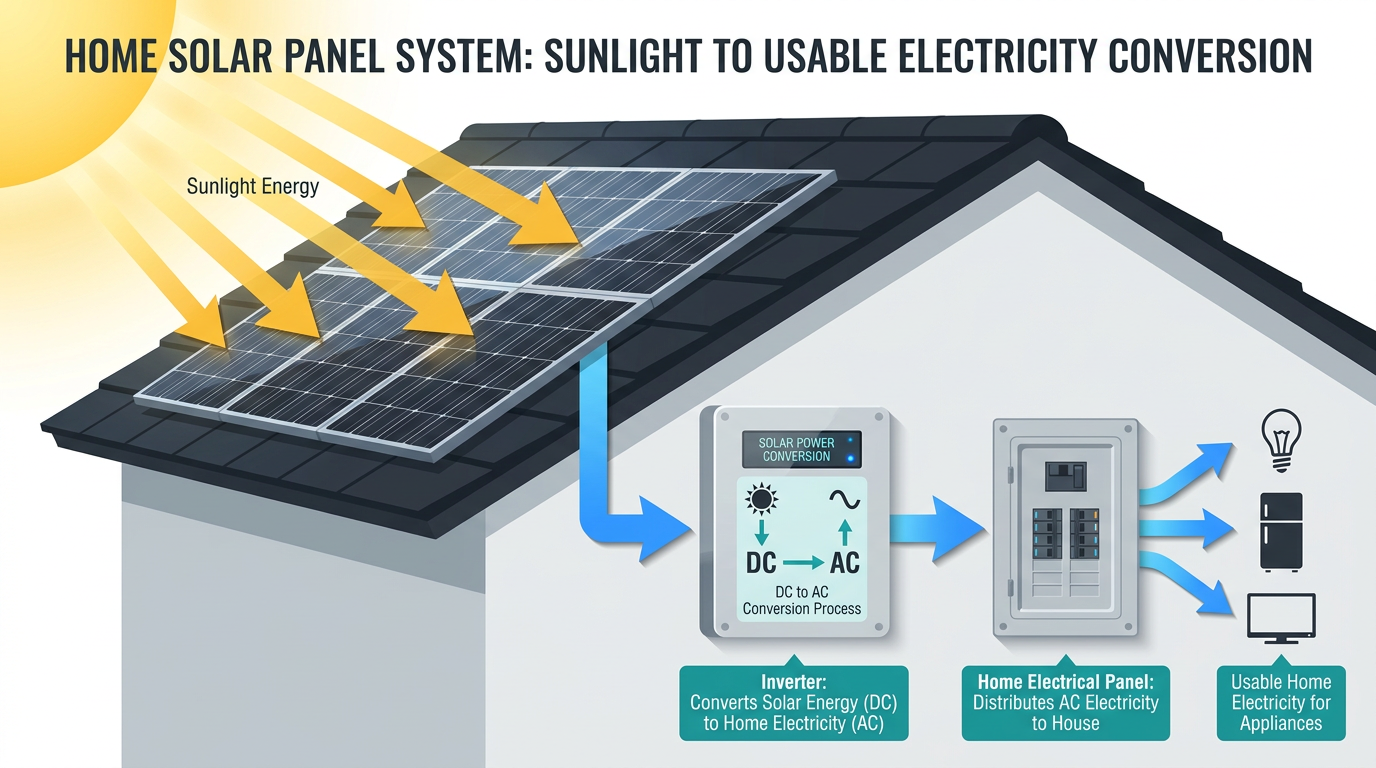
Here is the step-by-step process of how a home solar energy system works:
- Step 1 — Sunlight hits the panels: Solar panels are made up of many smaller units called solar cells. Each cell is made from silicon, a semiconductor material. When sunlight (photons) strikes the silicon cells, it knocks electrons loose and creates an electric current.
- Step 2 — DC electricity is produced: The current produced by the solar cells is called direct current (DC) electricity. This is the same type of electricity that batteries produce.
- Step 3 — The inverter converts DC to AC: Most home appliances run on alternating current (AC) electricity. A device called an inverter converts the DC electricity from your panels into AC electricity that your home can use.
- Step 4 — Electricity powers your home: The converted AC electricity flows through your home’s electrical panel and powers your lights, appliances, heating and cooling systems, and everything else that runs on electricity.
- Step 5 — Excess electricity is handled: If your panels produce more electricity than your home needs at that moment, the excess can be stored in a battery system or sent back to the utility grid — often earning you credits on your electricity bill through a program called net metering.
The Main Components of a Home Solar System
A complete home solar energy system is made up of several key components working together. Understanding each part helps you see the full picture of how the system operates.
Solar Panels
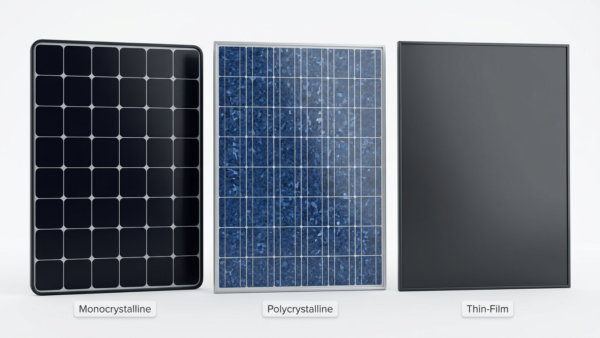
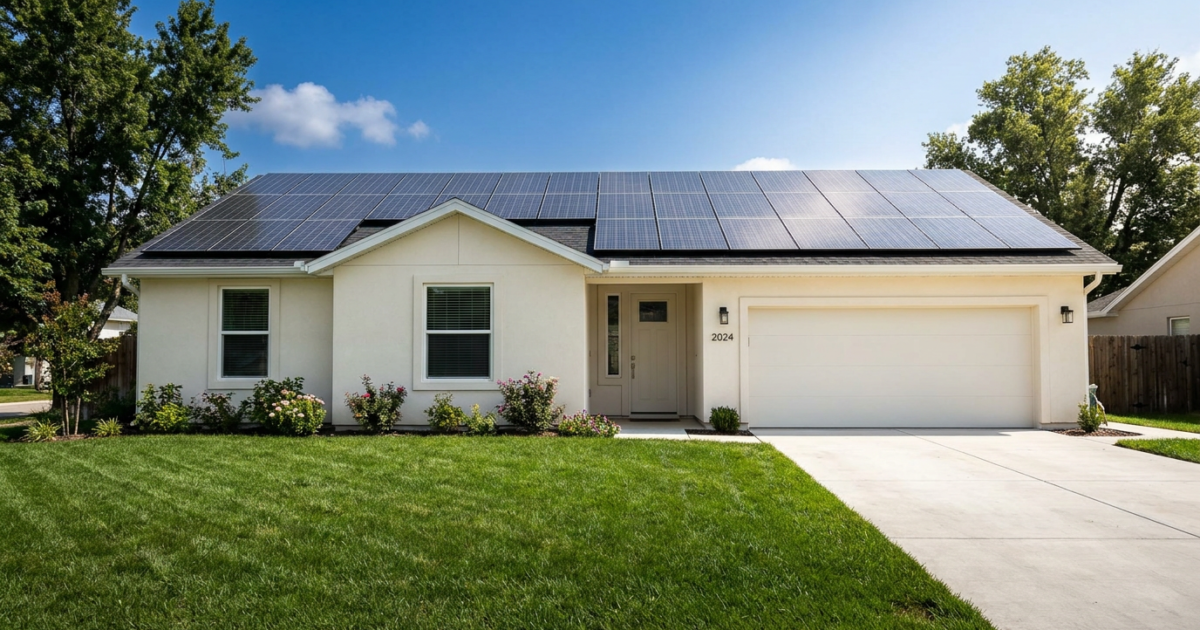
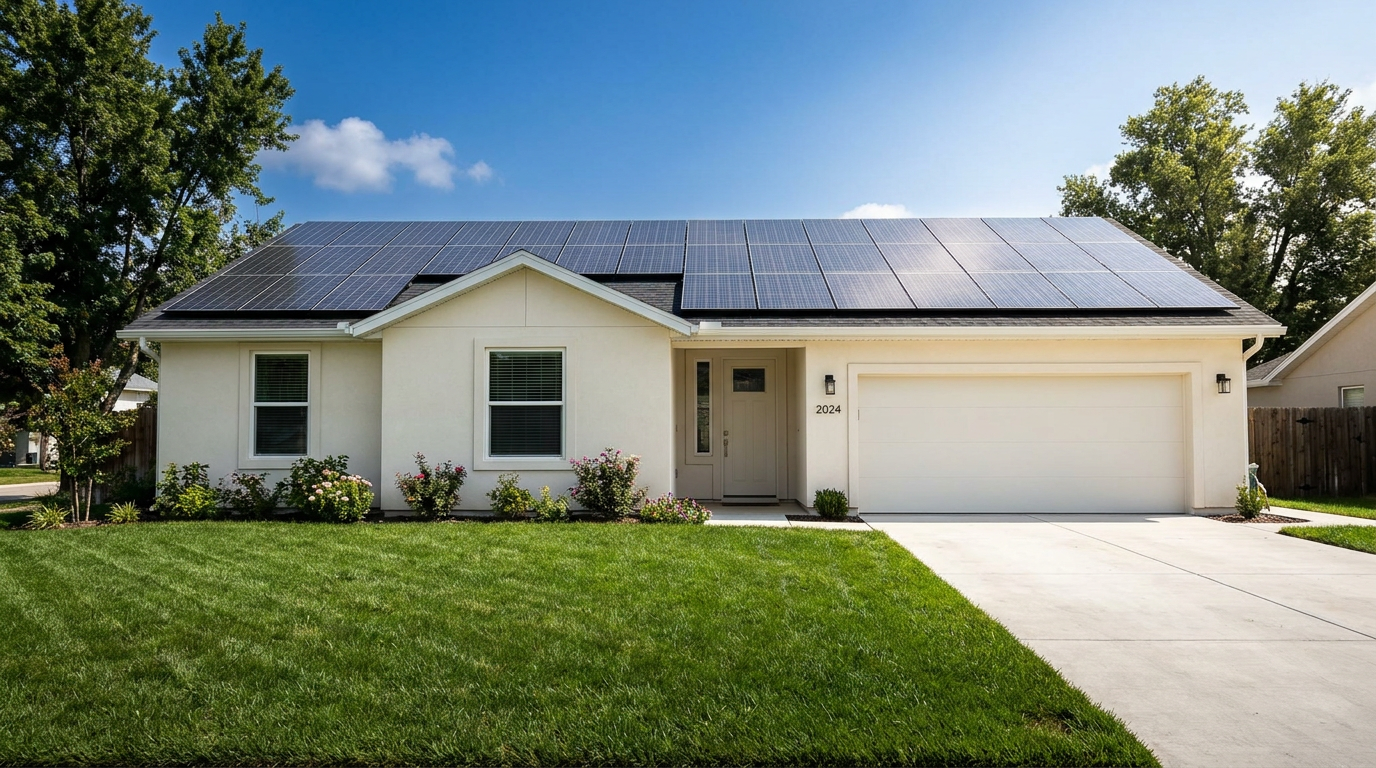
The panels themselves are the most visible part of the system. They are typically installed on the roof at an angle that maximizes sun exposure. Each panel contains dozens of solar cells connected together. The more panels you have, the more electricity your system can generate.
Inverter
The inverter is the brain of the system. It converts DC electricity from the panels into AC electricity for your home. There are two main types: a string inverter (one central unit for all panels) and microinverters (a small unit attached to each individual panel). Microinverters tend to be more efficient, especially if part of your roof is shaded at certain times of day.
Electrical Panel (Breaker Box)
The converted AC electricity flows into your home’s existing electrical panel, which distributes it to all the circuits in your home — just like electricity from the utility grid would.
Utility Meter
Your utility meter tracks how much electricity you use from the grid and, if you have net metering, how much excess solar electricity you send back. A bidirectional meter can measure electricity flowing in both directions.
Battery Storage (Optional)
A home battery system, such as a Tesla Powerwall or similar product, stores excess solar electricity for use at night or during a power outage. While not required, battery storage adds energy independence and backup power capability to your solar system.
How Solar Panels Work for Homes on Cloudy Days
One of the most common questions people ask is: do solar panels still work when it is cloudy? The answer is yes — though at reduced efficiency.
Solar panels generate electricity from daylight, not just direct sunlight. On overcast days, panels typically produce around 10 to 25 percent of their normal output, depending on how thick the cloud cover is. This is still meaningful electricity generation, and many homeowners in cloudy climates — including Germany, one of the world’s leading solar markets — successfully use solar energy year-round.
Rain can actually be beneficial, as it helps clean dust and debris off the panels, improving their efficiency once the sun returns.
How Solar Panels Work for Homes: Net Metering Explained
Net metering is a billing arrangement with your utility company that makes home solar even more valuable. Here is how it works:
- During the day, your solar panels often produce more electricity than your home uses — especially in the middle of the day when the sun is strongest but your household demand may be lower.
- That excess electricity is sent to the utility grid, and your meter runs backward (or a bidirectional meter records the export).
- At night or on cloudy days when your panels produce less than you need, you draw electricity from the grid as normal.
- At the end of the billing period, you are only charged for the net electricity you consumed — the difference between what you used from the grid and what you sent back.
Net metering policies vary by state and utility company, but where available, they can dramatically reduce or even eliminate your monthly electricity bill.

Common Questions About How Solar Panels Work for Homes
How long do solar panels last?
Most solar panels are designed to last 25 to 30 years. They do not stop working after that point — they simply become slightly less efficient over time. Most manufacturers guarantee at least 80 percent of original output after 25 years.
Do solar panels require a lot of maintenance?
Solar panels have no moving parts, which means they require very little maintenance. An occasional rinse with a garden hose to remove dust and debris is usually sufficient. Most systems also come with monitoring software that alerts you if a panel is underperforming.
How much electricity can a home solar system produce?
This depends on the size of the system, the angle and orientation of your roof, your location, and local weather patterns. A typical residential system ranges from 5 to 10 kilowatts (kW) and can offset a significant portion of an average household’s electricity use.
Can solar panels power an entire home?
Yes, in many cases. Whether your system fully covers your electricity needs depends on the size of the system relative to your household’s consumption. Many homeowners size their system to cover 80 to 100 percent of their average monthly usage.
Conclusion
Understanding how solar panels work for homes does not require an engineering degree. Sunlight hits the panels, creates DC electricity, the inverter converts it to AC, and your home runs on clean solar energy. Any excess goes to the grid or a battery for later use.
Now that you understand the basics of how the system works, you are ready to explore the next steps. Learn about the benefits of installing solar panels, explore the types of solar panels available, and when you are ready, check out our solar panel installation guide for beginners. For official resources, visit the U.S. Department of Energy’s guide to going solar.
About The Author