Brake pad replacement is one of the best first DIY car repairs you can tackle. It does not require a lift, specialized training, or expensive equipment. With basic tools, a free afternoon, and this guide, you can replace brake pads yourself and save $150 to $300 per axle in labor costs. More importantly, you will know exactly what went into your brakes — and that is worth something.
This guide walks you through the complete process from start to finish, including the tools you need, signs that your pads are due for replacement, and the step-by-step procedure for a standard disc brake system — which covers the vast majority of passenger cars and trucks on the road today.
Signs Your Brake Pads Need Replacing
Before you pull out the jack, confirm your pads actually need replacing. Here is what to look and listen for:
- Squealing or squeaking when braking: Most brake pads have a built-in wear indicator — a small metal tab that contacts the rotor when the pad wears thin and produces a high-pitched squeal. This is your first warning.
- Grinding noise: If you hear metal-on-metal grinding, the pad friction material is gone and the metal backing plate is contacting the rotor. Replace immediately — your rotors may already be damaged.
- Vibration or pulsing when braking: Can indicate worn pads combined with warped rotors.
- Longer stopping distances: If your car takes noticeably more distance to stop, brake pad wear is a likely cause.
- Visual inspection: Look through the wheel spokes at the brake caliper. The pad should be at least 3mm thick (about 1/8 inch). If it looks paper-thin, it is time.
Tools and Materials You Will Need
Tools:
- Floor jack and two jack stands (never work under a car supported only by a jack)
- Lug wrench or impact wrench
- Socket set (metric or SAE depending on your vehicle)
- C-clamp or brake caliper piston tool
- Wire brush
- Torque wrench
- Brake cleaner spray
- Clean rags
Parts and supplies:
- New brake pads (always replace both sides of an axle — never just one wheel)
- Brake caliper grease or anti-squeal lubricant
- Turkey baster or brake fluid syringe (to remove excess fluid from reservoir)
Brake pads for most vehicles cost $25 to $80 per axle set. Buy from a reputable brand — Akebono, Bosch, Wagner, and EBC are all solid choices for street driving.
Step-by-Step: How to Replace Brake Pads Yourself
Step 1: Loosen the Lug Nuts Before Jacking
With the car still on the ground, use your lug wrench to break the lug nuts loose — just one quarter turn each. Do not remove them yet. The weight of the car keeps the wheel from spinning while you break them free. Trying to loosen lug nuts after the wheel is in the air is a frustrating mistake.
Step 2: Jack Up the Car and Secure It
Consult your owner’s manual for the correct jack points — typically reinforced areas along the frame or pinch welds. Place the floor jack under the correct point, raise the car, then immediately place a jack stand under a solid frame point. Lower the car onto the jack stand. Never work under a car supported only by a floor jack — hydraulic jacks can fail.
Step 3: Remove the Wheel
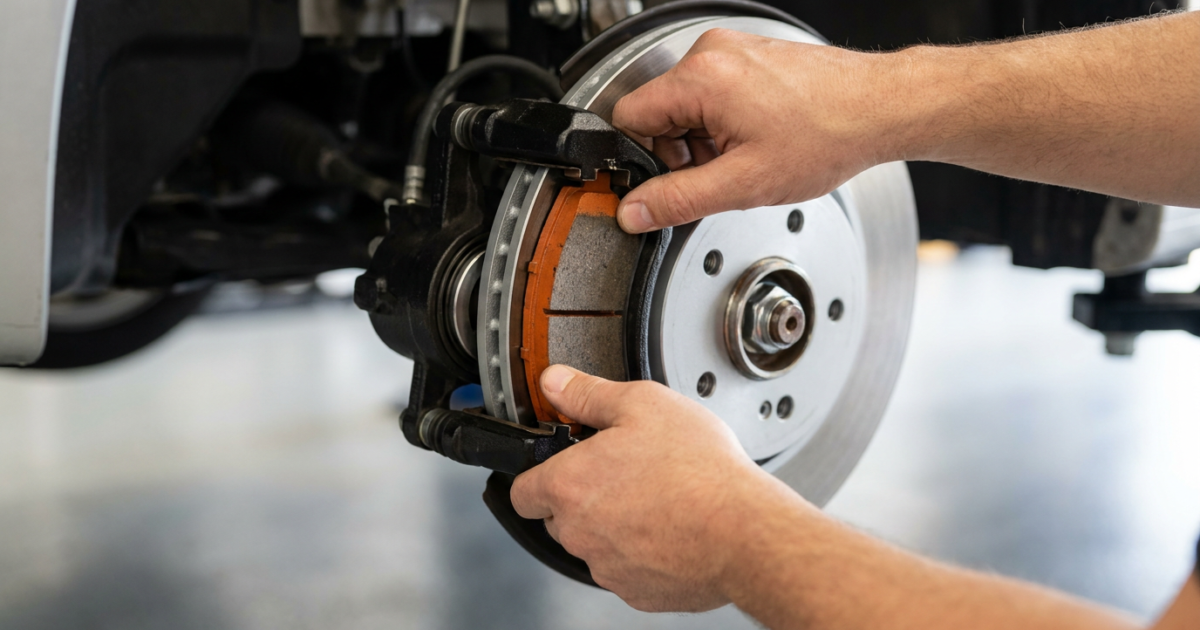
Finish removing the lug nuts and pull the wheel off. Set it aside flat so it does not roll. Now you have full access to the brake assembly: the rotor (the large disc), the caliper (the clamp that squeezes the pads), and the caliper bracket (the mounting frame).
Step 4: Remove the Caliper Bolts
The caliper is held to the bracket by two bolts — typically 12mm or 14mm on most vehicles. Remove both bolts and slide the caliper off the rotor. Do not let it hang by the brake hose — the hose can be damaged. Use a piece of wire or a bungee cord to hang the caliper from the spring or suspension component above it.
Step 5: Remove the Old Brake Pads
The old pads will either clip into the caliper or sit in the caliper bracket. Note exactly how they are positioned before removing them — take a photo with your phone. Slide or pop the old pads out. Inspect the rotor surface while you have access: light surface rust is normal, but deep grooves or scoring means the rotor should be replaced or resurfaced.
Step 6: Compress the Caliper Piston
New brake pads are thicker than worn ones, so the caliper piston needs to be pushed back into its bore to make room. First, remove some brake fluid from the reservoir under the hood using a turkey baster — compressing the piston pushes fluid back up into the reservoir, and if it is full, it will overflow.
Place the old brake pad against the piston face (to protect it), then use a C-clamp to slowly compress the piston back into the caliper until it is fully seated. On rear calipers with integrated parking brakes, the piston often needs to be rotated while being compressed — a caliper wind-back tool is needed for these.
Step 7: Clean and Lubricate the Bracket
Use a wire brush to clean the caliper bracket contact points — the areas where the pad ears slide. Remove rust and debris. Apply a thin layer of brake caliper grease to these contact points only. Do not get any grease on the rotor surface or the pad friction material — contaminated pads must be replaced.
Step 8: Install the New Brake Pads
Slide the new pads into position in the caliper bracket. Most pads have an inner pad (facing the piston) and an outer pad (facing the rotor from the outside) — they are often different shapes, so they only fit one way. Some pads come with shims or anti-squeal backing plates — install these as directed in the pad packaging.
Step 9: Reinstall the Caliper
Slide the caliper back over the new pads and rotor. Thread the caliper bolts in by hand first, then torque them to spec — typically 25 to 44 ft-lbs depending on the vehicle. Check your service manual or the torque spec printed on the caliper bolt packaging. Under-torqued caliper bolts are a serious safety hazard.
Step 10: Reinstall the Wheel and Torque the Lug Nuts
Mount the wheel, thread the lug nuts on by hand, then snug them in a star pattern. Lower the car off the jack stand, then torque the lug nuts to spec — typically 80 to 100 ft-lbs for most passenger vehicles. Always use a torque wrench for lug nuts, not an impact gun set to maximum.
Step 11: Bed the Brakes Before Driving Normally
Before driving, pump the brake pedal several times until it feels firm — this pushes the caliper pistons back out against the new pads. Then perform a brake bedding procedure: find an empty road, accelerate to 30 mph, and apply moderate brake pressure to slow to 5 mph without stopping completely. Repeat 5 to 6 times. This seats the pad material against the rotor and prevents glazing.
Common Mistakes to Avoid
- Replacing only one side: Always do both wheels on the same axle. Mismatched pad wear causes the car to pull to one side under braking.
- Forgetting to pump the brakes: If you drive away without pumping the pedal first, you will have no braking force on the first press — a dangerous surprise.
- Getting grease on the rotor or pad: Even a small amount of contamination dramatically reduces braking performance. If this happens, clean the rotor with brake cleaner and replace the pad.
- Skipping the torque wrench: Caliper bolts and lug nuts must be torqued to spec. Loose caliper bolts can cause the caliper to shift under braking; over-torqued lug nuts can warp rotors or break studs.
When to Replace Rotors Too
While you have the wheel off, inspect the rotor. Replace it if you see deep grooves, heavy scoring, cracks, or if the rotor thickness is below the minimum spec stamped on the rotor edge. Many mechanics recommend replacing rotors and pads together — a new pad on a deeply grooved rotor will wear unevenly and may never seat properly.
For more on keeping your car’s safety systems in top shape, check out our guide on how to check tire tread depth — another quick DIY safety check that takes under two minutes. And if your car has been showing other warning signs, our post on what causes engine knocking covers another common issue worth understanding.
For authoritative torque specs and vehicle-specific procedures, O’Reilly Auto Parts’ brake replacement guide and Haynes’ DIY brake pad guide are both excellent references with vehicle-specific detail.
Final Thoughts
Learning to replace brake pads yourself is one of the most practical skills a car owner can develop. The job takes about one to two hours for a first-timer, costs a fraction of what a shop charges, and gives you direct knowledge of your car’s most critical safety system. Follow the steps carefully, torque everything to spec, and bed the brakes properly — and you will have a repair that performs just as well as anything a shop would deliver.
About The Author