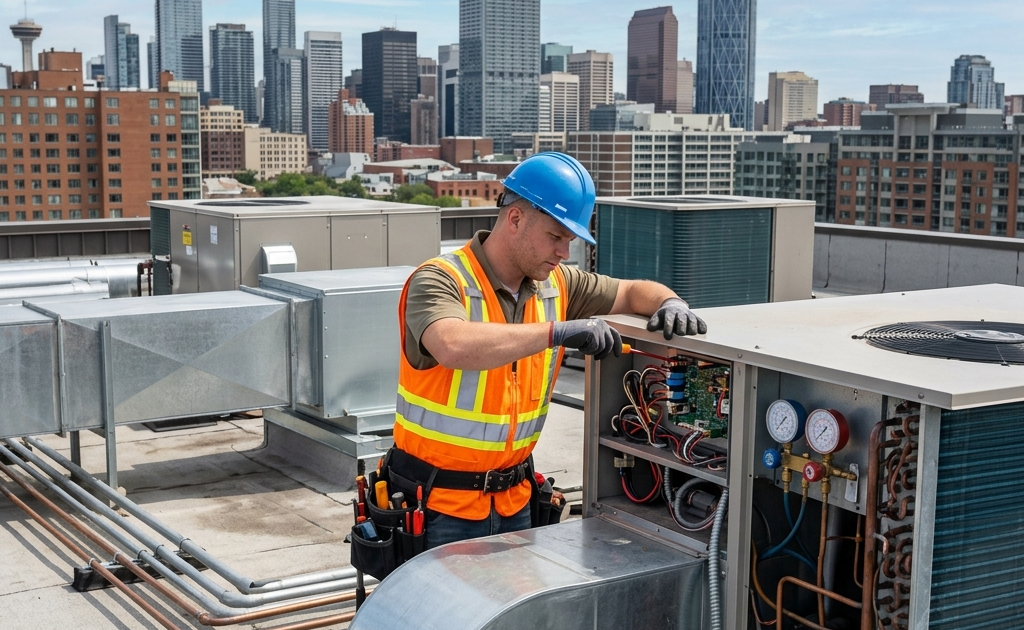
The HVAC industry is large and varied, but within it, commercial HVAC technician jobs occupy a distinct and particularly rewarding niche. Commercial work involves larger, more complex systems, higher technical demands, and — in most markets — significantly better compensation than residential work. For technicians ready to step up, the commercial sector offers some of the best opportunities in the trade.
What Makes Commercial HVAC Work Different
The fundamental difference between residential and commercial HVAC work isn’t just the size of the equipment — it’s the complexity of the systems and the stakes involved. A residential system failure is uncomfortable for a family. A commercial system failure can shut down a business, compromise a data center, or create compliance issues for a healthcare facility.
In commercial HVAC technician jobs, you’re typically working with:
- Rooftop units (RTUs) ranging from 5 to 50+ tons
- Chilled water systems with centrifugal or screw chillers
- Variable air volume (VAV) systems with complex controls
- Building automation systems (BAS) and direct digital controls (DDC)
- Commercial refrigeration in food service and cold storage applications
- Air handling units (AHUs) with complex filtration and humidity control
- Cooling towers and condenser water systems
- Heat recovery systems and energy management equipment
The technical depth required for commercial work is substantially greater than for residential. Technicians need strong electrical troubleshooting skills, the ability to read and interpret complex mechanical and electrical drawings, and familiarity with building automation and controls systems that residential technicians rarely encounter.
Types of Commercial HVAC Technician Jobs
The commercial HVAC sector encompasses several distinct types of roles, each with different day-to-day responsibilities and career trajectories:
Commercial Service Technician
Service technicians respond to equipment failures and perform preventive maintenance on commercial accounts. The work is diagnostic-heavy and requires the ability to troubleshoot complex systems quickly. Commercial service techs typically carry a larger, more sophisticated tool kit than residential technicians and need to be comfortable working at heights on rooftops and in mechanical rooms.
Commercial Installation Technician
Installation technicians work on new construction and major equipment replacement projects. The work is physically demanding and requires the ability to read construction drawings and coordinate with other trades. Commercial installation often involves working on a project schedule with defined milestones and deadlines.
Controls and BAS Technician
Building automation and controls technicians specialize in the digital systems that manage commercial HVAC equipment. This is one of the fastest-growing and highest-paying specializations in the commercial HVAC field. Controls technicians need strong IT skills in addition to HVAC knowledge, and the role increasingly overlaps with network administration and cybersecurity.
Chiller Technician
Chiller technicians specialize in large centrifugal and screw chillers used in major commercial and industrial facilities. This is a highly specialized role that commands premium compensation. Chiller technicians often work for equipment manufacturers or specialized service contractors and may travel extensively to service equipment at client sites.
Pay Rates for Commercial HVAC Technician Jobs
Compensation for commercial HVAC technician jobs is consistently higher than for comparable residential roles, reflecting the greater technical demands and the higher stakes of commercial work:
- Entry-level commercial technician — $25 to $35 per hour
- Experienced commercial service technician — $35 to $55 per hour
- Controls/BAS technician — $45 to $70 per hour
- Chiller technician — $50 to $80 per hour
- Union journeyman (commercial) — $45 to $75 per hour in major markets, plus comprehensive benefits
Many commercial employers also offer vehicle allowances or company vehicles, tool allowances, comprehensive health insurance, and retirement contributions. The total compensation package for an experienced commercial technician in a major market can easily exceed $100,000 annually when overtime is factored in.
Certifications That Matter for Commercial HVAC Jobs
Employers hiring for commercial HVAC technician jobs place significant weight on certifications that demonstrate technical competence. The most important include:
- EPA 608 Universal — Mandatory for any role involving refrigerant handling
- NATE certification — The Commercial Refrigeration, Air Distribution, and Light Commercial Refrigeration specialty tracks are particularly relevant. The NATE certification program is widely recognized by commercial employers as a meaningful credential.
- OSHA 30 — Required by most commercial employers; demonstrates awareness of workplace safety requirements
- Manufacturer certifications — Trane, Carrier, York, Daikin, and other major manufacturers offer training and certification programs that are highly valued by commercial service contractors
- Controls certifications — Honeywell, Johnson Controls, Siemens, and other BAS manufacturers offer certification programs for controls technicians
Making the Transition From Residential to Commercial
Many technicians start their careers in residential HVAC and transition to commercial work as they gain experience and credentials. The transition requires deliberate preparation:
- Build your electrical skills — Commercial work is more electrically intensive than residential. If your electrical troubleshooting skills are weak, invest in training before making the move.
- Get your OSHA 30 — Most commercial employers require it, and having it before you apply demonstrates that you’re serious about the transition.
- Learn to read commercial drawings — Mechanical and electrical drawings for commercial projects are more complex than residential plans. Practice reading them before you need to do it on the job.
- Consider a union apprenticeship — If you’re making a career change or transitioning from residential, a union apprenticeship can provide structured training in commercial systems and open doors to union commercial work.
- Target entry-level commercial roles — Don’t try to jump directly into a senior commercial service role. Look for positions that acknowledge your residential background and offer training in commercial systems.
The Long-Term Career Path in Commercial HVAC
For technicians who invest in their skills and credentials, commercial HVAC technician jobs offer a clear and rewarding long-term career path. Senior commercial technicians can advance into service management, project management, or technical sales roles. Controls specialists can move into building automation consulting or systems integration. And experienced commercial technicians with entrepreneurial ambitions can build their own commercial service businesses.
The commercial HVAC sector is also more insulated from economic downturns than residential work. Commercial buildings need to maintain their systems regardless of the economic climate, and long-term service contracts provide contractors with predictable revenue that sustains employment even when new construction slows.
If you’re currently in residential service and considering the move, our guide to Residential HVAC Service Jobs can help you assess where you are now, and our overview of Urgent Hiring: HVAC Mechanics shows the breadth of opportunities available across both sectors right now.
The commercial HVAC field rewards technicians who commit to continuous learning and professional development. If you’re willing to invest in your skills, the compensation and career opportunities are genuinely exceptional.
About The Author