The fuel pump is one of those components you rarely think about — until it fails. Responsible for delivering fuel from the tank to the engine at the correct pressure, a failing fuel pump can cause everything from poor performance and hard starts to a complete no-start condition. Understanding how long fuel pumps last, what shortens their lifespan, and how to recognize the warning signs can save you from an unexpected breakdown.
How a Fuel Pump Works
Modern vehicles use an electric fuel pump submerged inside the fuel tank. This in-tank design keeps the pump cool (fuel acts as a coolant) and provides a consistent fuel supply regardless of fuel level. The pump draws fuel through a strainer, pressurizes it, and delivers it through the fuel line to the fuel injectors at a precise pressure — typically 40–65 PSI for fuel-injected engines.
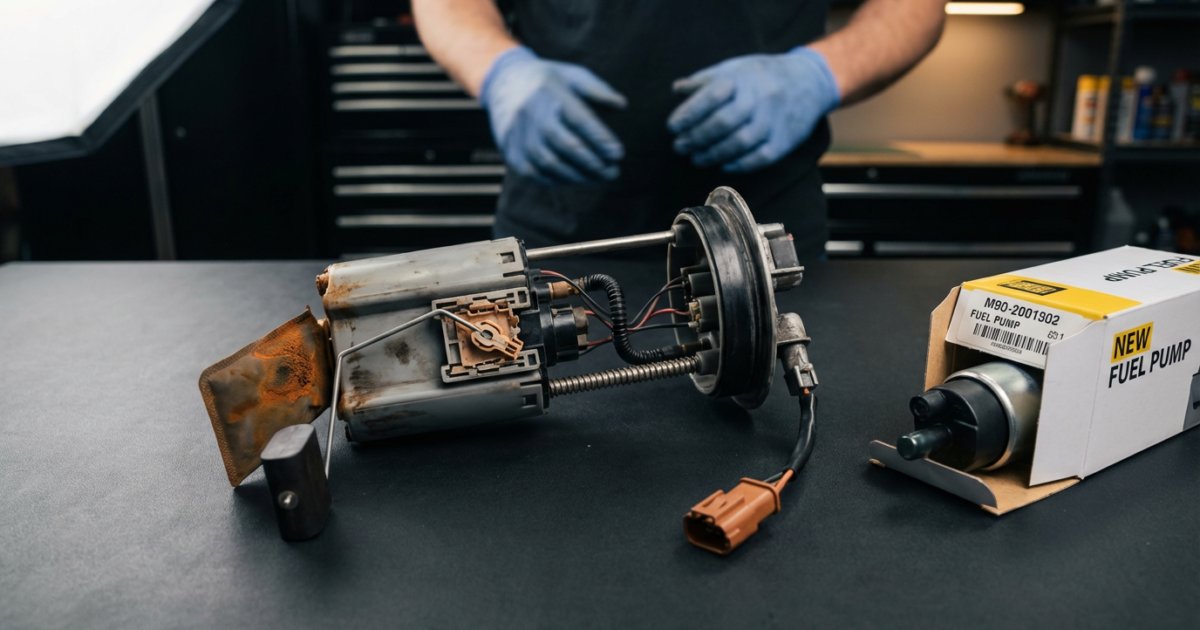
The fuel pump module typically includes the pump itself, a fuel level sending unit (which feeds your fuel gauge), a strainer/sock filter, and a pressure regulator. When any of these components fail, the entire module often needs replacement.
How Long Do Fuel Pumps Last?
A well-maintained fuel pump typically lasts 100,000 to 150,000 miles, and many last the full life of the vehicle. However, this varies significantly based on driving habits, fuel quality, and maintenance practices.
- Average lifespan: 100,000–150,000 miles
- Best case: 200,000+ miles with good maintenance
- Worst case: Under 50,000 miles with poor habits (running on low fuel, contaminated fuel)
Unlike some wear items (brake pads, tires), fuel pumps don’t have a scheduled replacement interval in most manufacturer maintenance schedules. They’re replaced on a condition basis — when they show symptoms or fail.
Factors That Shorten Fuel Pump Life
1. Running the Tank Low Frequently
This is the single biggest killer of fuel pumps. The pump relies on the surrounding fuel for cooling and lubrication. When the tank is consistently run below a quarter tank, the pump runs hotter and with less lubrication, accelerating wear. Make it a habit to refuel before the gauge drops below a quarter tank.
2. Contaminated Fuel
Dirt, rust particles, and water in the fuel tank can clog the pump strainer and damage the pump’s internal components. This is more common in older vehicles with aging fuel tanks or in areas where fuel quality is inconsistent.
3. Clogged Fuel Filter
A clogged fuel filter forces the pump to work harder to push fuel through the restriction, increasing heat and wear. Many modern vehicles have a lifetime fuel filter integrated into the pump module — but vehicles with a separate inline fuel filter should have it replaced every 30,000 miles.
4. Ethanol-Blended Fuels
High-ethanol fuels (E85 or even E15) can be harder on fuel system components not designed for them. Ethanol is more corrosive than gasoline and can degrade rubber seals and pump components in older vehicles. Always use the fuel type specified for your vehicle.
5. Electrical Issues
Voltage fluctuations, corroded connectors, or a weak battery can cause the pump to run at incorrect voltages, leading to premature failure. Ensure your charging system is healthy as part of regular maintenance.
Warning Signs of a Failing Fuel Pump
1. Engine Sputtering at High Speeds
If your engine sputters or surges at highway speeds but runs fine at lower speeds, the fuel pump may be struggling to maintain adequate pressure under high-demand conditions. This is often one of the first symptoms of a weakening pump.
2. Loss of Power Under Load
Noticeable power loss when accelerating hard, climbing hills, or towing is a classic fuel pump symptom. The engine isn’t getting enough fuel to meet the demand.
3. Hard Starting
A failing pump may not build adequate fuel pressure before startup, causing the engine to crank longer than normal before starting. You may also notice the engine starts more easily when the tank is full (more fuel available to the pump) than when it’s low.
4. Engine Stalling
Intermittent stalling — especially at idle or low speeds — can indicate the pump is failing to maintain consistent fuel pressure. The engine may restart after a few minutes as the pump cools down, only to stall again.
5. Whining Noise from the Fuel Tank
A healthy fuel pump produces a faint hum that’s barely audible. A failing pump often produces a loud whining or howling noise from the rear of the vehicle (where the fuel tank is located). This noise is a clear warning sign that the pump is struggling.
6. Decreased Fuel Economy
A pump delivering fuel at incorrect pressure can cause the engine to run rich (too much fuel) or lean (too little fuel), both of which reduce fuel economy. If your MPG has dropped without explanation, the fuel system is worth investigating.
7. No Start
Complete fuel pump failure results in a no-start condition. The engine cranks normally but won’t fire because there’s no fuel reaching the injectors. You can confirm this by checking for fuel pressure at the fuel rail — zero pressure with the pump running confirms pump failure.
Fuel Pump vs. Fuel Filter: Know the Difference
Many fuel pump symptoms overlap with a clogged fuel filter. Before replacing the pump, always check the fuel filter first — it’s much cheaper and easier to replace.
- Fuel filter symptoms: Gradual performance degradation, hard starting, reduced power — symptoms that worsen progressively over time
- Fuel pump symptoms: Intermittent issues, whining noise, sudden failure, symptoms that vary with fuel level
If your vehicle has a serviceable inline fuel filter, replace it before diagnosing the pump. A clogged filter can mimic pump failure and cause premature pump wear.
How to Test a Fuel Pump
Fuel Pressure Test
The most definitive test. Connect a fuel pressure gauge to the Schrader valve on the fuel rail (most fuel-injected engines have one). Key on, engine off — the pump should build pressure to the specified level (check your service manual). Start the engine and check pressure at idle and under load. Low or fluctuating pressure confirms a pump or pressure regulator issue.
Listen for the Pump
Turn the ignition to the “on” position without starting the engine. You should hear a brief hum from the fuel tank as the pump primes the system (usually 2–3 seconds). No sound at all suggests the pump isn’t receiving power or has failed completely.
Check Voltage at the Pump
With a multimeter, check voltage at the fuel pump connector while the ignition is on. Should be close to battery voltage (12V+). Low voltage indicates a wiring or relay problem rather than pump failure.
Fuel Pump Replacement Cost
- Parts: $100–$600 depending on vehicle. In-tank pump modules are more expensive than external pumps.
- Labor: $150–$400. In-tank pumps require dropping the fuel tank on most vehicles, which adds labor time.
- Total: $250–$1,000 at a shop.
Some vehicles (particularly many GM trucks and SUVs) have an access panel in the trunk or under the rear seat that allows pump replacement without dropping the tank — significantly reducing labor cost.
Tips to Extend Fuel Pump Life
- Keep the tank above a quarter full — the most impactful thing you can do for pump longevity
- Use quality fuel from reputable stations to minimize contamination
- Replace the fuel filter on schedule if your vehicle has a serviceable one
- Address fuel system issues promptly — a hard-to-start engine that causes repeated long cranking cycles stresses the pump
- Maintain your electrical system — a healthy battery and charging system ensures the pump receives proper voltage
Fuel system health is closely tied to overall engine oil and maintenance practices — a well-maintained engine puts less stress on all fuel system components.
Frequently Asked Questions
Can a fuel pump fail suddenly without warning?
Yes, though most pumps give warning signs before complete failure. Sudden failure is more common in pumps that have been running on low fuel frequently, as the accelerated wear can cause abrupt failure.
Can I drive with a weak fuel pump?
Temporarily, but it’s risky. A weak pump can fail completely at any time, leaving you stranded. Address the issue as soon as symptoms appear.
Does running out of gas damage the fuel pump?
Yes. Running completely out of fuel causes the pump to run without the cooling and lubrication provided by fuel, generating excessive heat. Doing this repeatedly significantly shortens pump life.
How do I know if it’s the fuel pump relay vs. the pump itself?
If the pump makes no sound at all when the ignition is turned on, check the fuel pump relay and fuse first — these are much cheaper to replace. If the relay and fuse are good but the pump still doesn’t run, the pump itself has likely failed.
Is it worth replacing just the pump or the whole module?
In most cases, replacing the entire fuel pump module (pump + sending unit + strainer) is the better value. The components wear together, and replacing just the pump often leads to the sending unit or strainer failing shortly after.
About The Author