A dead battery is one of the most common roadside emergencies — and one of the easiest to solve if you know what you are doing. Knowing how to jump-start a dead battery correctly takes about five minutes and can get you back on the road without waiting for a tow truck. Done wrong, it can damage your car’s electronics or, in rare cases, cause a battery to rupture. This guide covers the correct procedure, the right order for connecting cables, common mistakes to avoid, and what to do when a jump-start does not work.
What You Need to Jump-Start a Car
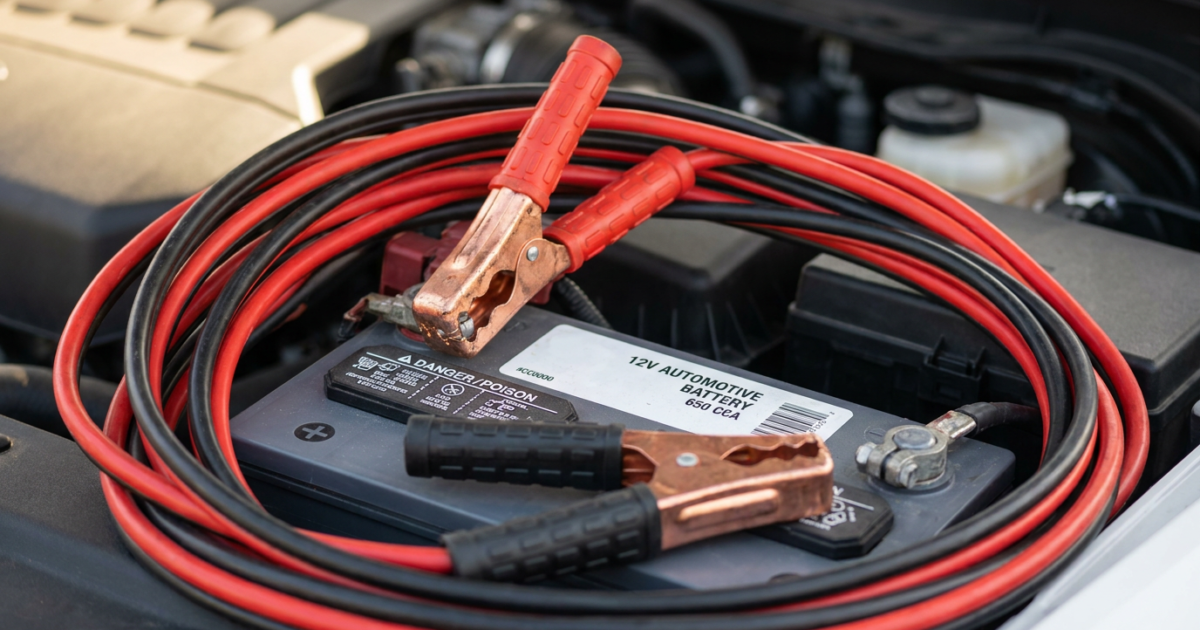
- Jumper cables: At least 10 feet long, 4 to 6 gauge thickness. Thicker cables (lower gauge number) transfer more current and work better on larger engines. Cheap thin cables can overheat on V8 engines.
- A working vehicle with a charged battery of similar voltage (12V for standard passenger cars)
- OR a portable jump starter pack — a lithium battery pack that lets you jump-start without a second vehicle. These are compact, affordable ($50–$100), and highly recommended to keep in your car.
Safety First: What to Check Before You Start
Before connecting anything, check the dead battery visually:
- Cracked or bulging case: Do not attempt to jump-start a physically damaged battery — it can leak acid or rupture under charge. Call for a tow.
- Heavy corrosion on terminals: White or blue-green buildup on the terminals can prevent a good connection. Clean it off with a wire brush or a rag before connecting cables.
- Frozen battery: In extreme cold, a fully discharged battery can freeze. A frozen battery should not be jump-started — it can crack or explode. Let it thaw first or replace it.
Also make sure both vehicles are turned off before connecting cables, and that neither car is touching the other.
The Correct Order: How to Connect Jumper Cables
The connection order matters. Getting it wrong can cause a spark near the battery or damage sensitive electronics. Follow this sequence exactly:
- Red cable to dead battery positive (+): Connect one red clamp to the positive terminal of the dead battery. The positive terminal is usually marked with a + symbol and is often larger than the negative terminal.
- Red cable to good battery positive (+): Connect the other red clamp to the positive terminal of the working battery.
- Black cable to good battery negative (-): Connect one black clamp to the negative terminal of the working battery.
- Black cable to unpainted metal ground on dead car: Connect the final black clamp to an unpainted metal surface on the engine block or chassis of the dead car — NOT to the negative terminal of the dead battery. A bolt on the engine block or a metal bracket works well. This prevents sparks near the battery where hydrogen gas can accumulate.
A simple way to remember the order: Red Dead, Red Donor, Black Donor, Black Ground.
Starting the Cars
- Start the working vehicle and let it run for 2 to 3 minutes. This allows the alternator to begin charging the dead battery through the cables.
- Try to start the dead vehicle. If it starts, great — move to the disconnection step. If it does not start after 3 to 4 attempts, wait another 5 minutes with the donor car running and try again.
- If it still does not start after 10 to 15 minutes of charging, the battery may be too far gone to accept a charge, or there may be another issue (bad alternator, starter failure, etc.).
How to Disconnect Jumper Cables (Reverse Order)
Disconnect in the exact reverse order of connection:
- Black clamp from the ground point on the previously dead car
- Black clamp from the negative terminal of the donor car
- Red clamp from the positive terminal of the donor car
- Red clamp from the positive terminal of the now-started car
Do this while both cars are running. Keep the cables from touching each other or any metal surfaces during removal.
After the Jump-Start: What to Do Next
A jump-start gets you running, but it does not fully recharge your battery. After a successful jump, drive the car for at least 30 minutes at highway speeds — not just around the block. This gives the alternator time to recharge the battery. Short trips after a jump-start often result in the battery dying again the next time you park.
If your battery dies again within a day or two, it needs to be tested and likely replaced. Most auto parts stores (AutoZone, O’Reilly, Advance Auto Parts) will test your battery and alternator for free. A standard 12V car battery lasts 3 to 5 years — if yours is older than that and dying, replacement is the right call.
Using a Portable Jump Starter Pack
Portable jump starter packs have become the preferred option for many drivers because they eliminate the need for a second vehicle. Modern lithium-ion jump starters are small enough to fit in a glove box and can jump-start most passenger cars and light trucks reliably.
The connection procedure is the same — red to positive, black to ground — but you connect to your own battery only, then start the car. Most units have built-in safety features that prevent reverse polarity connections. Keep the pack charged (check it every few months) and it will be ready when you need it.
Common Mistakes to Avoid
- Connecting black to the dead battery negative: This creates a spark risk near the battery. Always use a metal ground point on the engine or chassis instead.
- Connecting in the wrong order: Always red first, black last — both connecting and disconnecting.
- Letting the clamps touch each other while connected: This will cause a short circuit and can damage both vehicles.
- Trying to jump-start a visibly damaged battery: A cracked, bulging, or leaking battery is a safety hazard. Do not attempt it.
- Revving the donor engine aggressively: Unnecessary and can stress the donor car’s alternator. Idle or light throttle is sufficient.
- Driving only a short distance after the jump: The battery needs a sustained highway drive to recharge properly.
When a Jump-Start Does Not Work
If the car will not start after multiple attempts with good cables and a known-good donor battery, the problem may not be the battery at all:
- Bad alternator: If the alternator is not charging, the battery will die again immediately after the jump. A failing alternator often shows as a battery warning light on the dash.
- Failed starter motor: If you hear a single click or nothing at all when you turn the key, the starter may have failed — not the battery.
- Completely dead battery that will not accept charge: Very old or deeply discharged batteries sometimes cannot be recovered with a jump-start and need replacement.
- Blown fuse: Some vehicles have main fuses that protect the electrical system — a blown main fuse can prevent starting even with a good battery.
For more on diagnosing battery and electrical issues, our post on what causes engine knocking covers related warning signs worth knowing. And keeping your car in good overall shape reduces the chances of unexpected breakdowns — see our guide on best motor oil for high-mileage cars for another key maintenance topic.
For official safety guidance on jump-starting procedures, NHTSA and AAA’s roadside assistance resources are authoritative references worth bookmarking.
Final Thoughts
Knowing how to jump-start a dead battery is one of the most practical skills any driver can have. The process is straightforward when you follow the correct order — red dead, red donor, black donor, black ground — and disconnect in reverse. Keep a quality set of jumper cables or a portable jump starter in your car at all times, and a dead battery becomes a minor inconvenience rather than a major emergency.
About The Author