Truck Engine Replacement Parts
A diesel truck engine is designed to last 500,000 to 1,000,000 miles — but reaching that milestone requires replacing worn components at the right intervals. Whether you are performing a top-end refresh, a complete in-frame overhaul, or replacing a failed component, sourcing the correct truck engine replacement parts is the foundation of a successful repair. The wrong part, the wrong brand, or the wrong specification can turn a straightforward rebuild into a repeat failure.
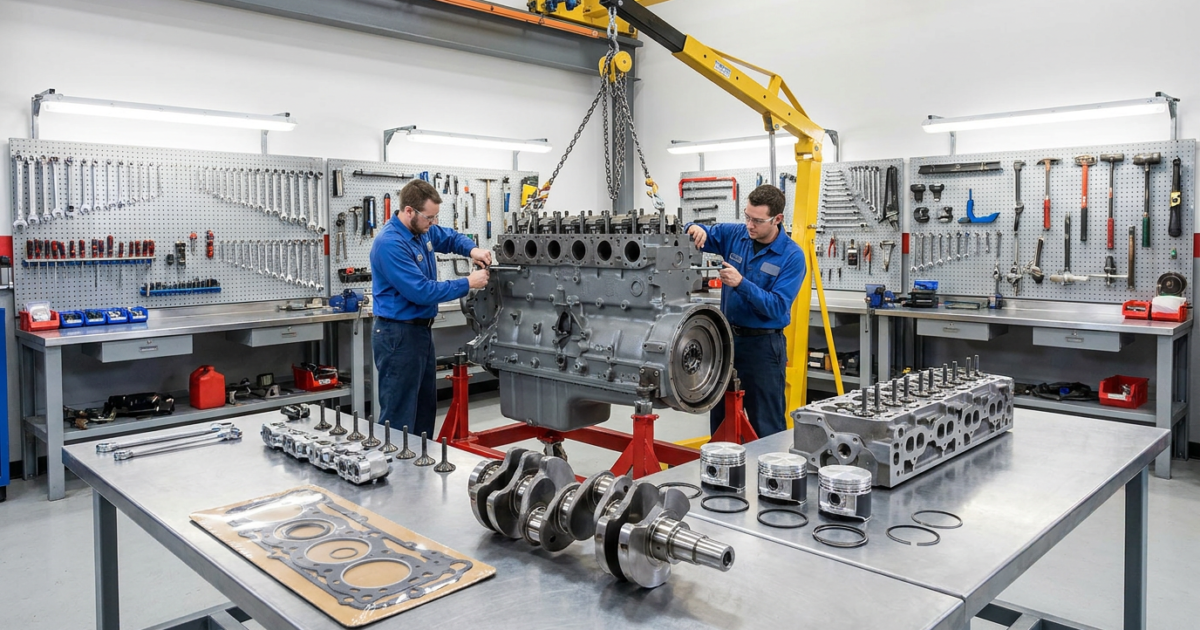
This guide covers the essential truck engine replacement parts for every major repair scenario, the top brands to trust, how to identify the right parts for your specific engine, and practical tips for getting the most out of every rebuild.
Essential truck engine replacement parts by repair type
Top-End Overhaul (Cylinder Head Rebuild)
A top-end overhaul addresses the cylinder head, valvetrain, and head gasket without removing the engine from the truck or disassembling the lower end. This is the most common major engine repair on high-mileage diesels and typically addresses head gasket failure, valve and seat wear, and injector bore damage.
- Head gasket set — The most critical part of a top-end rebuild. Use a complete gasket set from Victor Reinz, Mahle, or the OEM manufacturer. Never reuse a head gasket.
- Head bolts — Most heavy duty diesel engines use torque-to-yield head bolts that must be replaced every time the head is removed. Reusing stretched head bolts is a leading cause of repeat head gasket failure.
- Valves, valve seats, and valve guides — Inspect and measure at every head rebuild. Worn valve seats cause compression loss and hard starting; worn guides cause oil consumption and blue smoke.
- Valve stem seals — Always replace during a head rebuild. Worn seals cause oil consumption and blue smoke on startup.
- Rocker arms and push rods — Inspect for wear and replace as needed. Worn rocker arm pads cause valve lash issues and accelerated camshaft wear.
- Injector cups / sleeves — On Cummins ISX and similar engines, injector sleeves seal the injector in the head. Leaking sleeves allow coolant into the combustion chamber — always pressure-test and replace as needed during a head rebuild.
In-Frame Overhaul
An in-frame overhaul rebuilds the engine in the truck, replacing the lower end components without removing the engine from the chassis. This is the most cost-effective major rebuild option for most Class 8 trucks.
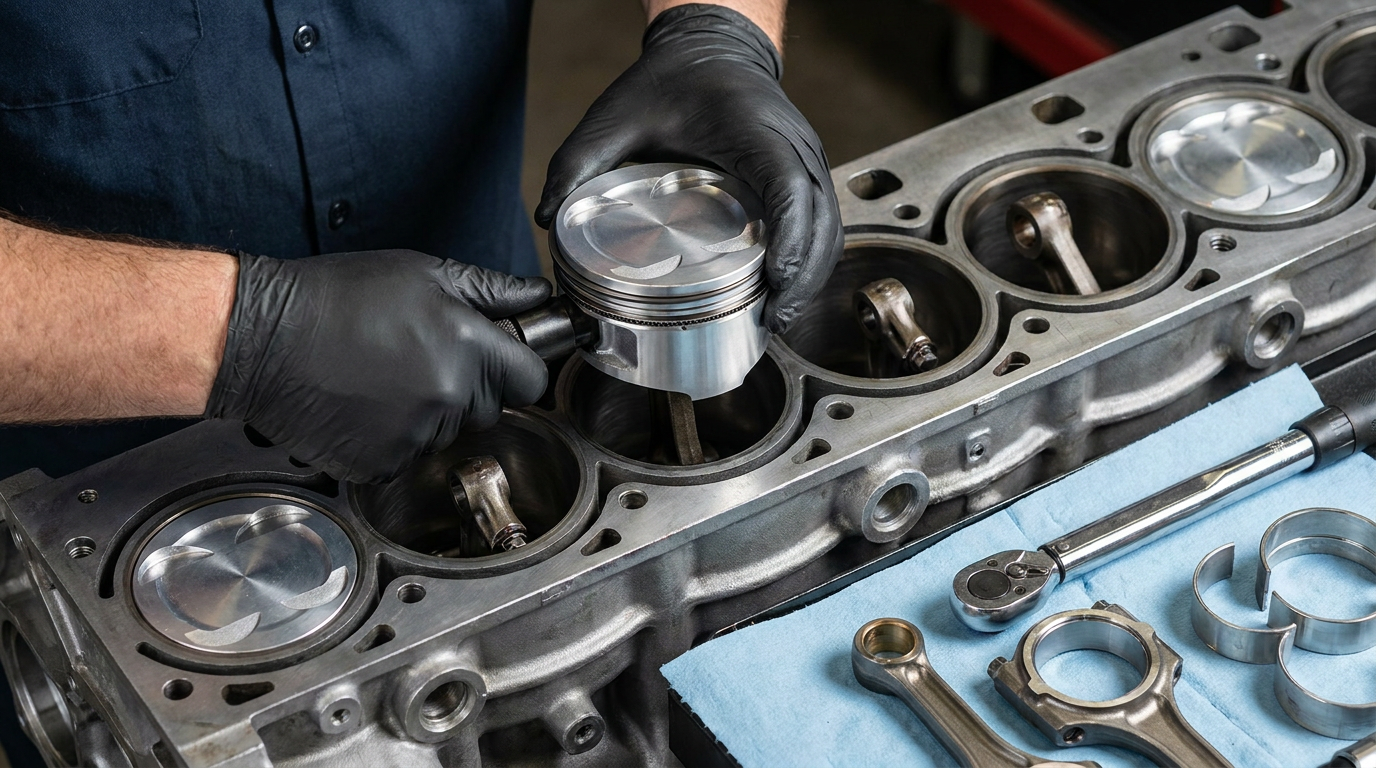
- Pistons and rings — The core of any in-frame overhaul. Use OEM-equivalent pistons from Mahle or Federal-Mogul matched to the correct bore size. Always measure cylinder bore wear before ordering pistons.
- Cylinder liners — Heavy duty diesels use replaceable wet liners. Replace liners at every in-frame overhaul — never reuse liners with worn or pitted surfaces.
- Connecting rod bearings — Replace at every overhaul regardless of apparent condition. Rod bearing failure is catastrophic and the cost of new bearings is trivial compared to the cost of a spun bearing.
- Main bearings — Replace main bearings during an in-frame overhaul if crankshaft journals are within specification. If journals are worn or scored, the crankshaft must be removed for grinding or replacement.
- Camshaft and followers — Inspect the camshaft for lobe wear at every overhaul. A worn camshaft causes power loss and increased fuel consumption that no other repair will fix.
- Oil pump — Replace the oil pump at every major overhaul. A worn oil pump that fails shortly after a rebuild destroys all the new bearings and pistons.
Out-of-Frame Overhaul (Complete Rebuild)
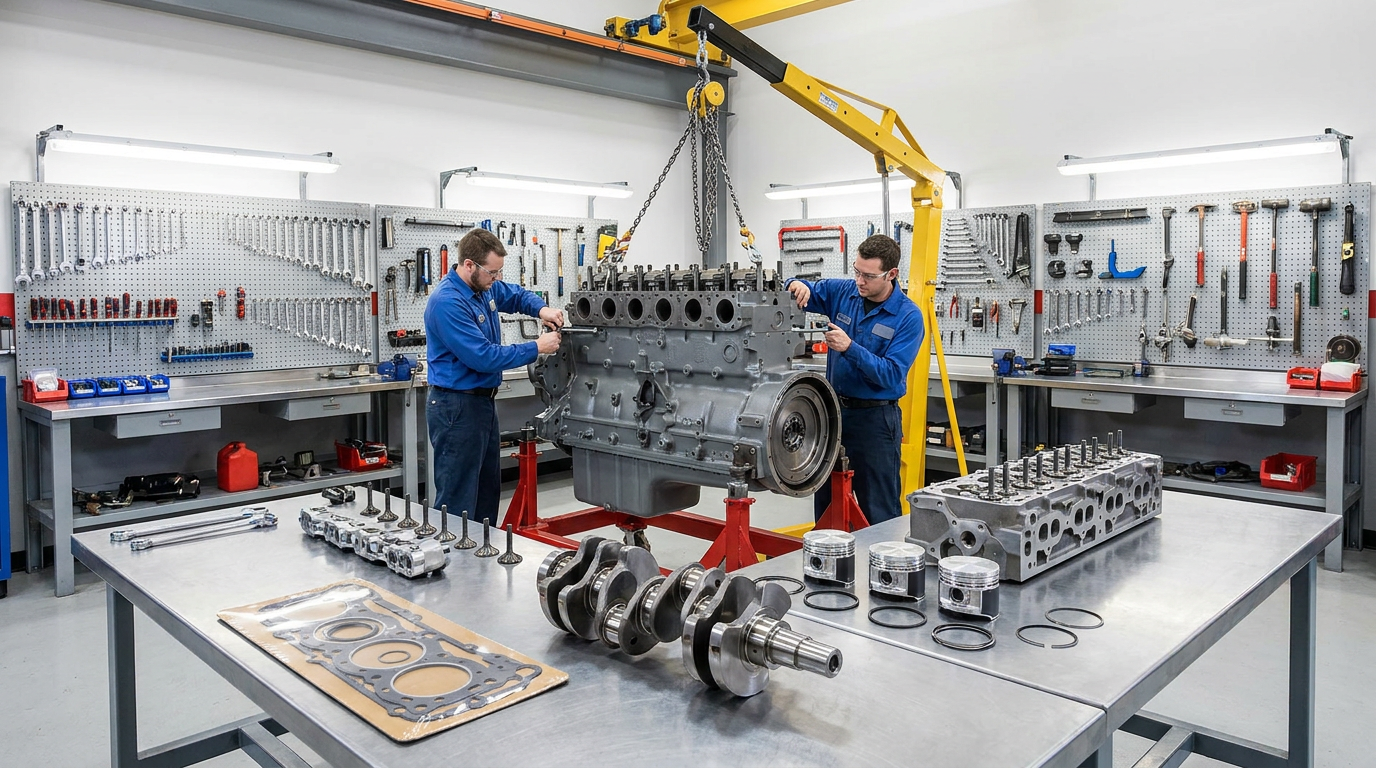
An out-of-frame overhaul removes the engine from the truck for a complete disassembly and rebuild. This allows access to every component and is the correct approach for engines with crankshaft damage, block damage, or severe wear throughout.
- Crankshaft — Measure all journals for wear and out-of-round. Grind and regrind if within limits; replace if beyond limits. Use OEM or Spicer replacement crankshafts for Class 8 applications.
- Complete gasket and seal kit — A complete out-of-frame kit includes every gasket, seal, and o-ring in the engine. Order by engine serial number to ensure correct coverage.
- Timing components — Replace the timing gear train, timing cover gaskets, and front seal at every out-of-frame rebuild.
- Water pump and thermostat — Always replace during an out-of-frame rebuild. The labor cost to replace these later far exceeds the part cost.
- Turbocharger — Inspect the turbo at every major rebuild. If the engine suffered from oil contamination or bearing failure, replace the turbo — a damaged turbo will destroy a freshly rebuilt engine.
Top brands for truck engine replacement parts
- Mahle — Pistons, rings, liners, and gaskets; OEM supplier to Cummins, Detroit, and Paccar. The benchmark for in-frame overhaul kits.
- Victor Reinz / Dana — Head gaskets and complete gasket sets; the industry standard for diesel engine rebuilds across all major makes.
- Federal-Mogul / Tenneco — Engine bearings, pistons, and seals; widely used in both OEM and aftermarket rebuild applications.
- Cummins — OEM replacement parts for ISX, X15, ISB, ISL, and other Cummins engines; available through Cummins distributors and authorized dealers.
- Detroit Diesel / Daimler — OEM replacement parts for DD13, DD15, DD16, and Series 60 engines.
- Paccar Parts — OEM replacement parts for MX-13 and MX-11 engines in Kenworth and Peterbilt trucks.
- BorgWarner — Turbochargers and turbo components; OEM supplier to Cummins, Detroit, and Paccar with strong aftermarket availability.
- Fleetguard / Cummins Filtration — Oil, fuel, air, and coolant filters; the standard for diesel engine filtration during and after a rebuild.
How to identify the correct truck engine replacement parts
Always use the engine serial number. The engine serial number — stamped on the block, typically on the front or side — identifies the exact engine build specification including bore size, compression ratio, fuel system type, and emissions configuration. Two trucks of the same model year with the same engine family can have different internal specifications depending on the customer order. The engine serial number captures all of these differences.
Measure before you order. For pistons, liners, and bearings, always measure the actual bore diameter and journal dimensions before ordering. Engines that have been previously rebuilt may have been bored oversize or have had journals ground undersize. Ordering standard-size parts for an oversize bore is a costly mistake.
Order complete kits when possible. Most major suppliers offer complete in-frame and out-of-frame overhaul kits by engine serial number. These kits include all the parts needed for the rebuild at a lower total cost than ordering individual components. They also ensure that all parts are from the same manufacturer and are dimensionally matched.
Verify supersessions before ordering. Engine manufacturers regularly update part numbers as components are revised. A part number from a 2015 service manual may have been superseded by an improved version. Always confirm current part numbers with your supplier before placing a large order.
Tips for a successful truck engine rebuild
Never reuse head bolts, head gaskets, or rod bearings. These are the three most common causes of repeat engine failures after a rebuild. The cost of new parts is always less than the cost of a second rebuild.
Replace the oil supply line to the turbocharger. The old line may contain debris or have internal restrictions. A new turbo starved of oil will fail within hours of startup.
Prime the oil system before first startup. After any major rebuild, pre-lube the engine by cranking without fuel until oil pressure registers before allowing the engine to start. This prevents dry startup damage to new bearings and cylinder walls.
Break in the engine properly. New rings need to seat against the cylinder walls. Follow the manufacturer’s break-in procedure — typically varying load and RPM for the first 50-100 hours — and change the oil and filter at the first break-in interval.
For related guides, see our articles on diesel truck engine parts and best truck parts suppliers. For complete overhaul kits by engine serial number, Mahle Aftermarket and Cummins Filtration are the most comprehensive online resources.
Conclusion
A successful truck engine rebuild starts with the right truck engine replacement parts — the correct specification, the right brand, and the right quantity for the repair at hand. Use the engine serial number for parts identification, measure before ordering, use complete overhaul kits when possible, and never cut corners on head bolts, head gaskets, or bearings.
The brands covered in this guide — Mahle, Victor Reinz, Federal-Mogul, and the OEM manufacturers — have earned their reputations by delivering parts that meet the dimensional and material specifications required for reliable, long-lasting diesel engine rebuilds. Source from them, follow the rebuild procedures, and your engine will deliver the miles it was designed for.
About The Author