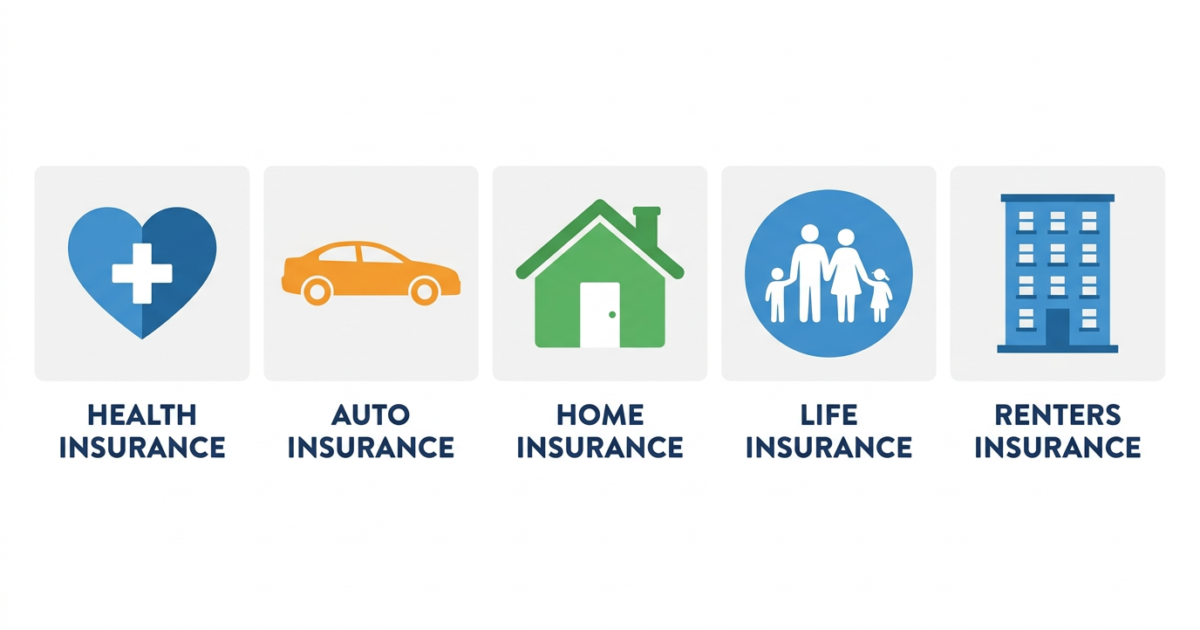
Types of Insurance Explained Simply
There are dozens of insurance products on the market, and it can be hard to know which ones you actually need. Understanding the main types of insurance explained simply helps you make smarter decisions about protecting yourself, your family, and your finances. You do not need to buy every type of insurance — but you do need to know what each one does.
This guide covers the most important types of personal insurance in plain, beginner-friendly language so you can figure out what fits your life right now.
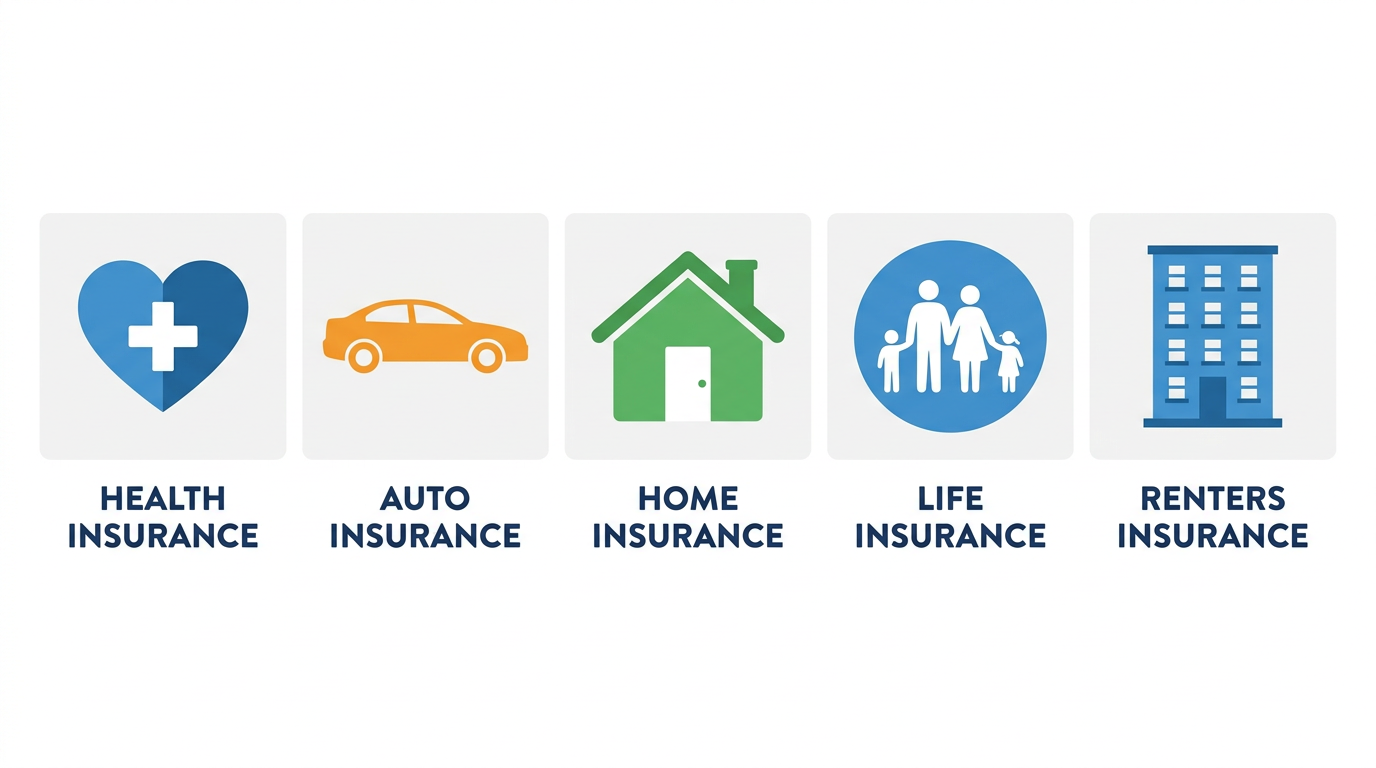
Types of Insurance Explained Simply: The Five You Need to Know
1. Health Insurance
Health insurance helps cover the cost of medical care — doctor visits, hospital stays, prescriptions, surgeries, and preventive care. Without it, a single hospital visit can cost tens of thousands of dollars.
You pay a monthly premium, and when you need care, you typically pay a deductible and a copay or coinsurance before your insurance covers the rest. Health insurance is available through employers, government programs like Medicaid and Medicare, or the Health Insurance Marketplace.
2. Auto Insurance
Auto insurance protects you financially if you are involved in a car accident. It is required by law in most U.S. states. A standard auto policy includes several types of coverage:
- Liability coverage — Pays for damage or injuries you cause to others
- Collision coverage — Pays to repair your own vehicle after an accident
- Comprehensive coverage — Covers non-collision damage like theft, weather, or vandalism
- Uninsured motorist coverage — Protects you if the other driver has no insurance
3. Homeowners Insurance
Homeowners insurance protects your home and belongings against damage from fire, storms, theft, and other covered events. It also includes liability coverage if someone is injured on your property.
If you have a mortgage, your lender will require homeowners insurance. Even if you own your home outright, it is one of the most important policies you can have — your home is likely your largest asset.
4. Renters Insurance
Renters insurance is for people who rent their home or apartment. Your landlord’s insurance covers the building — but it does not cover your personal belongings inside. Renters insurance covers your furniture, electronics, clothing, and other possessions if they are stolen or damaged.
It also includes liability coverage and can cover temporary living expenses if your rental becomes uninhabitable. Renters insurance is one of the most affordable types of coverage available — often less than $20 per month.
5. Life Insurance
Life insurance pays a lump sum — called a death benefit — to your beneficiaries when you die. It is designed to replace your income and help your family cover expenses like mortgage payments, childcare, and daily living costs.
There are two main types: term life insurance (covers you for a set period, like 20 years) and whole life insurance (covers you for your entire life and builds cash value). Term life is simpler and more affordable for most people.

Other Important Types of Insurance to Know
Disability Insurance
Disability insurance replaces a portion of your income if you become unable to work due to illness or injury. Many people overlook this coverage, but your ability to earn an income is your most valuable financial asset. Short-term disability covers a few months; long-term disability can cover years or until retirement.
Umbrella Insurance
Umbrella insurance provides extra liability coverage beyond the limits of your auto and homeowners policies. If you are sued for an amount that exceeds your standard policy limits, umbrella insurance covers the difference. It is relatively inexpensive and provides significant protection for people with assets to protect.
Travel Insurance
Travel insurance covers trip cancellations, medical emergencies abroad, lost luggage, and travel delays. It is especially valuable for international travel or expensive trips where a cancellation could mean losing thousands of dollars.
Pet Insurance
Pet insurance helps cover veterinary costs for your pets. Unexpected vet bills can run into thousands of dollars. Pet insurance is available for dogs, cats, and some exotic animals.
Important Things to Know When Comparing Types of Insurance
- Not all policies cover the same things. Two health insurance plans with the same premium can have very different networks, deductibles, and covered services. Always compare the details, not just the price.
- Bundling can save money. Many insurers offer discounts if you buy multiple policies from them — for example, combining auto and homeowners insurance with the same company.
- Your needs change over time. A single person in their 20s has different insurance needs than a married homeowner with children. Review your coverage every year and after major life events.
- Some types are legally required. Auto liability insurance is required in most states. If you have a mortgage, homeowners insurance is required by your lender. Health insurance is no longer federally mandated, but some states have their own requirements.
Tips for Choosing the Right Types of Insurance
- Start with health, auto, and renters/homeowners insurance — these are the foundation
- Add life insurance if others depend on your income
- Consider disability insurance if your employer does not provide it
- Compare at least three quotes for each type of coverage
- Work with an independent insurance agent who can shop multiple carriers for you
For more guidance, see our articles on How Insurance Works for Beginners and What to Know Before Choosing Insurance. The Insurance Information Institute (III) is an excellent free resource for comparing coverage types and understanding policy details.
Conclusion
Getting the types of insurance explained simply is the first step toward building real financial protection. Health, auto, homeowners or renters, life, and disability insurance form the core of a solid personal insurance plan. You do not need everything at once — start with what protects you from the biggest risks, then build from there.
The goal is not to buy every policy available. It is to make sure that if something goes seriously wrong, you are not left facing a financial crisis on top of everything else.
About The Author