Top Alternators for Ford F-150
If you drive a Ford F-150 long enough, alternator trouble is almost a rite of passage. It usually starts small: headlights dim slightly at idle, the battery light flickers once, or the truck takes one extra second to crank in the morning. Most owners blame the battery first—and sometimes they’re right—but in many cases, the alternator is the real problem hiding in plain sight. I’ve been under enough hoods to know that the “battery light” on a Ford dash is rarely just about the battery; it’s the truck’s way of screaming that the heart of the electrical system is struggling to keep up.
When you’re staring at a dead truck in your driveway, it’s tempting to run to the nearest big-box auto parts store and grab whatever is on the shelf. But here’s the reality: an F-150 isn’t a Honda Civic. Whether you’re running a 3.5L EcoBoost with all the bells and whistles or a 5.0L Coyote that you use for heavy hauling, the electrical demand is massive. Finding the Top Alternators for Ford F-150 isn’t just about finding a part that fits the bolts; it’s about finding a unit that won’t leave you stranded six months from now when you’re trying to jump-start a trailer in the rain.
The “Ghost in the Machine” Symptoms
Before you drop $300 to $600 on a new unit, you have to be sure it’s actually the alternator. Ford charging systems are smarter than they used to be, but that also makes them weirder when they fail. I once worked on a 2018 XLT where the owner swore the transmission was slipping. It turned out the alternator was “dropping” voltage just enough to confuse the shift solenoids.
If you notice your power windows moving slower than usual, or if your Sync screen randomly resets while you’re driving, don’t just ignore it. These are “ghost” symptoms. Your truck’s computer starts shutting down non-essential systems (like heated seats or high-end audio) to keep the fuel pump and ignition coils running. If you’re seeing these glitches, you need to start looking at the Top Alternators for Ford F-150 before the truck decides to shut down entirely on the highway.
Amperage: Don’t Starve Your Truck
One of the biggest mistakes I see guys make is buying an alternator based solely on price, which usually leads them to a lower-amperage unit. Ford used several different sizes depending on the “tow package” or “snow plow” prep. If your truck came with a 200-amp unit and you replace it with a 150-amp “economy” version to save fifty bucks, you’re going to kill that new alternator within a year.
When looking for the Top Alternators for Ford F-150, check your door sticker or run your VIN. If you’ve added any aftermarket gear—light bars, a winch, or a heavy-duty inverter for power tools—you should actually consider “upgrading” your amperage. Brands like Mechman or Nations Starter make “high-output” units that can pump out 250+ amps. For a work truck that spends half its life idling on a job site with the lights on, that extra headroom isn’t a luxury; it’s a necessity.
The “Pro” Tip for Installation
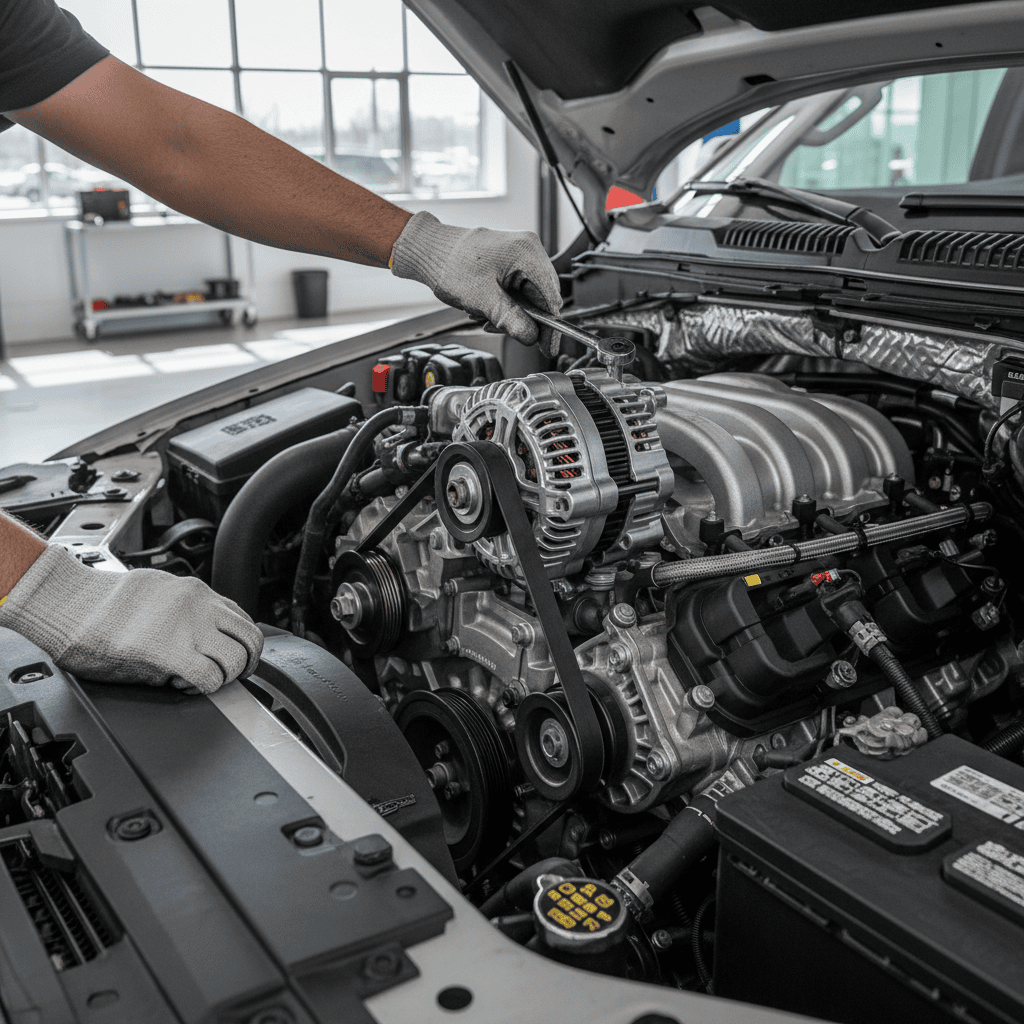
If you’re doing this job yourself, there’s a trick that will save you an hour of swearing. On the 3.5L and 5.0L engines, the alternator sits in a bracket with a “compression spacer” in the back bolt hole. When you take the old one out, that spacer stays tight. Trying to slide the new alternator into that tiny gap is like trying to put a square peg in a slightly too-small square hole.
Here’s what the “pro” manuals don’t always tell you: take the bolt you just removed, thread it into the spacer from the back side, and give it a gentle tap with a hammer. This “precesses” the spacer out just a fraction of an inch, opening up the gap. The new alternator will slide right in. It’s small details like this that separate a frustrating Saturday from a successful repair. When you’re dealing with the Top Alternators for Ford F-150, you want the hardware to feel like it belongs there, not like you’re forcing it.
Search more topics
New vs. Remanufactured: The Truth
You’ll see a lot of “Reman” units for sale. In the old days, a remanufactured alternator was just as good as new. Today? It’s a gamble. Many of the cheap reman units you find online are just cleaned up, given new brushes, and sent out the door. The internal copper windings might still be 10 years old.
If you’re planning on keeping your truck for more than two years, I always tell people to spend the extra money on a “New” unit from a reputable brand like Motorcraft (the OEM) or Denso. The Top Alternators for Ford F-150 are almost always new-build units. Why? Because Ford’s modern “smart charging” system is very picky about the voltage regulator. Aftermarket remans often use a “universal” regulator that can cause a permanent battery light on your dash, even if the truck is charging fine. It’s an annoying glitch that’s hard to get rid of.
Don’t Forget the “Big Three”
If you’re upgrading to one of the Top Alternators for Ford F-150 because you have a massive stereo or a plow, you have to talk about the wiring. Your factory wiring was designed for factory output. If you put a 300-amp beast in there but keep the skinny factory “charge wire” that goes to the battery, you’re creating a bottleneck.
In the truck community, we call it the “Big Three” upgrade:
-
The wire from the alternator to the battery.
-
The engine block ground.
-
The battery-to-chassis ground.
Replacing these with 1/0 gauge copper wire ensures that all that power you just paid for actually makes it to your accessories. It’s like upgrading from a garden hose to a fire hose.
The Hidden Culprit: The Belt and Tensioner
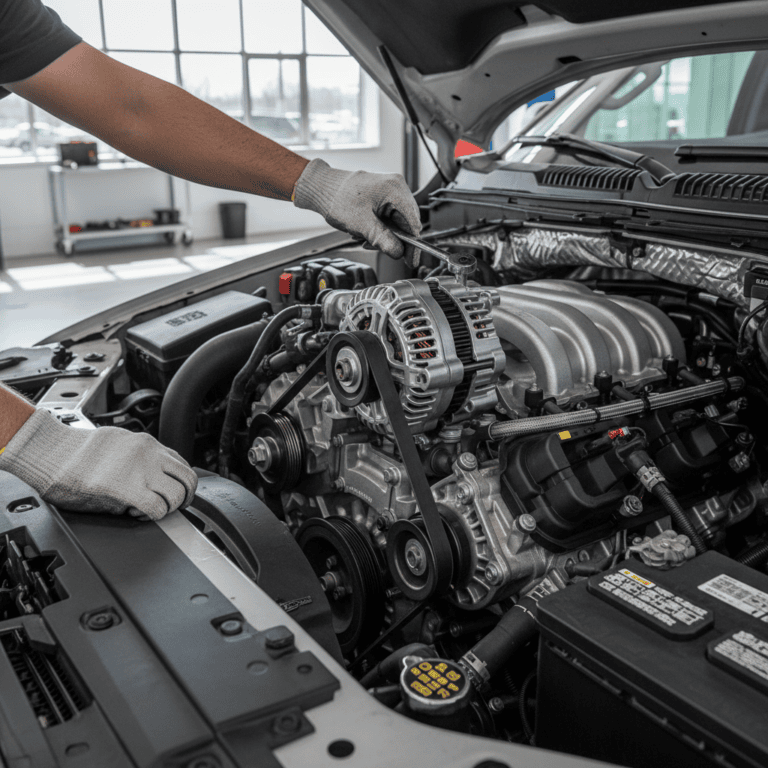
Finally, before you bolt that new unit down, look at your serpentine belt. If the belt is glazed (shiny) or has tiny cracks, it’s going to slip on the new alternator pulley. A slipping belt won’t always squeal; sometimes it just doesn’t spin the alternator fast enough to hit the required voltage.
The Top Alternators for Ford F-150 won’t do you any good if your tensioner is weak. Give the tensioner pulley a spin while the belt is off—if it sounds like a skateboard wheel or feels “crunchy,” replace it. Most of the “failed” alternators I see returned to parts stores aren’t actually broken; they were just being spun by a worn-out belt system that couldn’t provide the grip needed under load.
Making the Final Choice
Your F-150 is a workhorse, and the alternator is the brain that keeps the muscles moving. Whether you’re a “keep it stock” kind of owner or you’re building a trail-ready monster, don’t go cheap on the charging system. Look for a unit with a solid warranty—at least 2 years—and verify that it includes a new pulley.
The Top Alternators for Ford F-150 are the ones that you install once and forget about for the next 100,000 miles. Do the job right the first time: clean your grounds, use a little bit of dielectric grease on the connector, and make sure that belt is tight. Your truck (and your battery) will thank you for it.
READ ALSO:
Search Anything
Search any topic — including insurance, loans, travel, technology, health, and more.
About The Author