
Simple Guide to Managing Your Finances
Managing your finances does not have to be complicated. With the right approach, anyone can take control of their money — regardless of income level, financial background, or past mistakes. This simple guide to managing your finances breaks everything down into clear, actionable steps that you can start using today.
Whether you are just starting out or looking to reset your financial habits, this guide covers the essentials: budgeting, saving, tracking spending, managing debt, and building toward your future. No jargon, no complicated formulas — just a straightforward roadmap to financial confidence.

Why You Need a Simple System for Managing Your Finances
Most people do not struggle with money because they are bad at math. They struggle because they do not have a system. Without a clear process for managing income, expenses, and savings, money tends to disappear without much to show for it.
A simple financial management system does three things:
- It gives you a clear picture of where your money is going
- It ensures your most important financial priorities are always funded first
- It removes the guesswork and stress from everyday money decisions
The system does not need to be elaborate. In fact, the simpler it is, the more likely you are to stick with it. Here is a five-step framework that covers everything you need.
Step 1: Know Your Numbers
The foundation of managing your finances is knowing exactly what you earn and what you spend. This sounds obvious, but most people have only a vague sense of their actual numbers.
Start by calculating your monthly take-home income — the amount that actually lands in your bank account after taxes and deductions. Then list every expense you have in a typical month, divided into two categories:
- Fixed expenses — costs that stay the same every month: rent, car payment, insurance, loan payments, fixed subscriptions
- Variable expenses — costs that change month to month: groceries, dining out, gas, entertainment, clothing, personal care
Add up both categories and compare the total to your income. If your expenses exceed your income, that gap is the first problem to solve. If you have money left over, that surplus is your opportunity to save and invest.
Step 2: Build a Simple Budget
A budget is a written plan that tells your money where to go before the month begins. It is the single most effective tool for managing your finances, and it does not need to be complicated.
A simple starting framework is the 50/30/20 rule:
- 50% of take-home pay for needs (rent, utilities, groceries, transportation, insurance)
- 30% for wants (dining out, entertainment, hobbies, non-essential subscriptions)
- 20% for savings and debt repayment
Adjust these percentages to fit your situation. If you have significant debt, you might allocate more to debt repayment. If you are saving for a specific goal, you might temporarily reduce the wants category. The key is having a plan and reviewing it at the start of each month.
Step 3: Save Before You Spend
Most people save whatever is left over after spending. The problem is that there is rarely anything left over. The solution is to reverse the order: save first, then spend what remains.
This principle — often called paying yourself first — is one of the most powerful habits in personal finance. Here is how to put it into practice:
- Decide on a savings amount before the month begins and include it in your budget as a non-negotiable expense
- Set up an automatic transfer from your checking account to a dedicated savings account on payday
- Start with whatever you can manage — even $25 or $50 a month — and increase the amount as your income grows
Your first savings goal should be an emergency fund of at least $1,000, then three to six months of essential living expenses. Once your emergency fund is in place, you can direct additional savings toward other goals: a vacation, a down payment, retirement, or investments.
Step 4: Track Your Spending
A budget tells you where your money should go. Tracking tells you where it actually went. Both are necessary for managing your finances effectively.
Tracking your spending does not need to be time-consuming. A few simple approaches:
- Weekly check-in: Spend 10 minutes each week reviewing your bank and credit card transactions. Categorize them and compare to your budget.
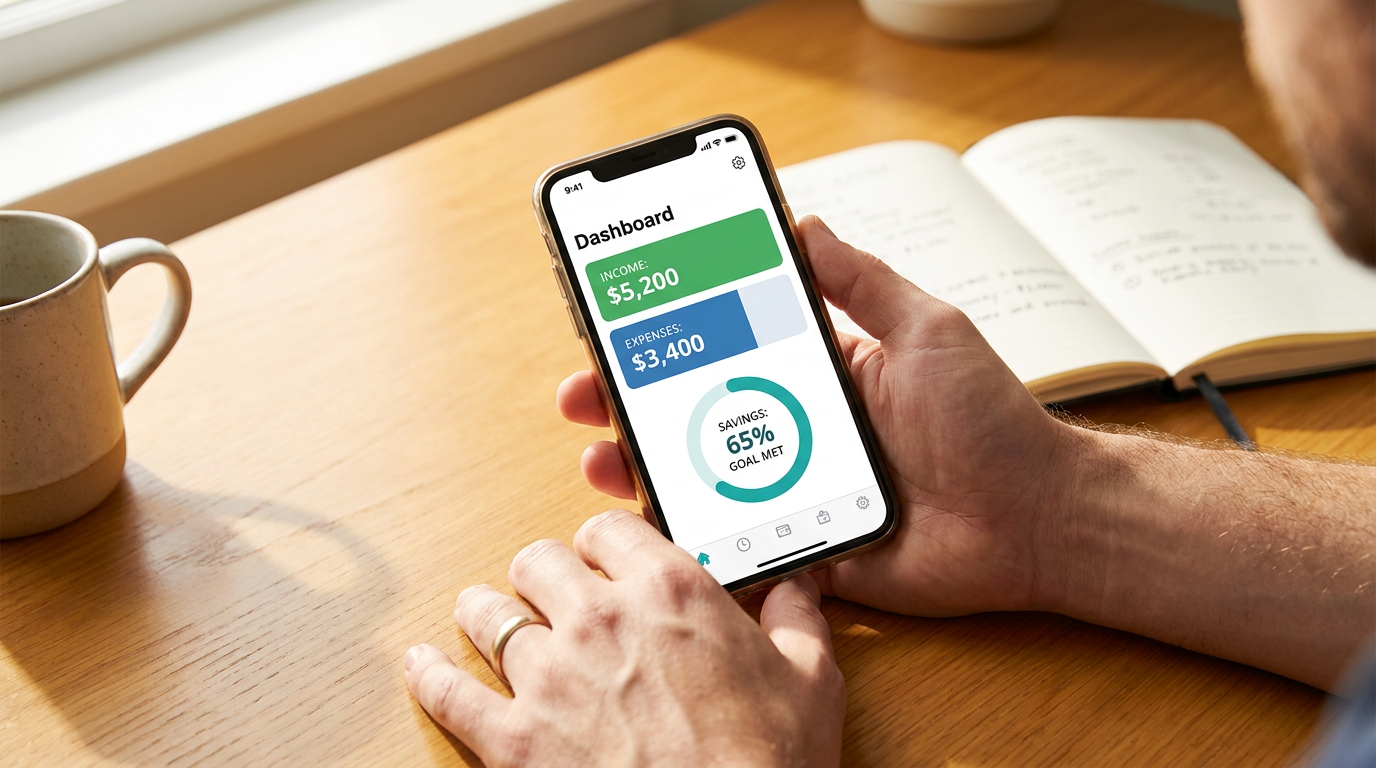
- Budgeting app: Apps like Mint, YNAB, or your bank’s built-in tools can automatically categorize transactions and show you where you stand in real time.
- Envelope method: Withdraw cash for variable spending categories and keep it in labeled envelopes. When the envelope is empty, spending in that category stops for the month.
The method matters less than the habit. Reviewing your spending regularly keeps you aware, accountable, and in control — and helps you catch overspending before it becomes a problem.
Step 5: Manage Debt and Start Investing
Managing debt: If you carry high-interest debt — especially credit card balances — paying it down should be a top financial priority. High-interest debt costs you money every month and limits your ability to save and invest. Use either the avalanche method (highest interest rate first) or the snowball method (smallest balance first) to pay down debt systematically while making minimum payments on everything else.
Starting to invest: Once your emergency fund is in place and high-interest debt is under control, begin investing for the long term. Even small amounts invested consistently over time can grow significantly thanks to compound interest. Start with your employer’s 401(k) if one is available — especially if there is a company match. If not, open an IRA (Individual Retirement Account) and contribute what you can each month.
You do not need to understand the stock market deeply to start investing. A simple low-cost index fund that tracks the broad market is a solid starting point for most beginners.
Tips for Sticking with Your Financial Plan
- Keep it simple. The more complicated your system, the less likely you are to maintain it. A basic budget and one savings account is enough to start.
- Automate everything you can. Automatic savings transfers, automatic bill payments, and automatic investment contributions remove the need for willpower and reduce the risk of forgetting.
- Review monthly. Set aside 15 to 20 minutes at the start of each month to review last month’s spending, update your budget, and check your savings progress.
- Celebrate milestones. Paying off a debt, hitting a savings goal, or completing your first month on budget are all worth acknowledging. Progress feels good — let it motivate you.
- Be patient with yourself. Managing finances is a skill that improves with practice. You will have months where you overspend or miss a savings goal. That is normal. What matters is getting back on track, not being perfect.
- Revisit your goals regularly. Your financial situation and priorities will change over time. Review your goals every six months and adjust your plan accordingly.
Quick-Start Checklist for Managing Your Finances
- ☐ Calculate your monthly take-home income
- ☐ List all fixed and variable expenses
- ☐ Create a simple monthly budget
- ☐ Set up an automatic savings transfer for payday
- ☐ Open a dedicated emergency fund savings account
- ☐ Choose a spending tracking method and use it weekly
- ☐ List all debts with balances and interest rates
- ☐ Make a debt payoff plan
- ☐ Start contributing to a retirement account
- ☐ Schedule a monthly money review
For more detail on any of these steps, see our related guides: How Personal Finance Works for Beginners, Understanding Budgeting and Saving Money, and Common Financial Mistakes and How to Avoid Them. For free tools and resources, visit the Consumer Financial Protection Bureau.
Conclusion
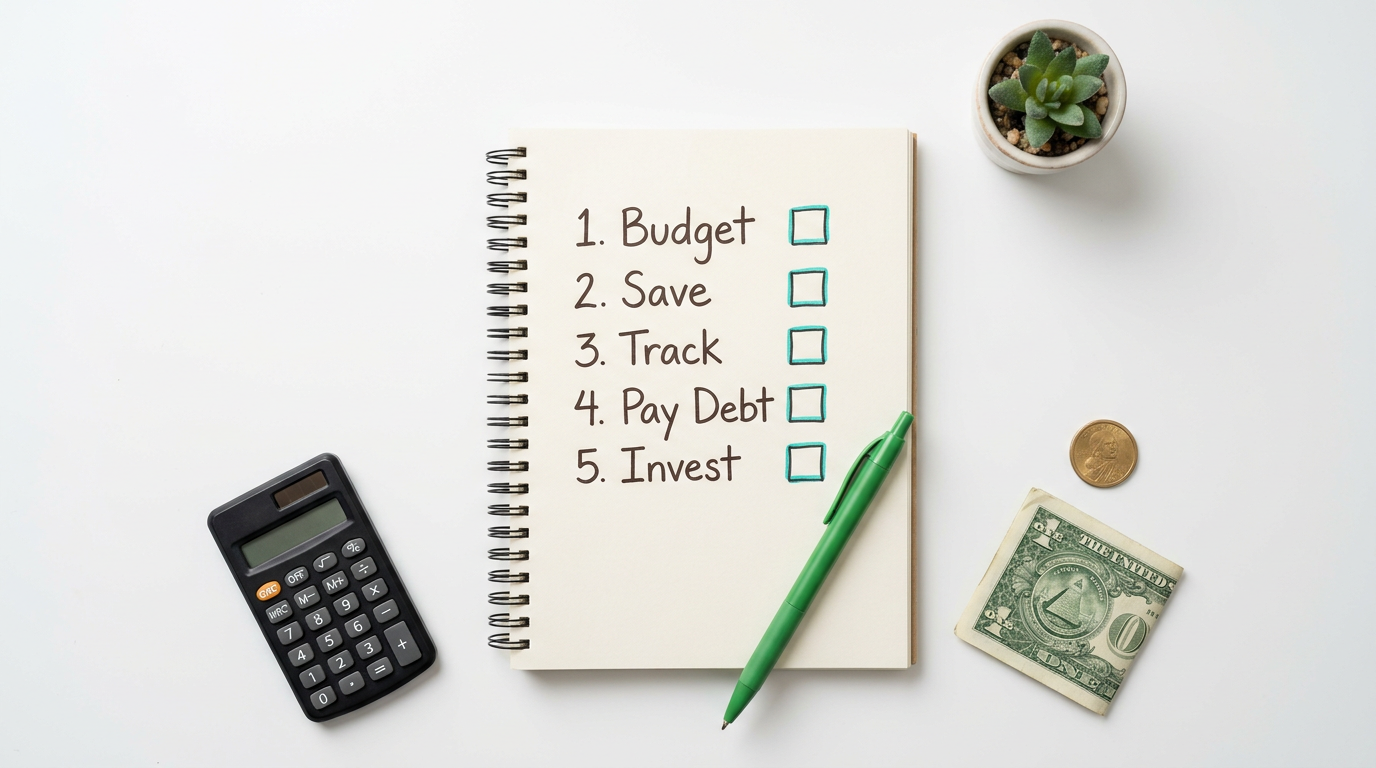
This simple guide to managing your finances comes down to five steps: know your numbers, build a budget, save before you spend, track your spending, and manage debt while starting to invest. None of these steps require advanced knowledge or a large income — they require consistency and a willingness to start.
The best time to start managing your finances was yesterday. The second best time is today. Pick one step from this guide and take action on it right now. Your future self will thank you.
About The Author