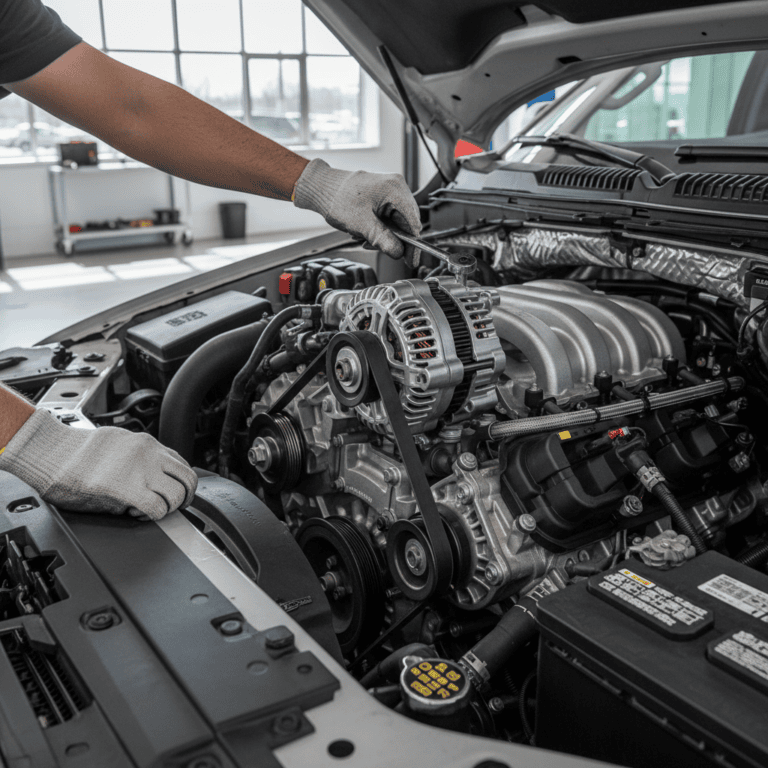
I’ve learned that car batteries rarely fail at a convenient time.
They don’t usually die in your driveway on a sunny afternoon when you have tools, coffee, and free time. They die when you’re already late, when it’s cold, when it’s raining, or when you’re parked somewhere you really don’t want to be stuck. That’s why I always tell people the same thing: pay attention to the small warnings before the battery gives up completely.
The problem is, most drivers miss those warnings. Not because they don’t care, but because the signs can feel random at first. One slow start gets blamed on weather. Dim lights get blamed on the bulbs. A dashboard warning disappears, so it gets ignored. Then one morning, the engine just clicks—and that’s when the stress starts.
Over the years, I’ve helped friends, neighbors, and family with no-start issues more times than I can count, and in a lot of those cases, the battery had been warning them for weeks. If you know what to look for, you can avoid the surprise.
This guide will walk you through the most common Signs Your Car Battery Is Dying, what they feel like in real life, and what to do before it turns into a tow-truck day.
Table of Contents
ToggleThe first sign most people notice: slow engine cranking
This is the classic one, and it’s still the most useful early warning.
When your battery is healthy, the engine usually cranks with confidence—quick, steady, and familiar. When the battery starts weakening, the crank speed slows down. It may sound like the engine is dragging for a second before starting.
A lot of people describe it like this:
Search more topics
-
“It still starts, but it sounds tired.”
-
“It hesitates a little in the morning.”
-
“It starts better later in the day than early morning.”
That “tired” crank is one of the most common Signs Your Car Battery Is Dying. It doesn’t always mean the battery is finished today, but it means you should test it soon.
Hard starts in cold weather
Cold weather exposes weak batteries fast. I’ve seen batteries seem “fine” in mild weather and then suddenly act like they’re dead on the first really cold morning.
Why? Because batteries lose cranking strength in lower temperatures, and engines need more effort to start when it’s cold. So a battery that was barely hanging on in warm weather may fail once temperatures drop.
If your car struggles mostly:
-
first thing in the morning,
-
after sitting overnight,
-
or during cold or wet days,
that’s a strong clue the battery is weakening.
People often ask if this counts as normal winter behavior. Some slowdown can be normal in extreme cold, yes—but if it feels noticeably different than last season, put battery testing on your to-do list. Seasonal hard starts are often one of the early Signs Your Car Battery Is Dying, especially in older batteries.
Clicking sound when you turn the key (or press start)
This is one of the most stressful sounds a driver can hear.
You get in, turn the key, and instead of starting, you hear:
-
a rapid clicking,
-
a single click,
-
or repeated clicking with weak dashboard lights.
That usually means the battery doesn’t have enough power to crank the starter properly. In some cases it can also be a starter or connection issue, but battery weakness is very common.
I’ve seen people replace starters when the real issue was a weak battery and corroded terminals. So if you hear clicking, don’t guess—test the battery and inspect the battery connections first.
A clicking no-start situation is one of the louder and more obvious Signs Your Car Battery Is Dying, and at that point, you’re already near “stranded” territory.
Dim headlights and weak electrical power
Sometimes the battery gives warnings while the car is not starting-related at all.
You may notice:
-
headlights look dimmer than usual before startup,
-
interior lights fade quickly,
-
power windows move slower,
-
locks sound weaker,
-
infotainment resets or acts strange.
Now, once the engine is running, the alternator powers much of the electrical system. So dim lights while driving can also point to alternator issues. But dim electrical behavior before startup—or right after startup—can absolutely be battery-related.
One neighbor once told me, “My windows are just getting old.” They weren’t. Her battery voltage was low, and the weak electrical performance was one of the clearest Signs Your Car Battery Is Dying before the car eventually refused to start at a grocery store.
Battery warning light on the dashboard
This one causes confusion because people assume the battery light always means “replace battery.”
Not always.
The battery warning light often means there is a charging system issue, which could involve:
-
the battery,
-
wiring,
-
or poor connections.
Still, if the battery light appears—especially with slow starting, dim lights, or electrical weirdness—do not ignore it. It’s a sign that the charging system is not healthy, and the battery may be undercharged or failing.
Think of the warning light as a “check the charging system now” alert, not something to wait on.
Combined with other symptoms, a battery light can be one of the most important Signs Your Car Battery Is Dying or not being charged properly.
Needing frequent jump-starts
If you’ve needed more than one jump-start recently, that’s not bad luck. That’s a problem.
A one-time jump-start can happen because:
-
a light was left on,
-
a door wasn’t fully closed,
-
the car sat too long,
-
or weather was extreme.
But repeated jump-starts usually mean:
-
the battery can’t hold a charge,
-
the alternator isn’t charging properly,
-
or there’s a parasitic drain.
I’ve seen drivers carry jumper cables for months and treat jump-starts like a normal routine. It’s not normal. If your car regularly needs a jump, you’re past the “early warning” stage.
At that point, repeated jump-starts are one of the strongest Signs Your Car Battery Is Dying, and testing should happen immediately.
Corrosion on battery terminals
Pop the hood and look at the battery terminals. If you see white, blue, or greenish buildup around the terminals, that corrosion can interfere with electrical flow.
Corrosion doesn’t always mean the battery is dead, but it can cause:
-
hard starts,
-
weak charging,
-
connection issues,
-
and voltage drop.
I’ve cleaned terminal corrosion and “fixed” a no-start many times without replacing the battery right away. But corrosion can also be a sign the battery is aging, leaking gas, or not charging correctly.
If corrosion keeps coming back, don’t just clean it and forget it. It may be a symptom of a bigger battery issue.
Swollen battery case or bad smell
This is a sign many people never check for, but it matters.
A battery that looks swollen or bloated can be overheating or internally damaged. Sometimes you may also notice a sulfur or “rotten egg” smell, which can indicate battery problems or overcharging.
If you notice either:
-
do not ignore it
-
and do not keep driving like nothing is wrong
A swollen battery can fail suddenly and may be unsafe. This is no longer just one of the subtle Signs Your Car Battery Is Dying—it’s a replace-it-now warning.
How old is the battery?
This is simple, but surprisingly useful.
Many car batteries start becoming unreliable after a few years, depending on:
-
climate,
-
driving habits,
-
charging system health,
-
and battery quality.
Heat can shorten battery life just as much as cold weather exposes weakness. Short trips also reduce battery life because the alternator may not fully recharge the battery after each start.
If your battery is older and you’re noticing any of the symptoms above, test it soon. Age alone doesn’t prove failure, but age + symptoms is a strong combination.
A lot of the Signs Your Car Battery Is Dying are easier to interpret when you also know the battery is already several years old.
Battery or alternator? How to tell the difference
This is the question almost everyone asks.
Here’s the practical version:
More likely battery:
-
Slow crank, especially after sitting
-
Needs jump-start, then runs okay
-
Trouble mostly at startup
-
Older battery + cold weather struggles
More likely alternator (or charging issue):
-
Battery dies again soon after driving
-
Battery warning light stays on
-
Lights flicker while driving
-
Multiple electrical issues while engine is running
That said, the safest move is testing both the battery and charging system together. I’ve seen weak batteries overload alternators and weak alternators ruin new batteries. Replacing one without checking the other can waste money.
What to do before the battery leaves you stranded
If you suspect battery trouble, here’s a smart plan:
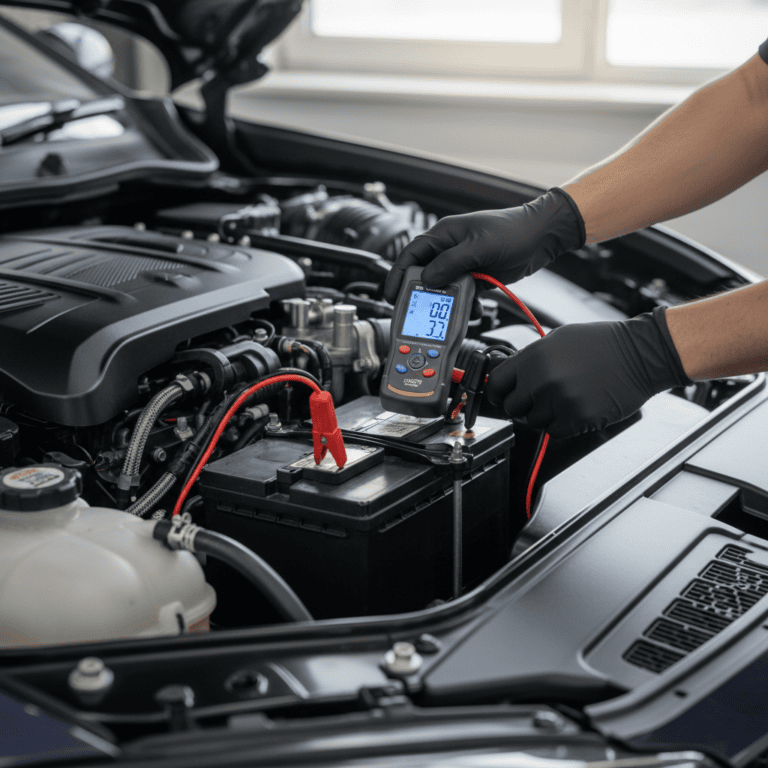
-
Inspect the terminals
Look for corrosion, loose clamps, or damaged cables. -
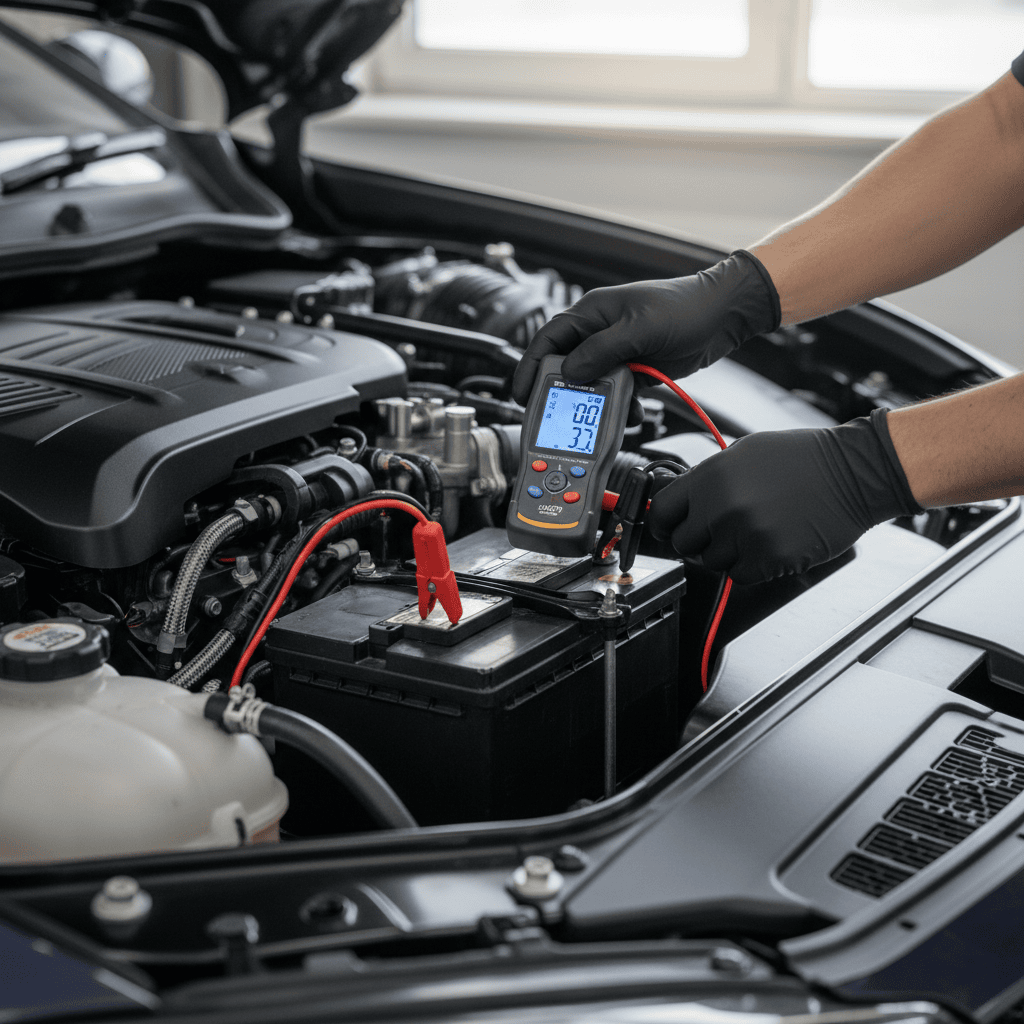
Test the battery
Use a proper battery tester (many shops can do this quickly). -
Test the charging system
Make sure the alternator is charging correctly. -
Check battery age
If it’s older and symptoms are showing, replacement may be the smarter choice. -
Don’t wait for total failure
It’s cheaper and less stressful to replace a weak battery at home than in a parking lot with a tow bill.
This is one of those maintenance areas where acting early pays off immediately in peace of mind.
My practical advice from experience
If your car has started giving you even two or three of these symptoms, don’t wait to “see if it gets worse.” It probably will—and usually at the worst time.
I’ve seen too many people lose a morning, miss work, or pay for a tow over something that gave warning signs for weeks. The good news is that batteries are one of the easier problems to catch early if you know what to watch for.
The key is to treat small changes seriously:
-
slower starts,
-
weak lights,
-
repeated jumps,
-
weird electrical behavior.
Those little clues are often your car asking for help before it stops asking and simply won’t start.
Final thoughts
The most common Signs Your Car Battery Is Dying are usually not dramatic at first. That’s exactly why they get ignored. A weak crank here, dim lights there, one jump-start, then another. By the time the battery fully fails, the warning period has often already passed.
If your car feels different when starting, trust that instinct and check it early. A battery test takes far less time than waiting for roadside assistance, and replacing a weak battery on your schedule is always better than dealing with a dead one on the road.
Learn the signs, act early, and you’ll save yourself money, time, and a lot of frustration.
Educational article by SDinformation — created to help everyday drivers make safer, smarter car-part decisions with practical, real-world guidance.
Search Anything
Search any topic — including insurance, loans, travel, technology, health, and more.
About The Author

Ashton Krasni
Ashton is a highly respected insurance and technology writer with over 12 years of industry experience. He specializes in breaking down complex insurance policies, financial concepts, and emerging technologies into clear, actionable insights that help readers make informed decisions.
Born in Tivat, Montenegro, Ashton holds a Master’s degree in IT Business and brings a strong blend of technical expertise and real-world industry knowledge to his work. Now 35 years old, he has contributed extensively to digital publications covering insurance, fintech, technology, and online business trends.
With a background that spans both technology strategy and insurance analysis, Ashton is known for delivering accurate, reader-focused content grounded in research, clarity, and practical value.