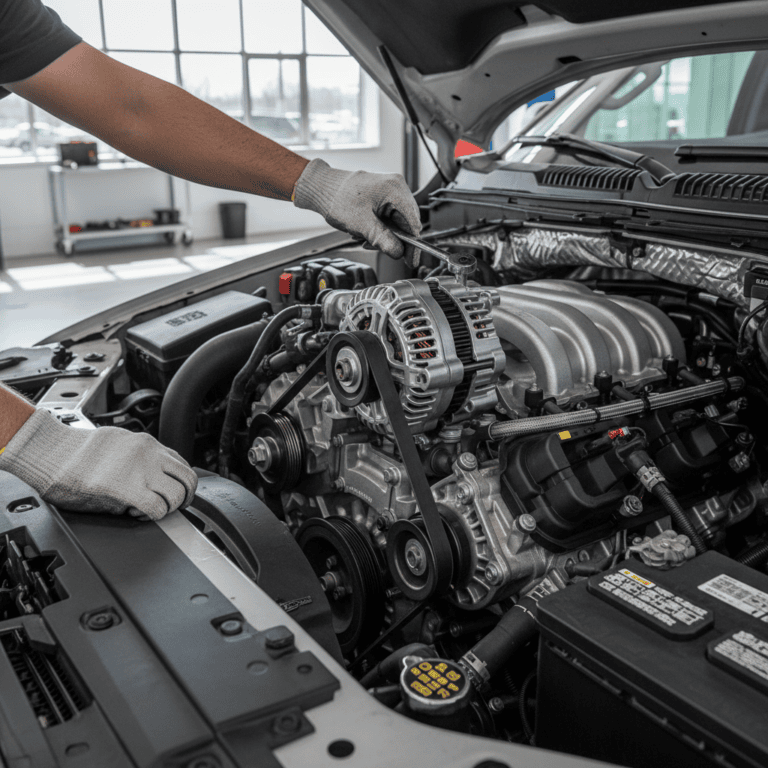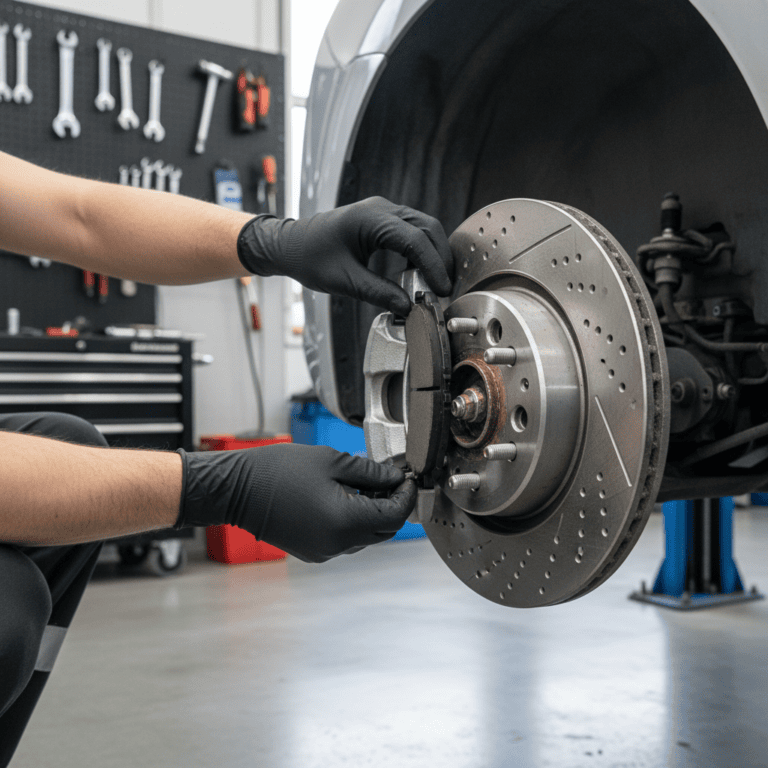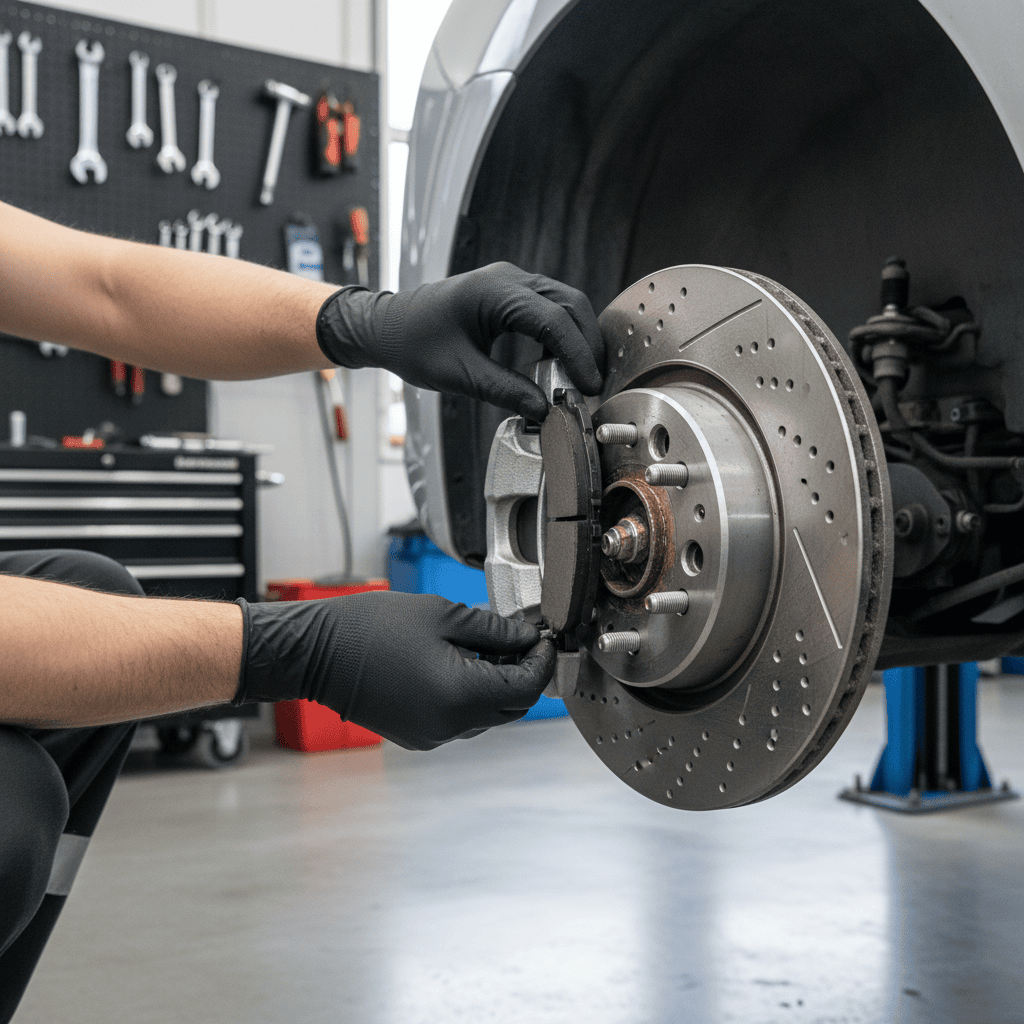
Professional mechanic replacing brake pads on a vehicle, ensuring optimal safety for daily driving.
I learned this lesson the expensive way.
A few years ago, I was driving through weekday traffic like everyone else—coffee in the cup holder, maps open, running five minutes late. Nothing dramatic. Just normal life. Then at a red light, I pressed the brake pedal and felt that weird soft sink—the kind that instantly makes your stomach drop. The car stopped, but it didn’t feel right. Later that week came the squeal. A few days after that, a steering vibration on highway exits.
That one small delay in maintenance turned into pads, rotors, hardware, and labor all at once.
Since then, I’ve become borderline obsessive about choosing the right brakes, especially for commuters, family cars, and daily-use SUVs. And if there’s one thing I can tell you from real-world driving, it’s this: the Best Brake Pads for Daily Driving are not the “most aggressive” or “most expensive” pads on the shelf. They’re the pads that work quietly, consistently, and safely in normal everyday situations.
Why daily driving is harder on brakes than people think
Most people imagine “hard use” as racetrack driving or mountain descents. But daily driving is its own kind of punishment.
Think about a typical U.S. day:
-
Stop-and-go traffic in the morning
-
Short trips where brakes never fully warm up
Search more topics
-
Sudden stops at lights, school zones, and intersections
-
Rain one day, dry heat the next
-
Parking lots, hills, highway off-ramps, repeat
Your brake pads are constantly heating and cooling. That cycling matters. Cheap or mismatched pads can glaze, squeal, dust heavily, or wear unevenly. That’s why choosing the Best Brake Pads for Daily Driving is really about balance—not extremes.
You want:
-
Smooth initial bite
-
Quiet operation
-
Predictable pedal feel
-
Low dust
-
Good lifespan
-
Reliable stopping in all weather
The mistake I see most often: buying “performance” for commuter use
One of my friends bought track-oriented pads for his daily sedan because the packaging looked premium and “racing-inspired.” On paper, it sounded like an upgrade. In traffic, it was a nightmare.
Cold mornings: noisy.
Low-speed stops: grabby.
Wheel dust: constant.
Comfort: gone.
Here’s the truth: many performance compounds shine at high brake temperatures. Most commuters rarely reach those temperatures. So what feels amazing on a track can feel awkward in city driving.
For real life, the Best Brake Pads for Daily Driving are usually OE-style premium replacements designed for everyday temperatures and road conditions.
Ceramic vs semi-metallic: what actually works in the real world
I’ve run both types across different vehicles, and each has a place.
Ceramic pads (my go-to for most commuters)
On sedans, crossovers, and family vehicles, premium ceramics are usually the easiest recommendation.
What I like from experience:
-
Very quiet in traffic
-
Cleaner wheels (far less visible dust)
-
Smooth, progressive braking
-
Great for school runs, commuting, and errands
Where they’re less ideal:
-
Repeated heavy downhill braking
-
Heavy towing or payload use
Semi-metallic pads (better for heavy-duty use)
If you drive a truck, carry tools, tow often, or live in steep terrain, semi-metallic may be better.
What I like from experience:
-
Stronger bite under heat
-
More confidence with heavier vehicles
-
Better thermal tolerance under load
Trade-offs:
-
More noise when cold
-
More brake dust
-
Sometimes harsher feel in slow traffic
So when people ask me for the Best Brake Pads for Daily Driving, I usually answer with a question:
“What are you driving, and what does your week look like?”
That answer decides more than brand names ever will.
A real commuter scenario: two drivers, two right answers
I helped two neighbors replace brakes within the same month.
-
Neighbor Adam: compact commuter sedan, 40 miles/day, mostly suburban traffic
→ We chose premium ceramic pads with new hardware. Quiet, smooth, low dust. -
Neighbor Benny: half-ton pickup, tools in bed, occasional trailer, hill routes
→ We chose heavy-duty semi-metallic. Slightly noisier, but stronger under load.
Both felt safer after the change. Both made the right choice—for their use.
That’s the point. The Best Brake Pads for Daily Driving are context-specific, not universal.
Brand is important, but product line matters more
I’ve seen this too many times: people buy a trusted brand’s cheapest line and expect premium results. Then they blame the brand when squeal starts.
Most major brands offer tiers:
-
Economy line
-
Mid-tier replacement
-
Premium OE-style
-
Heavy-duty/performance lines
Don’t choose by logo alone. Choose by specific line and features:
-
Noise-reducing shims
-
Quality friction formula
-
Corrosion-resistant backing plate
-
Included abutment clips/hardware
-
Good fitment consistency
The Best Brake Pads for Daily Driving are often in the premium OE-replacement tier, not entry-level.
The hidden part nobody talks about: hardware and slide pins
One of the worst brake jobs I’ve ever fixed had decent pads—but old rusty clips and dry slide pins.
The result?
-
Uneven wear
-
Dragging caliper
-
Hot rotor
-
Poor fuel economy
-
Early failure
Pads are only part of the system. If hardware is worn or corroded, new pads can’t perform correctly.
Always check:
-
Abutment clips
-
Slide pins and boots
-
Caliper movement
-
Pad ears/contact points
-
Rotor condition
When people ask why their “new brakes” still feel wrong, this is often the reason.
Rotors: replace, machine, or reuse?
Here’s my practical rule from experience:
-
If rotors are deeply grooved, heat-spotted, or near minimum thickness → replace.
-
If they are within spec and surface is clean/even → resurfacing may be okay.
-
If you already have vibration/pulsing → don’t gamble; replace.
I know people try to save money by slapping new pads onto tired rotors. Sometimes it works for a while, sometimes it comes back as pulsation or noise in weeks.
If budget allows, fresh pads + quality rotors + new hardware gives the best daily-driver result.
Bedding-in: the step that separates “fine” from “excellent”
I used to skip bedding when I was younger. Big mistake.
Now I always do a proper break-in routine after installation. It creates an even transfer layer between pad and rotor, which helps with smooth bite and long-term consistency.
A general routine:
-
Do a series of moderate stops from medium speed.
-
Avoid full panic stops unless needed.
-
Let brakes cool with normal driving.
-
Don’t sit holding hard brake pressure right after heavy stops.
Follow manufacturer guidance when provided. Good bedding makes a noticeable difference in how the brakes feel over the next weeks.
What I’d choose today by vehicle type
If I had to make quick recommendations based on real-world daily use:
-
Commuter sedan/coupe: premium ceramic
-
Family crossover: premium ceramic or balanced hybrid formula
-
Midsize SUV in mixed city/highway: ceramic from a premium line
-
Pickup with cargo/towing: quality semi-metallic
-
High-mileage city car: quiet ceramic with full hardware refresh
Again, the Best Brake Pads for Daily Driving are the ones matched to the job, not the loudest marketing claim.
Mistakes to avoid if you want long pad life
From what I’ve seen in shops and driveways, these mistakes cost people the most:
-
Buying the cheapest pads online without checking seller quality
-
Ignoring exact trim-level fitment
-
Reusing old hardware “to save money”
-
Installing new pads on damaged rotors
-
Skipping lubrication/service of slide pins
-
No bedding-in procedure
-
Waiting too long after first warning signs
Brake work is one area where cutting corners usually costs more later.
How brakes should feel when you got it right
When the setup is right, you notice it immediately:
-
No drama at low speed
-
No squeal in parking lots
-
Stable pedal in traffic
-
Confident stop from highway speed
-
Less dust on wheels
-
No surprises in rain
That’s what daily drivers need—predictable control every day, not occasional hero stops.
And that’s exactly why I keep saying the same thing to friends and clients: the Best Brake Pads for Daily Driving are about consistency, comfort, and safety across thousands of normal miles.
Final thoughts
If you’re reading this while comparing parts tabs late at night, here’s the simple version:
-
Heavier vehicles and towing use cases often do better with semi-metallic.
-
Replace hardware.
-
Inspect rotors honestly.
-
Bed in properly.
-
Don’t buy hype; buy for your real driving.
I’ve seen people spend more by choosing cheap parts twice. I’ve also seen people fix brake issues once properly—and forget about them for years.
So if your goal is reliable stopping, lower noise, cleaner wheels, and peace of mind on the way to work, school, or home, choose the setup built for real life. That’s the true definition of the Best Brake Pads for Daily Driving.
Search Anything
Search any topic — including insurance, loans, travel, technology, health, and more.
About The Author