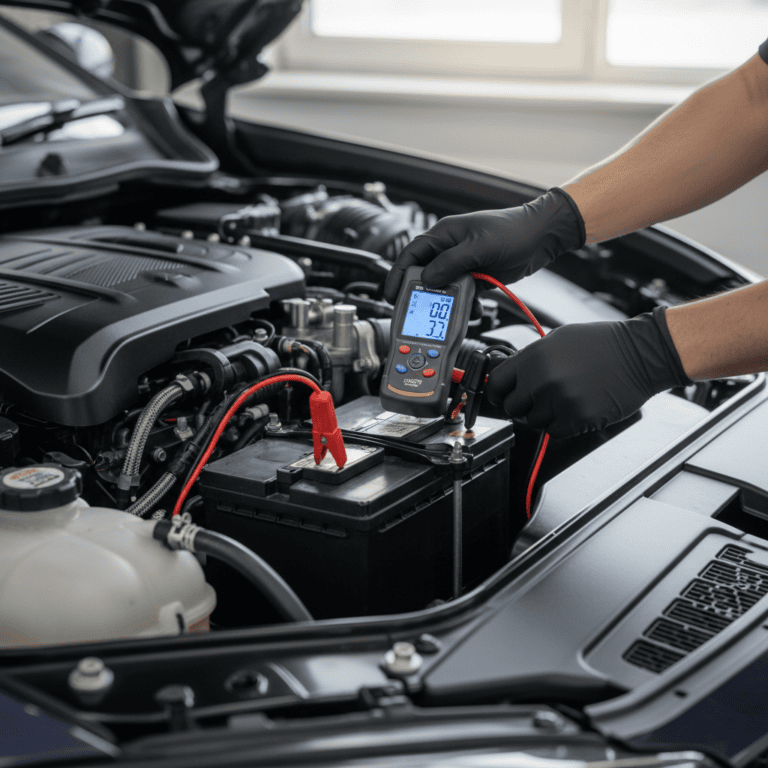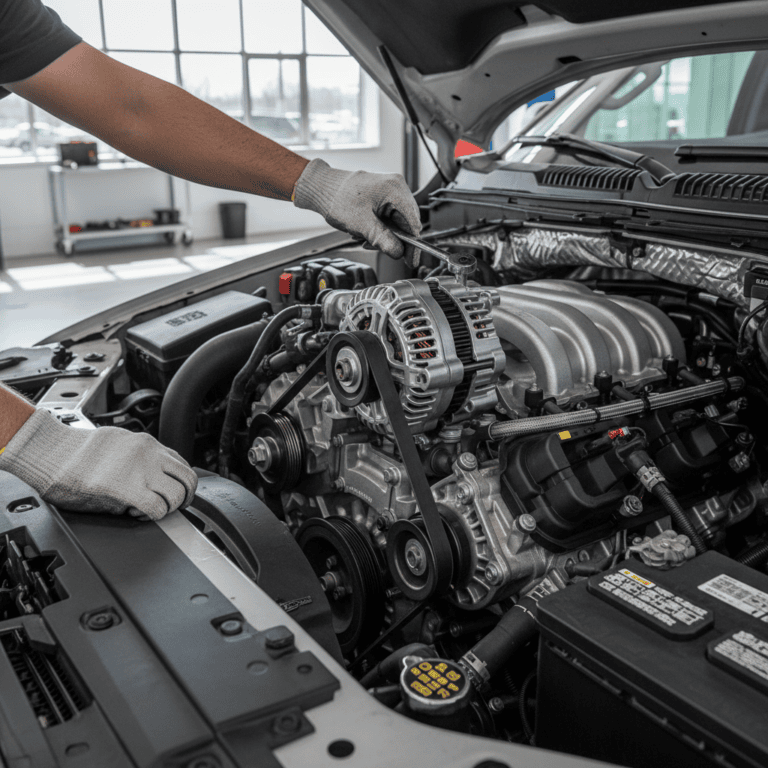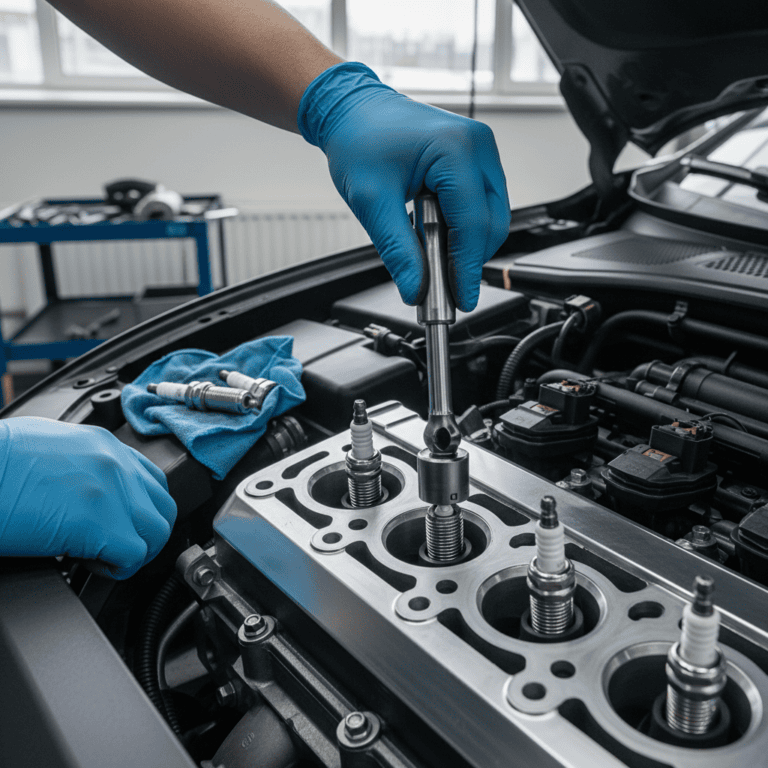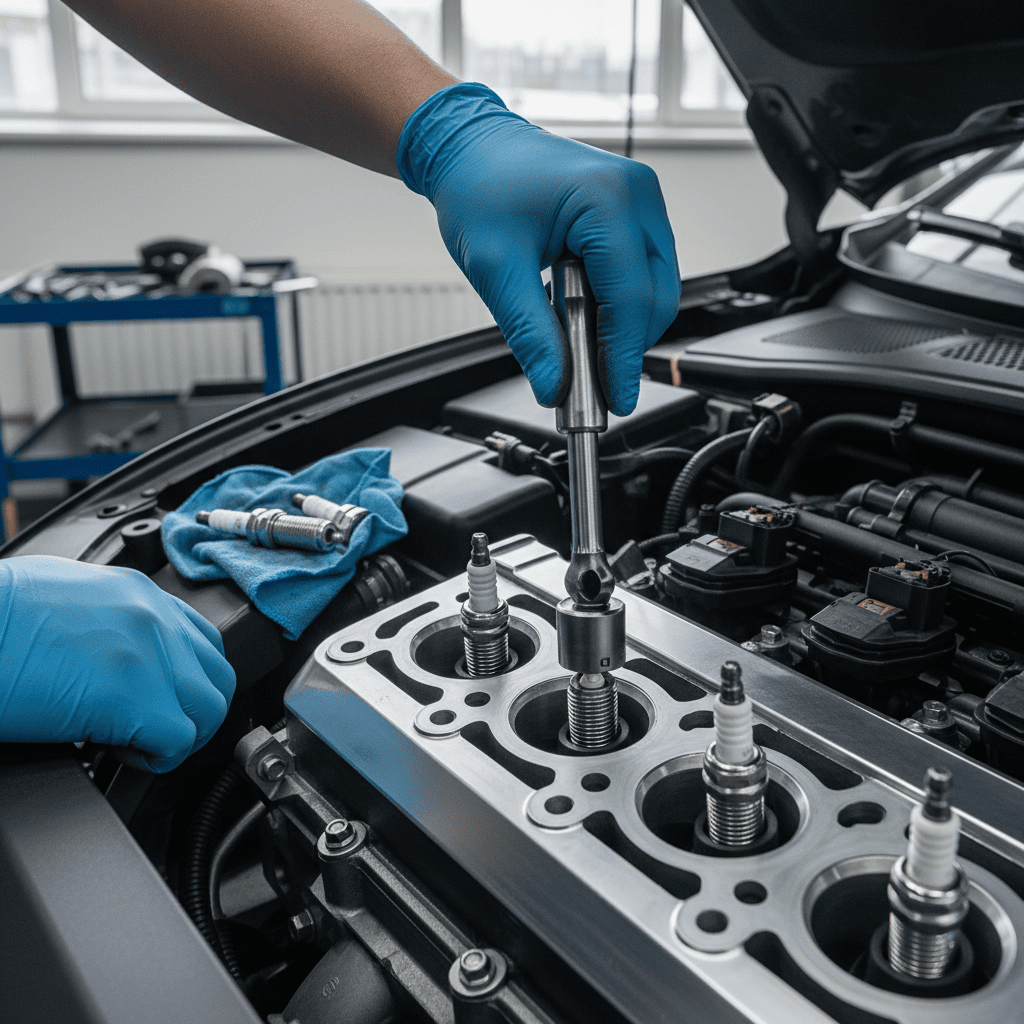
Professional mechanic replacing spark plugs to enhance vehicle fuel efficiency and performance.
I didn’t become “the spark plug guy” on purpose.
It started with a simple complaint from a friend: “My car feels lazy, and I’m filling up more than I used to.” No check-engine light. No dramatic misfire. No smoke. Just a car that had slowly lost its sharpness over time. He had already changed the air filter and even tried a fuel additive because someone at a gas station told him it would “clean everything.” It helped exactly zero.
When I asked him the last time the spark plugs were changed, he gave me the look most drivers give: the one that says, “I know that’s a real maintenance item, but I have absolutely no idea.”
We pulled the plugs that weekend. They weren’t catastrophic, but they were worn enough to explain a lot—rounded electrodes, uneven gap, and one plug with deposits that showed the engine wasn’t burning as cleanly as it should. After replacing them with the right set for his engine (not the most expensive set in the store, just the correct type), the difference was immediate. Smoother idle, quicker throttle response, easier starts, and over the next few tanks, better fuel economy.
That was the moment I really understood why people search for the Best Spark Plugs for Better MPG. It’s not about chasing miracle gains. It’s about restoring efficiency your engine has been quietly losing little by little.
Why spark plugs matter more than most drivers think
People tend to focus on tires, oil, and brakes because they’re obvious. Spark plugs are easy to ignore because they sit buried inside the engine, doing their job silently. But they are one of the core parts that determine how cleanly your engine burns fuel.
Every time your engine runs, each spark plug creates a spark that ignites the air-fuel mixture in its cylinder. If that spark is weak, inconsistent, or delayed because the plug is worn, combustion becomes less efficient. The car may still run “fine” by everyday standards, but it starts wasting fuel, losing power, and feeling rougher than it should.
That’s why choosing the Best Spark Plugs for Better MPG is less about hype and more about precision. The right plugs help the engine burn fuel more completely. The wrong plugs—or old ones—can quietly cost you money at the pump.
Search more topics
My rule from experience: fix the basics before blaming the car
I’ve seen a lot of drivers assume their car is “just getting old” when what they’re really dealing with is overdue maintenance. A sluggish engine, rough idle, poor pickup, and a small MPG drop often get blamed on age, bad gas, weather, or “this model is just like that.”
Sometimes that’s true. But many times, a basic tune-up changes everything.
Spark plugs are one of those maintenance items where neglect creeps in slowly. You don’t always wake up to a dramatic failure. Instead, the engine loses crispness over months. The driver adapts. Then one day they realize they’re visiting the gas station more often.
When someone asks me about the Best Spark Plugs for Better MPG, I always tell them the same thing first: the best plug in the world won’t help if the engine has other issues—but the correct plug can absolutely restore efficiency if worn plugs are the problem.
Copper, platinum, or iridium: what actually makes sense?
This is where a lot of people get confused, especially online. They see three or four plug types and assume “most expensive = best for every car.” That’s not always true.
Copper spark plugs
Copper plugs are usually cheaper and can perform well in engines designed for them. They conduct electricity well, but they wear faster than platinum or iridium.
Good for:
-
Older vehicles that originally used copper plugs
-
Drivers who don’t mind shorter service intervals
Not ideal for:
-
Long-term low-maintenance driving
-
Modern engines designed around longer-life plugs
Platinum spark plugs
Platinum plugs typically last longer than copper and are common in many vehicles. They offer a good balance of cost and lifespan.
Good for:
-
Daily drivers needing reliable long-term performance
-
Owners who want fewer replacements than copper
Iridium spark plugs
Iridium plugs are often the premium option and usually the longest-lasting. They’re popular in modern engines because they maintain performance longer and require less frequent replacement.
Good for:
-
Many newer vehicles
-
Drivers who want long service intervals
-
Engines that came factory-equipped with iridium plugs
Here’s the key point from real-world experience: if your engine was designed for iridium, replacing it with cheaper copper plugs to “save money” often backfires. You may end up with rougher running, shorter lifespan, and more labor later. In that case, the Best Spark Plugs for Better MPG are usually the same type the manufacturer specified.
A small change you can feel: what happened after a proper plug replacement
One of the most satisfying maintenance jobs I’ve done was on a high-mileage commuter sedan that had become noticeably thirsty. The owner was convinced the transmission was “going bad” because the car felt slow leaving stoplights.
The old plugs told a different story.
They were worn enough that the engine had to work harder to produce the same smooth combustion it once had. We replaced them with the correct heat range and spec, checked the gaps, and reassembled everything carefully. On the test drive, the first thing the owner noticed wasn’t even fuel economy. It was how smooth the engine felt at idle. Then came the easier acceleration.
A week later, he messaged me saying he had gone farther on the same amount of fuel than the previous few tanks. Not a magic transformation. Just a car running the way it was supposed to.
That’s what people should expect when looking for the Best Spark Plugs for Better MPG: not miracles, but efficiency restored.
What really affects MPG when it comes to spark plugs
Let’s be practical. Spark plugs alone do not control your fuel economy. Driving habits, tire pressure, air filter condition, fuel quality, traffic, weather, and engine health all matter. But spark plugs can absolutely influence MPG when they are worn, incorrect, or poor quality.
Here’s how they affect efficiency:
-
Consistent ignition: Better combustion means less wasted fuel.
-
Proper heat range: Helps prevent fouling and poor performance.
-
Correct gap: Too wide or too narrow can weaken spark performance.
-
Reliable long-term operation: Worn electrodes reduce efficiency gradually.
That’s why I prefer quality plugs from trusted brands over random cheap sets. You’re not just paying for metal—you’re paying for consistency.
The mistake I see most: buying by marketing, not fitment
I’ve seen people buy “performance spark plugs” because the packaging promised better power and MPG. Sometimes they get lucky. Sometimes the car runs worse.
The most important factor is fitment and specification:
-
Correct thread size
-
Correct reach
-
Correct seat type
-
Correct heat range
-
Correct plug design for your engine
If any of these are wrong, you can create problems instead of solving them.
When choosing the Best Spark Plugs for Better MPG, start with your owner’s manual or parts lookup by year, make, model, and engine. Then choose a high-quality plug in the correct spec. That alone puts you ahead of most rushed purchases.
Should you gap new spark plugs?
This depends on the plug type and the vehicle.
A lot of modern plugs come pre-gapped, and many iridium plugs should be handled carefully because the fine electrode can be damaged if adjusted roughly. But “pre-gapped” does not always mean “perfect for your exact application after shipping.”
My habit is simple:
-
Always verify the gap against the vehicle spec.
-
Adjust only if the manufacturer allows it.
-
Use the right tool and be gentle—especially with iridium plugs.
I’ve seen brand-new plugs dropped, bent, or installed without checking. That can ruin the benefit of buying quality parts in the first place.
Signs your spark plugs may be hurting MPG
You don’t need a severe misfire to have spark plug-related fuel economy loss. Watch for these smaller clues:
-
Harder cold starts than usual
-
Slight hesitation when accelerating
-
Rough idle at stoplights
-
Reduced throttle response
-
Lower MPG over several tanks
-
Engine feels “heavy” or less smooth
-
Misfire under load (in later stages)
If the plugs are overdue, replacing them is often one of the most cost-effective maintenance steps you can take.
What I recommend for daily drivers
If your goal is fuel economy and reliability—not racing—here’s my practical approach:
-
Use the correct plug type for your engine
Don’t downgrade materials to save a little money. -
Buy a reputable brand
Consistency matters more than flashy claims. -
Replace on schedule (or when symptoms appear)
Waiting too long usually costs more in fuel and drivability. -
Inspect ignition coils/boots while you’re there
A bad coil can mimic spark plug issues. -
Do the job cleanly
Proper torque matters. Cross-threading a plug hole is a terrible day.
This is the boring advice that actually works. And in my experience, boring, correct maintenance is exactly how you get the best real-world results.
The truth about “better MPG” claims
Let’s be honest: if your current plugs are still in excellent condition, replacing them won’t suddenly give you huge fuel savings. But if your plugs are worn, wrong, or overdue, a proper replacement can make a very noticeable difference in smoothness, drivability, and fuel use.
That’s why I always frame it this way: the Best Spark Plugs for Better MPG help your engine operate efficiently, but they work best as part of a healthy system. Keep tires inflated, use the right oil, maintain filters, and drive smoothly. Spark plugs are one important piece of the full MPG picture.
Final thoughts from the driveway, not the brochure
After enough weekend tune-ups, roadside troubleshooting, and “I should have done this earlier” conversations, I’ve come to appreciate spark plugs for what they are: small parts that have a big effect when they’re right—and an annoying effect when they’re wrong.
If your car feels slower, rougher, or less efficient than it used to be, don’t ignore the basics. Start with maintenance history. Check the plug interval. Use the correct spec. Install them carefully. The result may not feel dramatic in one minute, but over the next months of commuting, errands, and highway runs, you’ll feel it in smoother driving and fewer fuel stops.
That’s the real value behind finding the Best Spark Plugs for Better MPG—not marketing promises, but getting your engine back to doing its job cleanly, efficiently, and reliably every day.
Educational article by SDinformation — created to help everyday drivers make safer, smarter car-part decisions with practical, real-world guidance.
Search Anything
Search any topic — including insurance, loans, travel, technology, health, and more.
About The Author