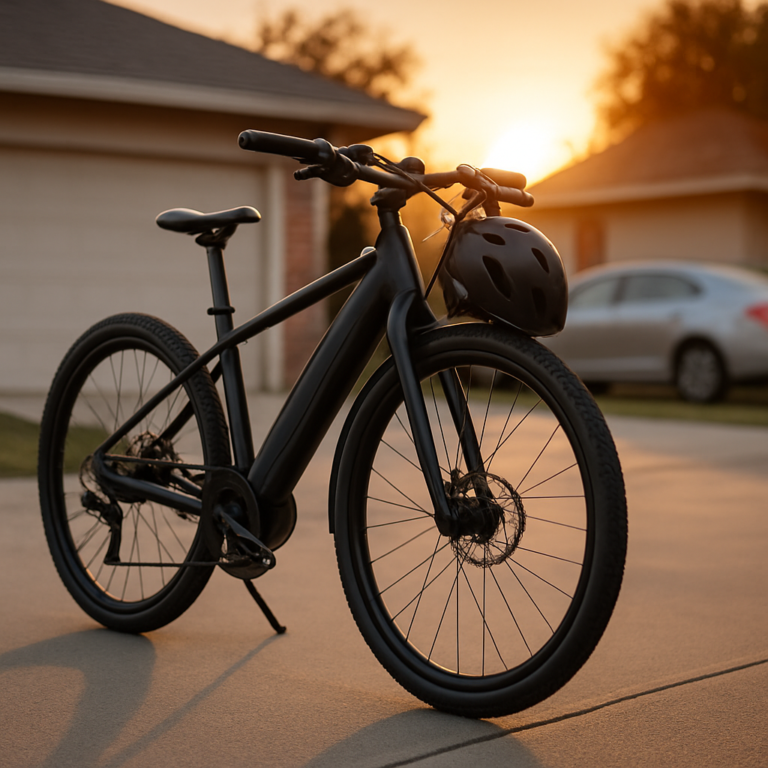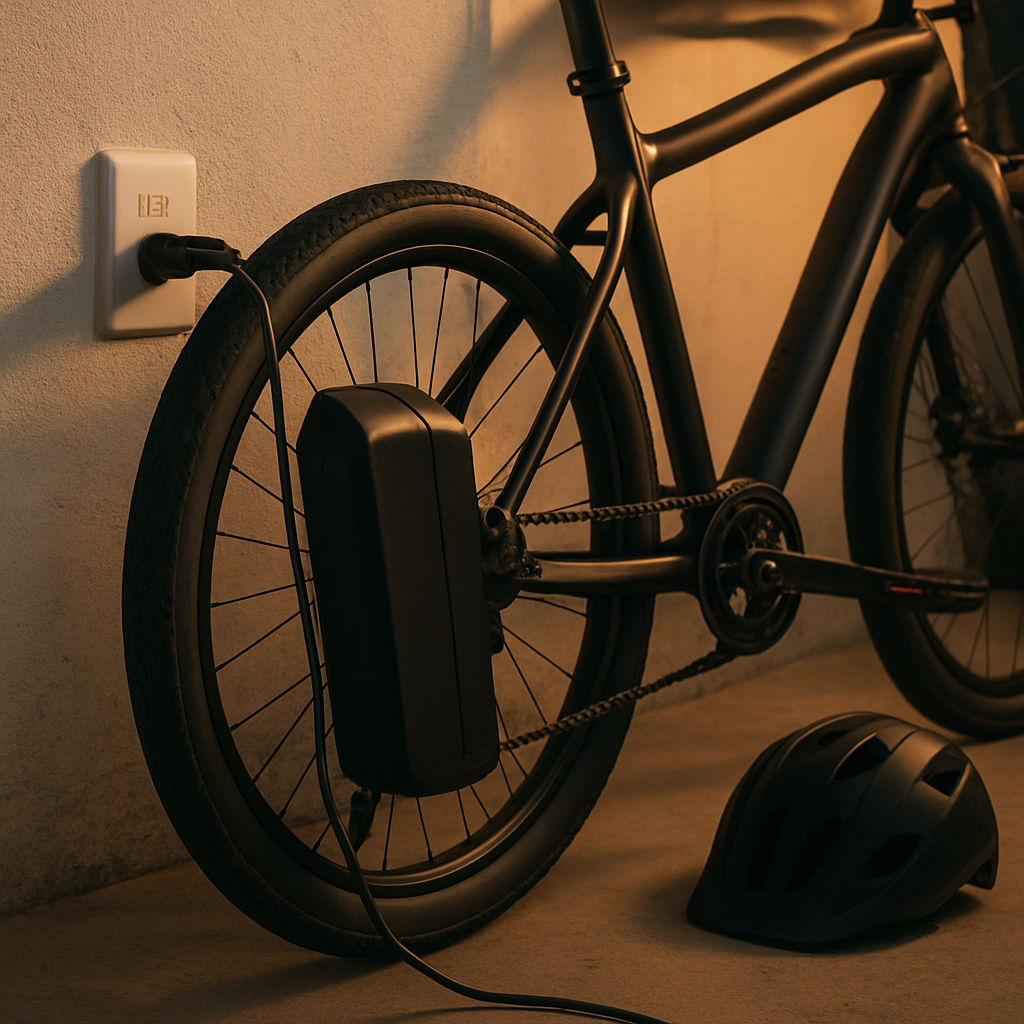
I remember the exact moment I realized I was done with gas stations. I was standing in line at a pump on a rainy Tuesday, watching the digits on the meter spin toward $60, and I thought about the e-bike sitting in my garage. I had just ridden it 15 miles the day before, and I hadn’t even thought about the “fuel” cost. When I got home, I pulled out my calculator and my latest utility bill. I wanted to know the real-world truth: how much does it cost to charge an electric bike?
What I found blew my mind. We spend so much time obsessing over the initial $2,000 or $3,000 price tag of the bike itself that we completely overlook the fact that the daily “fueling” of an e-bike is arguably the cheapest thing in our lives. If you’re tired of being at the mercy of oil prices or rising bus fares, you’re looking in the right place.
In this breakdown, we’re going to get into the nitty-gritty of kilowatt-hours, utility rates, and the “coffee cup” comparison. By the end, you’ll see exactly how much does it cost to charge an electric bike and why it’s the ultimate financial “cheat code” for modern life.
The Math Behind the Magic
To figure out how much does it cost to charge an electric bike, you only need two numbers. You don’t need to be a mathematician; you just need to look at your battery casing and your power bill.
-
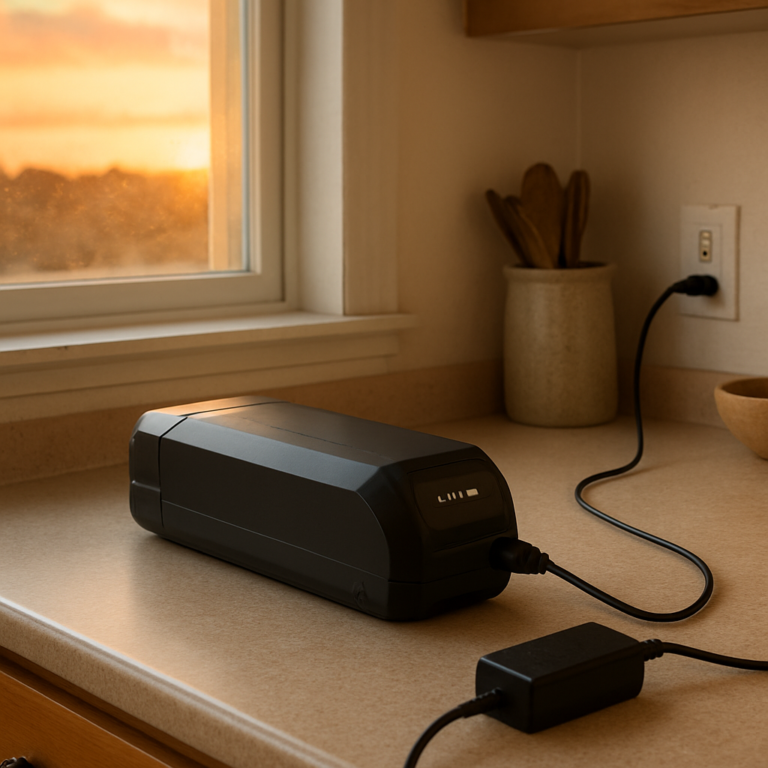
The “Fuel Tank” (Watt-hours): Most e-bikes have a capacity between 400Wh and 750Wh.
-
The “Fuel Price” (Cents per kWh): In the U.S., the average is around 16 to 18 cents per kilowatt-hour. In parts of Europe, it can be 30 cents or higher.
The formula is simple: (Battery Wh / 1000) × Electricity Rate.
Let’s take my own bike as an example. I have a beefy 625Wh battery. If I charge it from completely dead to 100% in a state like Texas (where power is roughly $0.14 per kWh), the math looks like this:
Search more topics
Explore related answers and trending queries in seconds.
-
$0.625 \times 0.14 = 0.0875$
That’s less than 9 cents. I can ride nearly 40 miles for the price of a single nickel and a few pennies. When people ask me how much does it cost to charge an electric bike, I usually just laugh and tell them, “I honestly don’t know, it’s too small to notice.”
Putting the Savings in Perspective: E-Bike vs. The World
It’s one thing to say “9 cents,” but it’s another to see how that stacks up against your other options. This is where the e-bike really starts to look like a genius investment.
The Car Comparison
The average American car gets about 25 miles per gallon. If gas is $3.50 a gallon, you’re paying 14 cents per mile.
An e-bike, as we just established, costs about 9 cents for 40 miles. That’s 0.2 cents per mile.
To put that in perspective, driving a car is 70 times more expensive than charging an e-bike. If you replaced just one 10-mile car trip a day with an e-bike, you’d be saving enough money to buy a new high-end e-bike every two or three years just from the fuel savings alone.
The Public Transit Comparison
I used to take the subway for $2.75 a ride. That’s $5.50 a day. In a month, that’s $110.
Even if I charged my e-bike every single day from 0% to 100% (which nobody actually does), I would spend less than $3.00 for the entire month. When you’re looking at how much does it cost to charge an electric bike, you’re looking at the difference between a monthly bill and the loose change in your couch.
The Factors That Can “Inflate” Your Bill
While the cost is incredibly low, it isn’t exactly the same for everyone. There are a few variables that might nudge your price up by a few pennies.
-
Charger Inefficiency: No charger is 100% efficient. Some energy is lost as heat. Usually, you can add about 15% to your calculation to account for this. So that 9-cent charge is actually about 10.5 cents. Still not exactly breaking the bank.
-
Battery Health: As a battery gets older, it becomes less efficient at holding and taking a charge. You might find yourself plugging in more often as the years go by.
-
Time-of-Use Rates: Some utility companies charge way more for power during the “peak” afternoon hours. If you plug in at 5:00 PM when everyone is running their AC, you might pay double what you’d pay if you plugged in at midnight.
Even with all these factors combined, the answer to how much does it cost to charge an electric bike almost never exceeds 30 cents per charge, even in the most expensive energy markets in the world.
Does “Fast Charging” Cost More?
I get asked this all the time: “If I buy a 4-amp fast charger, will my electricity bill go up?”
The answer is no. You’re still putting the same amount of “juice” into the battery; you’re just doing it through a bigger straw. A 500Wh battery needs 0.5kWh of energy whether it takes two hours or six hours to get there.
The only “cost” of fast charging is potential wear and tear on the battery cells due to heat, but in terms of what you pay the power company, it’s identical. So don’t be afraid to top off quickly if you’re in a rush; it won’t change how much does it cost to charge an electric bike.
The “Hidden” Maintenance Costs
To be intellectually honest, “fueling” isn’t the only cost of riding. If we’re talking about the total price of ownership, we have to mention battery replacement.
Most lithium-ion batteries are good for 500 to 1,000 full charge cycles. After that, they might only hold 70% of their original capacity. If a new battery costs $500 and it lasts you 4 years, you’re essentially “paying” an extra $10 a month for the privilege of having that battery.
When you add that to the electricity, the total cost per month is still under $15. Compare that to a car’s oil changes, tires, insurance, and registration, and the e-bike remains the undisputed heavyweight champion of budget travel.
Conclusion: Why You Can Stop Worrying
If you’re on the fence about buying an electric bike because you’re worried about your monthly expenses, let me set your mind at ease. The cost of the electricity is the last thing you should be worried about.
When you sit down and calculate how much does it cost to charge an electric bike, you realize it’s one of the few things in 2026 that actually feels like a bargain. It’s a feeling of pure freedom to know that you can zip across town, climb the steepest hills, and arrive at your destination without spending more than the price of a stick of gum.
So, plug it in, forget about the bill, and go enjoy the ride. Your wallet will thank you later.
This article was written by SDinformation. We specialize in cutting through the fluff to give you the real numbers on green tech and electric mobility. Now that you know how much does it cost to charge an electric bike, are you ready to see how much you could save on your specific commute?
About The Author

Search Anything
Search any topic — insurance, loans, travel, technology, health, and more.