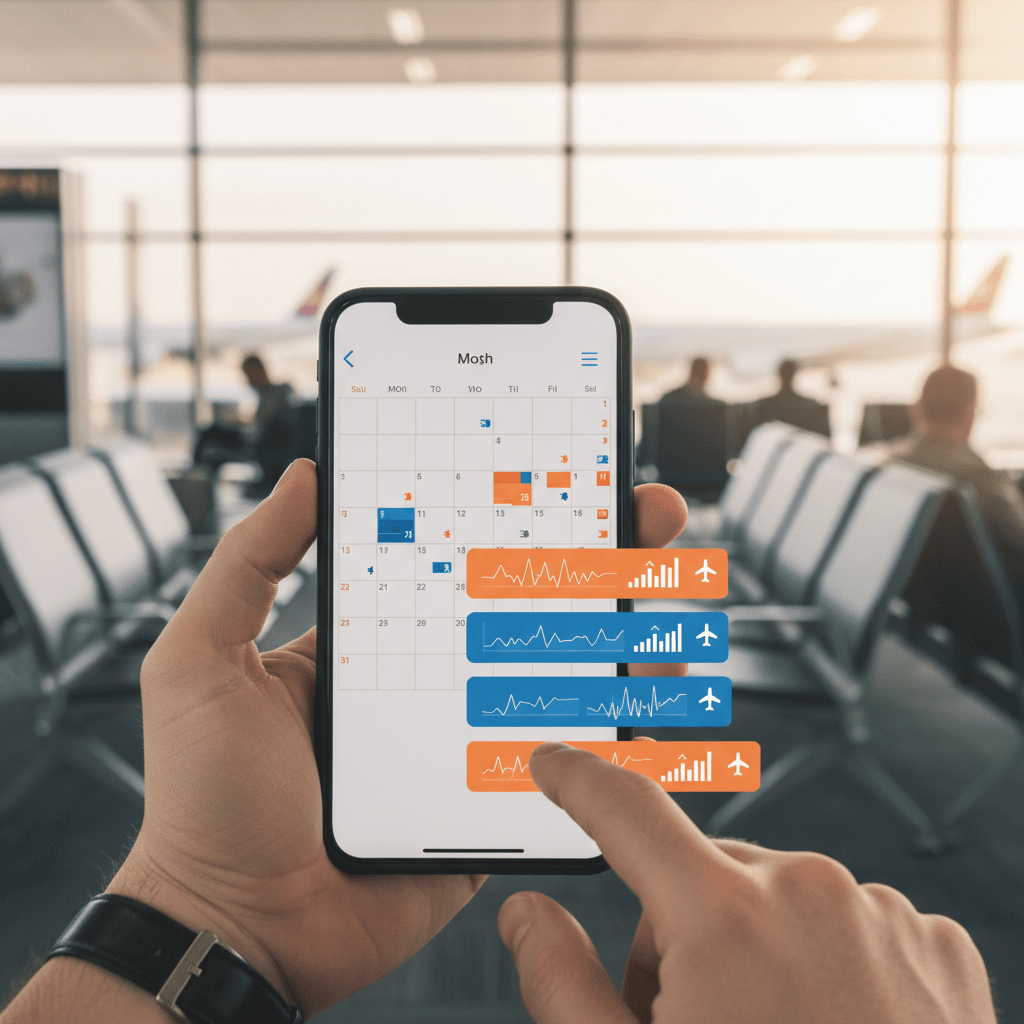
Look for Flight Price Tracker Tips, I get it. Most “travel guides” these days feel like they were written by a robot that’s never actually had to sprint through Terminal 4 at JFK because their “cheaper” connecting flight was delayed. You want the real stuff—the kind of advice you get from someone who spends way too much time in airport lounges and has three different flight tracking apps fighting for dominance on their home screen.
Booking travel in 2026 is a weird game. Airlines have gotten scarily good at using AI to squeeze every last cent out of us. If you’re just hopping onto a search engine, picking a date, and hitting “buy,” you’re essentially leaving a tip for a multi-billion dollar corporation that doesn’t need it.
To beat them, you need a strategy that’s a bit more cynical and a lot more automated. Here is my personal, slightly chaotic, but highly effective set of Flight Price Tracker Tips to help you actually win.
1. The “Golden Window” is a Lie (Sort Of)
We’ve all heard the myth: “Book on a Tuesday at 3:00 PM while standing on one leg.” It’s nonsense. Airlines update prices constantly. However, the amount of time before your trip does matter.
For domestic hops, I usually start my trackers about 8 weeks out. Anything earlier and you’re just looking at “placeholder” prices that haven’t been discounted yet. For the big international hauls—say, London to Tokyo—I start lurking around the 6-month mark. But here’s the kicker: don’t just track the flight you want. Track the flight you don’t want, too. Sometimes seeing the price of a Monday departure plummet will give you the leverage to realize your “required” Sunday flight is a total rip-off.
2. Setting Your “Walk-Away” Number
The biggest mistake people make with Flight Price Tracker Tips is not having a target. You get an alert that a flight dropped from $800 to $650. You think, “Hmm, maybe it’ll hit $550?” Then you wake up the next morning and it’s $900.
Before you even turn on an alert, do a quick “pulse check” of the route. If the average price is $700 and you see $580, that’s your signal. Set your tracker to ping you specifically for that “Buy Now” price. When it hits, you book it within ten minutes. No second-guessing, no “let me call my travel buddy.” Just pull the trigger.
3. The “Positioning Flight” Gamble
This is a pro move that most casual travelers miss. If you live in a mid-sized city, your local airport is likely price-gouging you because they have a monopoly on convenience.
Instead of just tracking “My City to Paris,” I set up trackers for the nearest major hubs. If I’m in Charlotte, I track flights from JFK or Dulles to Paris. If I can find a $400 deal from New York, and it only costs me $120 to get to New York on a separate “positioning” flight, I’ve just saved a few hundred bucks. Just make sure you leave a massive buffer (like, 5+ hours) between those two separate tickets, or a single delay will ruin your entire life.
4. Track One-Way Tickets Separately
Algorithms love round-trip flyers because they’re predictable. But in 2026, the real gems often hide in “hacker fares”—booking your departure with one airline and your return with another.
One of my favorite Flight Price Tracker Tips is to set up three alerts for every trip:
-
The Round Trip.
-
The Outbound leg (one-way).
-
The Return leg (one-way). You’d be surprised how often a budget carrier has a fire sale on the way out, while a legacy carrier is trying to fill seats on the way back.
5. Don’t Ignore the “Ghost” Airports
If you’re heading to London, you’re probably tracking Heathrow. Stop that. Track Gatwick, Stansted, and even Luton (if you can stomach the bus ride).
When you use trackers, most people forget to check the “Include nearby airports” box because they don’t want the hassle. But $200 in savings buys a lot of Ubers. I once saved enough on a flight to “Stockholm” (landing at Skavsta, which is basically in another zip code) that the 90-minute train ride into the city felt like a victory lap rather than an inconvenience.
6. The 24-Hour “Insurance” Trick
Most people think once they book, the tracking stops. Wrong. Keep that tracker running for exactly 24 hours after you buy.
In the U.S. (and many other regions), airlines are legally required to give you a full refund if you cancel within 24 hours of booking (provided the flight is at least a week away). If your Flight Price Tracker Tips pay off and a massive “oops” fare or a sudden drop happens right after you bought your ticket, you can cancel the first one for free and grab the cheaper one. It’s a small window, but I’ve used it to shave $150 off a flight to Mexico while sitting in my pajamas the night after I “finished” booking.
7. Fees: The Great Equalizer
A tracker might tell you a flight is $200, but by the time you add a carry-on bag, a seat where your knees don’t touch your chin, and a “convenience fee” for using a credit card, it’s $350.
When you get an alert, don’t celebrate yet. You have to “dry run” the booking all the way to the payment page. I’ve seen “deals” on trackers that were actually more expensive than the standard flights once the baggage fees were factored in. My rule? If it’s a budget airline alert, add $60 to the price in your head immediately. If it still looks good, then it’s a deal.
8. Why Mid-Week Isn’t Always the Answer
While everyone says “fly on Wednesday,” the data in 2026 is starting to shift. With more people working remotely, “mid-week” is becoming a popular time for digital nomads to move around.
Actually, some of the best Flight Price Tracker Tips involve looking at Saturday afternoons. Business travelers are already home, and weekend vacationers left on Friday. If you can sacrifice half a Saturday, you can often find “dead zones” in the airline’s pricing algorithm where they’re desperate to fill seats.
9. The VPN and “Incognito” Debate
Look, people argue about this endlessly. Does incognito mode actually work? Sometimes. Is it a magic bullet? No. But using a VPN to set your location to a lower-income country can occasionally trigger different “point of sale” pricing.
I don’t do this for every flight, but for expensive international trips, it’s worth the five minutes of effort. If I’m booking a flight within South America, I’ll set my VPN to Brazil or Argentina. Sometimes the price stays the same; sometimes it drops by 15%. It’s basically digital coupon clipping.
10. Stop When You’re Ahead
This is the most “human” advice I can give you. The internet has turned us all into optimization addicts. We want the absolute lowest price ever recorded in history.
If you find a flight that fits your budget, has a decent layover, and lets you get to your destination feeling like a person rather than a sardine—book it and delete the tracker. Seriously. Don’t be that person who checks the price two weeks later just to hurt their own feelings. The goal of these Flight Price Tracker Tips isn’t to win a game against a computer; it’s to get you on vacation without going broke.
Summary Checklist for Your Next Trip
-
Check 3-6 months early for the “big” trips.
-
Set a hard “Buy Price” so you don’t hesitate.
-
Track individual legs to find “hacker” savings.
-
Include secondary airports, but calculate the Uber cost first.
-
Keep the tracker on for 24 hours after booking for that “oops” refund.
Ultimately, the best Flight Price Tracker Tips are the ones that save you time, not just money. Technology is a tool, but your own common sense is what actually gets you the window seat.
Now, where are you thinking of heading? If you give me a specific route, I can tell you which of these tactics I’d actually use for it.
I’ve spent plenty of time digging through data and testing these methods in the real world, and I’m sharing them here because I believe travel shouldn’t just be for people with unlimited budgets.
This article was written by SDinformation as part of our ongoing effort to provide straightforward, educational resources for anyone trying to navigate the messy world of modern travel logistics. The goal isn’t just to hand you a list of Flight Price Tracker Tips and send you on your way, but to actually give you the framework to understand how airline pricing works so you can make informed decisions. Travel is one of the best ways to learn about the world, and I hope this guide helps you spend less money on the “getting there” part so you can spend more on the actual experience.
About The Author