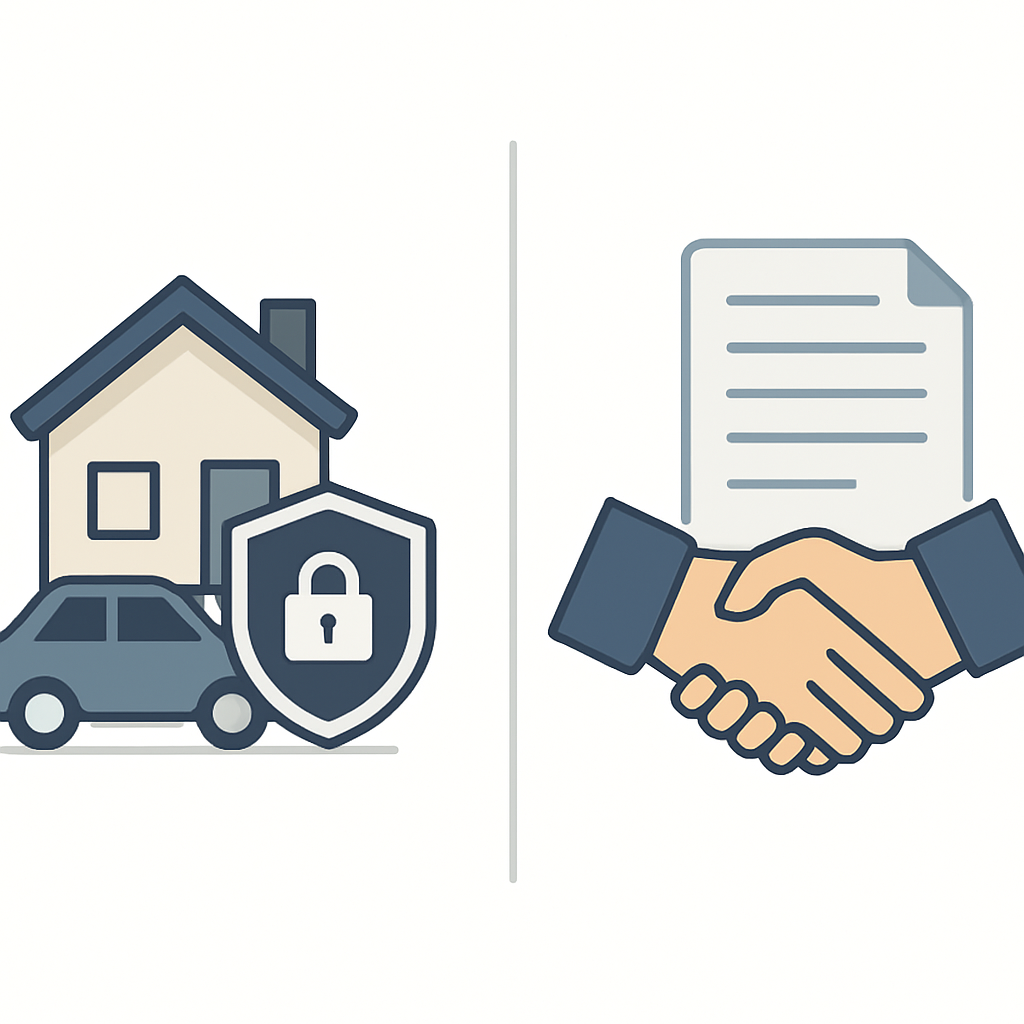
A visual comparison of secured loans backed by collateral and unsecured loans based on creditworthiness.
Picture this: You’re standing at a financial crossroads, needing money for that dream home renovation, unexpected medical bill, or perhaps starting your own business. The bank offers you two paths – one requires putting up your house as collateral, while the other simply relies on your promise to pay back. Sound confusing? You’re not alone!
Welcome to the world of secured & unsecured loans, where understanding the DIFFERENCE could save you thousands of dollars or protect your most valuable assets. Every day, millions of people make loan decisions without fully grasping what they’re signing up for. Some end up paying way more than necessary, while others risk losing their homes or cars because they didn’t understand the fine print.
This comprehensive guide will walk you through everything you need to know about these two loan types. We’ll explore how they work, what risks come with each option, the true costs involved, & most importantly – which one might be the RIGHT choice for your specific situation. By the end of this article, you’ll have the knowledge to make an informed decision that protects both your finances & your peace of mind. Whether you’re a first-time borrower or someone looking to refinance existing debt, understanding these loan fundamentals is crucial for your financial success.
Understanding Secured Loans: When Your Assets Become Your Promise
Secured loans are like making a deal with a safety net – but that net belongs to the lender, not you. When you take out a secured loan, you’re essentially telling the bank, “If I can’t pay you back, you can take this valuable thing I own.” This “valuable thing” is called COLLATERAL, & it can be your house, car, savings account, or other assets that hold significant value.
Think of it like borrowing money from a friend, but leaving your expensive watch with them until you pay them back. The watch ensures they’ll get something valuable even if you can’t repay the cash. Common examples of secured loans include mortgages (where your house is collateral), auto loans (where your car is collateral), & home equity loans (where again, your house serves as security). These loans exist because they reduce the lender’s risk – they know they can recover their money by selling your collateral if things go wrong.
The process typically works like this: You apply for the loan, the lender evaluates both your creditworthiness AND the value of your proposed collateral. They’ll often require an appraisal to determine exactly how much your asset is worth. If approved, you’ll receive the money, but the lender holds a legal claim against your collateral until the loan is completely paid off. This legal claim is called a LIEN, & it means you can’t sell or transfer ownership of that asset without the lender’s permission.
What makes secured loans attractive to many borrowers is that they often come with lower interest rates & more favorable terms. Lenders feel safer offering better deals because they have that backup plan. However, this security for the lender translates into risk for you – fail to make payments, & you could lose whatever asset you used as collateral.
Unsecured Loans Explained: Borrowing on Trust & Promise Alone
Unsecured loans operate on a completely different principle – they’re based primarily on your creditworthiness, income, & promise to repay. No collateral required, no assets at immediate risk. It’s like the lender is saying, “We trust you’ll pay us back based on your financial history & current situation.” This might sound like the obviously better choice, but there are significant trade-offs to consider.
Search more topics
Explore related answers and trending queries in seconds.
Credit cards represent the most common form of unsecured lending that most people encounter daily. Personal loans, student loans, & signature loans also fall into this category. When you apply for an unsecured loan, lenders scrutinize your credit score, employment history, debt-to-income ratio, & overall financial stability much more intensively than they would for secured loans. They’re essentially betting on your CHARACTER & ability to repay without having a physical asset to fall back on.
The application process focuses heavily on documentation proving your income stability & creditworthiness. Lenders want to see pay stubs, tax returns, bank statements, & a solid credit history showing you’ve successfully managed debt before. They’re looking for patterns that indicate you’re a RELIABLE borrower who won’t default on the loan. Some lenders even consider factors like your education level, profession, & length of employment as indicators of your likelihood to repay.
Because lenders take on more risk with unsecured loans, they typically charge higher interest rates & may offer less favorable terms. They might also require higher credit scores for approval & could limit the amount they’re willing to lend. However, the major advantage is clear – your home, car, & other valuable assets remain completely safe even if you struggle with repayment. The worst-case scenario involves damaged credit & potential legal action for debt collection, but you won’t lose your house or car directly.
Breaking Down the Risks: What You Could Gain or Lose
Understanding the RISK profile of each loan type is crucial for making an informed decision. With secured loans, the most obvious risk is losing your collateral. Miss too many mortgage payments, & you face foreclosure. Default on your car loan, & repossession becomes a reality. This isn’t just theoretical – millions of people have lost homes & vehicles due to secured loan defaults, especially during economic downturns like the 2008 financial crisis.
However, secured loans also carry some less obvious risks. Property values can fluctuate, potentially leaving you “underwater” – owing more than your collateral is worth. This situation became common during housing market crashes when homeowners found themselves trapped with mortgages exceeding their home’s value. Additionally, having collateral tied up means reduced FLEXIBILITY in your financial planning. You can’t easily sell or refinance that asset without dealing with the existing lien.
Unsecured loans present different risk profiles altogether. While you won’t lose physical assets, defaulting can severely damage your credit score, making future borrowing expensive or impossible. Lenders may pursue wage garnishment, where they legally claim a portion of your paycheck until the debt is satisfied. They might also place liens on assets you acquire after the loan default, & unpaid debts can follow you for years through collection agencies.
The psychological stress of unsecured debt shouldn’t be underestimated either. Without the “reset button” of losing collateral & having the debt disappear, unsecured debts can feel overwhelming & endless. Collection calls, letters, & legal threats create ongoing anxiety that many borrowers find more stressful than the clear-cut nature of secured loan consequences. Some borrowers actually prefer secured loans because they feel the risks are more TRANSPARENT & predictable.
The True Cost Analysis: Interest Rates, Fees & Hidden Expenses
When comparing loan costs, interest rates grab most of the attention, but they’re only part of the story. Secured loans typically offer significantly lower interest rates – sometimes 3-10 percentage points lower than comparable unsecured loans. A $20,000 secured loan at 6% interest costs much less over time than the same amount at 16% on an unsecured personal loan. Over a five-year term, this difference could mean thousands of dollars in savings.
But don’t forget about additional costs that can add up quickly. Secured loans often require appraisals, title searches, insurance requirements, & origination fees. Mortgage loans, for example, can include inspection fees, attorney fees, recording fees, & private mortgage insurance if your down payment is less than 20%. Auto loans might require GAP insurance or extended warranties. These upfront costs can sometimes offset the interest rate advantages, especially for smaller loan amounts or shorter terms.
Unsecured loans generally have fewer upfront fees, but they make up for it with higher interest rates & sometimes additional charges like late payment penalties or prepayment fees. Credit cards, a form of unsecured credit, can carry annual fees, balance transfer fees, cash advance fees, & penalty interest rates that kick in after missed payments. The CONVENIENCE of unsecured credit often comes with a premium price tag.
Consider also the opportunity cost of tying up collateral. When your house secures a loan, you lose some flexibility in how you use that equity. You might miss opportunities to invest that equity elsewhere or face complications if you need to move quickly. Conversely, unsecured loans preserve your financial flexibility, allowing you to make decisions about your assets independently of your debt obligations. This flexibility has value that’s difficult to quantify but shouldn’t be ignored in your decision-making process.
Making the Right Choice: Factors to Consider for Your Situation
Choosing between secured & unsecured loans isn’t a one-size-fits-all decision. Your credit score plays a HUGE role in determining which option makes sense. If you have excellent credit (740+), you might qualify for competitive rates on unsecured loans that approach secured loan rates. However, if your credit is poor or limited, secured loans might be your only option for reasonable interest rates, or sometimes for qualifying at all.
Consider the loan purpose carefully. Large, long-term expenses like home purchases or major renovations often make sense for secured loans because the collateral (your home) is directly related to the loan purpose. Plus, these large amounts typically require the lower payments that secured loans provide. Conversely, smaller amounts for things like debt consolidation, vacations, or emergency expenses might work better as unsecured loans, especially if you value the peace of mind of not risking your assets.
Your personal risk tolerance is another crucial factor. Some people sleep better at night knowing their house isn’t on the line, even if it means paying higher interest rates. Others prefer the lower costs of secured loans & feel confident in their ability to make payments consistently. Consider your job stability, emergency fund, & overall financial resilience when evaluating how much risk you’re comfortable taking on.
Think about your future plans too. If you might need to sell your house or car in the near future, having them secured against loans complicates those transactions. You’ll need to coordinate with lenders, potentially pay off loans early, or arrange for loan transfers. Unsecured loans provide more FREEDOM to make major life changes without financial complications. Also, consider whether you have suitable collateral available – you can’t get a secured loan without assets valuable enough to secure it.
Your Path Forward: Making Smart Borrowing Decisions
Now that you understand the fundamental differences between secured & unsecured loans, you’re equipped to make decisions that align with your financial goals & risk tolerance. Remember, there’s no universally “better” option – only what’s better for your specific circumstances at this moment in your life.
Start by honestly assessing your current financial situation. Calculate your debt-to-income ratio, review your credit score, & evaluate your emergency fund. If you’re considering a secured loan, get a realistic appraisal of your potential collateral’s value. For unsecured loans, research what interest rates you might qualify for based on your credit profile. Many lenders offer prequalification processes that give you rate estimates without affecting your credit score.
Don’t rush into any loan decision. Shop around with multiple lenders, as rates & terms can vary significantly. Credit unions often offer competitive rates for both secured & unsecured loans, especially if you’re already a member. Online lenders have expanded options considerably & may offer rates traditional banks can’t match. Always read the fine print carefully, understanding not just the interest rate but all fees, prepayment penalties, & what happens if you encounter financial difficulties.
Consider speaking with a financial advisor or counselor if you’re unsure about which direction to take. They can help you model different scenarios & understand the long-term implications of your choice. Remember, taking on debt is a significant financial decision that will impact your life for months or years to come. The time you invest in understanding your options now could save you thousands of dollars & considerable stress down the road. Make the choice that gives you not just the money you need, but also the peace of mind you deserve.
This educational guide is brought to you by SD Information, where complex financial topics are explained simply and clearly.
About The Author

Search Anything
Search any topic — insurance, loans, travel, technology, health, and more.